
Short Answer
Understanding Dark Matter
Dark matter is a hypothesized form of matter that is believed to constitute approximately 85% of the total matter in the universe. It is invisible to electromagnetic radiation, meaning it neither emits nor absorbs light, making it undetectable through direct observation. Scientists infer its presence primarily through its gravitational influence on visible matter, such as stars and galaxies, which appear to move in ways that cannot be explained by the gravitational pull of observable matter alone.
- Role in the Universe:
Dark matter acts as a cosmic framework, providing the gravitational glue that holds galaxies together and influences the formation and evolution of cosmic structures. - Detection Challenges:
Despite its significant role in cosmological models, dark matter has never been directly observed, leading to ongoing debates about its true nature.
Reevaluating the Existence of Dark Matter
The concept of dark matter has long been accepted as a cornerstone of modern cosmology. However, some scientists propose that what we attribute to dark matter might instead be a sign of incomplete or incorrect understanding of gravitational laws. This perspective suggests that the anomalies in galactic rotation and cosmic structure formation could stem from the need to revise the fundamental principles governing gravity and motion, rather than invoking an unseen substance.
Alternative Theories to Dark Matter
One prominent alternative to the dark matter hypothesis is the modification of gravitational laws on large scales. Theories such as Modified Newtonian Dynamics (MOND) propose that Newton’s inverse-square law of gravity may not hold true across the vast expanses of galaxies. Instead, gravity could behave differently depending on the scale, becoming a variable force that adapts to the cosmic environment.
- Modified Newtonian Dynamics (MOND):
Suggests that at very low accelerations, typical in galactic outskirts, gravity deviates from Newtonian predictions, potentially explaining galaxy rotation curves without dark matter. - Emergent Gravity Theories:
Propose that gravity arises from more fundamental microscopic processes, leading to new gravitational behaviors at cosmic scales.
Implications for Gravitational Lensing
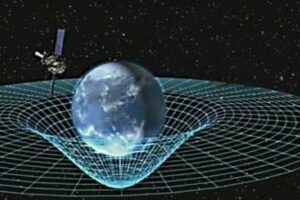
Gravitational lensing-the bending of light around massive objects-has been a key observational pillar supporting dark matter’s existence. However, if gravitational laws vary at large scales or under extreme conditions, the observed lensing effects might be explained without requiring additional unseen mass. This challenges the interpretation of lensing data and suggests that the cosmic fabric’s curvature could be influenced by modified gravity rather than hidden matter.
Galaxy Formation Without Dark Matter
Traditional models of galaxy formation rely heavily on dark matter halos acting as gravitational wells that attract and accumulate ordinary matter. In a universe without dark matter, the process of galaxy formation would need to be reimagined. Instead of depending on invisible anchors, galaxies might emerge from complex interactions of baryonic matter influenced by alternative gravitational dynamics, indicating a more self-organizing cosmos.
Philosophical and Scientific Reflections
The debate over dark matter’s existence touches on deeper questions about scientific belief and the limits of observation. Dark matter represents the tension between what is observed and the theoretical constructs developed to explain those observations. Rejecting dark matter is not merely discarding a hypothesis but embracing scientific humility and the possibility that our current frameworks are incomplete. This openness to ambiguity is essential for advancing knowledge and appreciating the universe’s complexity.
The Quest for New Physics
If dark matter does not exist, the scientific community faces the exciting challenge of discovering new physical principles that can account for cosmic phenomena. This pursuit may lead to breakthroughs in understanding gravity’s quantum nature or uncovering hidden symmetries that reconcile observations with theory. Such advancements would mark a significant paradigm shift in physics and cosmology.
Conclusion: Embracing Cosmic Mystery
Contemplating a cosmos without dark matter invites us to rethink our understanding of the universe. It encourages exploration beyond established theories and fosters a spirit of inquiry that values uncertainty and complexity. Whether dark matter is real or a conceptual placeholder, the investigation itself enriches our comprehension and deepens our awe of the universe’s enigmatic grandeur. In this ongoing journey, the interplay of light and shadow symbolizes the enduring quest for knowledge and the beauty of scientific discovery.
FAQ
What is dark matter?
Dark matter is a hypothesized form of matter that is believed to make up about 85% of the universe’s total matter, inferred through its gravitational effects on visible matter.
What are some alternatives to dark matter?
Alternatives to dark matter include theories like Modified Newtonian Dynamics (MOND) and Emergent Gravity, which suggest that gravity behaves differently on cosmic scales.



Leave a Reply