
Short Answer
Definition and Overview of the Bullet Cluster
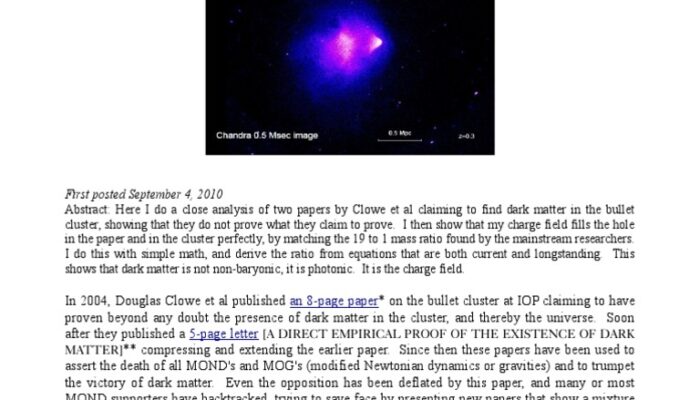
The Bullet Cluster, officially designated as 1E 0657-56, is a remarkable astronomical system consisting of two galaxy clusters in the process of colliding. This event has become a cornerstone in astrophysics, often cited as compelling evidence for the existence of dark matter. The collision reveals a striking separation between the visible matter, primarily hot gas emitting X-rays, and the total gravitational mass inferred from gravitational lensing. This discrepancy suggests the presence of a substantial amount of unseen mass that does not interact with light but exerts gravitational influence.
Physical Characteristics and Observational Techniques
The Bullet Cluster is characterized by two massive galaxy clusters moving through each other at an extraordinary speed of approximately 4,700 kilometers per second. The most captivating aspect is the spatial offset between the baryonic matter-mainly the luminous hot plasma detected through X-ray emissions-and the gravitational mass distribution mapped by weak gravitational lensing. This lensing effect, which bends the light from background galaxies, serves as a tool to trace the total mass, including components invisible to electromagnetic observations.
- X-ray Astronomy:
Detects the hot, ionized gas that constitutes the majority of the visible matter in the clusters. - Gravitational Lensing:
Measures the bending of light caused by mass, revealing the overall gravitational potential, including dark matter.
Significance in Dark Matter Research
The Bullet Cluster is often hailed as a “smoking gun” for dark matter because the gravitational lensing maps show mass concentrations where little ordinary matter is present. This supports the hypothesis that dark matter is a non-baryonic substance that interacts gravitationally but not electromagnetically. The clear separation between the hot gas and the gravitational mass distribution provides empirical support for dark matter models, distinguishing it from alternative explanations that rely solely on visible matter.
Alternative Interpretations and Theoretical Challenges
Despite its prominence, the interpretation of the Bullet Cluster data is not universally accepted without reservations. Some scientists advocate for alternative theories such as Modified Newtonian Dynamics (MOND) or other modifications to gravitational laws at large scales. These frameworks attempt to explain the observed phenomena without invoking dark matter, though they often face difficulties in accounting for the full range of cosmological and astrophysical observations.
- Modified Gravity Theories:
Propose changes to the laws of gravity to explain mass discrepancies without dark matter. - Challenges:
Struggle to fully replicate the Bullet Cluster’s observed gravitational lensing and X-ray emission patterns.
Methodological Considerations and Data Interpretation
Critical analyses emphasize the complexities involved in interpreting the Bullet Cluster observations. Weak lensing reconstructions depend heavily on data quality, noise sensitivity, and assumptions about the cluster collision dynamics. Projection effects and the challenge of disentangling three-dimensional structures from two-dimensional images can introduce uncertainties. These factors necessitate cautious interpretation and highlight the potential for artifacts influencing conclusions.
Simulations and Dynamical History
Numerical simulations aimed at reproducing the Bullet Cluster’s morphology and kinematics reveal a delicate balance of initial conditions, cluster masses, gas physics, and collision velocities. Variations in these parameters can significantly affect the predicted distribution of baryonic and dark matter components. The term “bullet” suggests a simple, high-speed collision, but the actual interaction is likely more complex and turbulent, with ongoing research striving to unravel its detailed dynamics.
Multiwavelength Astrophysics and Technological Implications
The Bullet Cluster exemplifies the power and challenges of multiwavelength astrophysics, combining data from X-ray, optical, and gravitational lensing observations to probe the universe’s hidden mass. This synergy advances our understanding but also exposes limitations in current instrumentation and analytical methods. Systematic errors, calibration uncertainties, and the inherent difficulty of interpreting distant cosmic events underscore the need for continual technological and methodological improvements.
Philosophical and Epistemological Reflections
Beyond its scientific impact, the Bullet Cluster raises profound questions about the nature of evidence and scientific consensus. It illustrates how empirical data can be simultaneously persuasive and contentious, shaped by theoretical perspectives and interpretive frameworks. The inference of dark matter as an unseen cause of gravitational anomalies reflects broader challenges in distinguishing between observable phenomena and theoretical constructs in science.
Summary and Future Directions
In conclusion, the Bullet Cluster is a pivotal subject in astrophysics, representing a complex intersection of observation, theory, and interpretation. While it provides strong support for the existence of dark matter, alternative explanations and methodological critiques encourage ongoing scrutiny. Future observations with next-generation telescopes and refined theoretical models promise to deepen our understanding of this cosmic collision and its implications for the nature of matter and gravity.
Why the Bullet Cluster Matters
The Bullet Cluster holds a crucial place in modern astrophysics because it challenges and refines our understanding of the universe’s composition. It serves as a key empirical test for dark matter theories, influences the development of gravitational models, and exemplifies the integration of diverse observational techniques. Its study advances both fundamental physics and cosmology, shaping how scientists approach the mysteries of the cosmos.
FAQ
What is the Bullet Cluster?
The Bullet Cluster is a pair of colliding galaxy clusters, providing evidence for dark matter due to the separation of visible mass and gravitational mass.
Why is the Bullet Cluster considered significant in dark matter research?
It demonstrates a clear discrepancy between visible matter and gravitational mass, supporting the existence of non-baryonic dark matter.





Leave a Reply