

Short Answer
Understanding Dark Energy
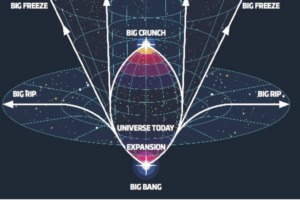
Dark energy is a mysterious force that constitutes about 68% of the total energy content of the universe. It is primarily responsible for the observed accelerated expansion of the cosmos, a phenomenon that has puzzled scientists and cosmologists since its discovery. Despite its dominant role in shaping the universe’s fate, the intrinsic nature and properties of dark energy remain largely unknown, making it one of the most profound enigmas in modern astrophysics.
Definition and Concept of Negative Mass
Mass is conventionally understood as a positive quantity that measures an object’s resistance to acceleration when subjected to a force. Negative mass, however, is a hypothetical form of matter characterized by having a mass value with an opposite sign. This exotic concept challenges traditional physics because objects with negative mass would exhibit counterintuitive behavior, such as accelerating in the opposite direction of an applied force, leading to phenomena that defy everyday experience.
- Positive Mass:
The standard form of mass that resists acceleration and attracts other masses gravitationally. - Negative Mass:
A theoretical concept where mass has a negative value, potentially causing repulsive gravitational effects and unusual motion.
Historical Context: Discovery of Cosmic Acceleration
In the late 1990s, observations of distant Type Ia supernovae revealed that the universe’s expansion is not decelerating due to gravity as previously assumed, but rather accelerating. This unexpected finding necessitated the introduction of a repulsive force or energy permeating space, counteracting gravitational attraction. Einstein’s cosmological constant (Λ) was initially proposed as a simple explanation, but ongoing research seeks more physically grounded models, including the intriguing possibility that dark energy could be linked to negative mass.
Negative Mass as a Model for Dark Energy
One speculative framework suggests that dark energy might be explained by a fluid composed of particles with negative mass density filling space. Unlike ordinary matter, which clumps together under gravity, this negative mass fluid would repel itself and other masses, generating a repulsive gravitational effect that drives the accelerated expansion of the universe.
This model can be visualized through fluid dynamics: negative mass particles would move away from positive mass objects, creating a self-sustaining cosmic interaction that perpetuates expansion. Such a scenario offers a novel perspective on the mechanics behind dark energy, potentially uniting abstract theoretical physics with observable cosmic phenomena.
Physical Implications and Theoretical Challenges
Integrating negative mass into established physics frameworks presents significant challenges. While Newtonian mechanics and General Relativity do not explicitly forbid negative mass, their predictions become non-intuitive. For example, Newton’s Second Law implies that an object with negative inertial mass would accelerate opposite to the direction of an applied force, potentially resulting in “runaway” motion when interacting with positive mass objects. Paradoxically, these dynamics might help explain the balanced rate of cosmic expansion observed today.
The Cosmological Constant Problem and Negative Mass
The cosmological constant problem arises from the discrepancy between the enormous vacuum energy density predicted by quantum field theory and the much smaller value inferred from astronomical observations. Introducing a negative mass fluid could theoretically counteract excessive positive vacuum energy, effectively reducing the net vacuum energy density. This balancing act might account for the subtle acceleration of the universe’s expansion without requiring fine-tuning of parameters.
Relationship Between Dark Energy and Dark Matter
Dark matter and dark energy are both essential components of the standard cosmological model, yet they exhibit fundamentally different behaviors. Dark matter exerts attractive gravitational forces and clusters around galaxies, while dark energy drives the expansion of space itself. Some theoretical approaches propose a unified framework where negative mass fluid explains dark energy, coexisting with positive mass dark matter as unseen conventional matter. This synergy could simplify cosmological models and inspire new experimental investigations.
Experimental and Observational Efforts
Detecting negative mass particles directly remains an immense challenge. Researchers analyze subtle anomalies in galactic rotation curves, gravitational lensing patterns, and fluctuations in the cosmic microwave background for indirect evidence of negative mass effects. Additionally, laboratory experiments using metamaterials and condensed matter systems simulate negative effective mass behavior, providing valuable insights and refining theoretical models in controlled environments.
Broader Implications and Future Prospects
The hypothesis that dark energy may be a manifestation of negative mass extends beyond cosmology, prompting a reevaluation of fundamental concepts such as inertia, gravity, and particle interactions. The idea of repulsive gravity and exotic matter states challenges established scientific paradigms and fosters interdisciplinary research spanning particle physics, quantum mechanics, and astrophysics.
Speculative applications include futuristic technologies where controlled negative mass could revolutionize propulsion systems or energy manipulation, although such prospects remain theoretical and distant. Nonetheless, exploring negative mass as a component of dark energy enriches scientific discourse and expands the boundaries of our understanding.
Summary and Outlook
Considering dark energy as a fluid with negative mass offers a compelling and imaginative framework that bridges theoretical physics with cosmological observations. While the concept is still speculative and fraught with unresolved questions, it exemplifies the spirit of scientific inquiry-challenging assumptions, exploring new ideas, and seeking coherent explanations for the universe’s deepest mysteries.
The quest to unravel the true nature of dark energy continues to be one of the most significant challenges in contemporary science. Whether negative mass constitutes the essence of dark energy or represents only a piece of a larger cosmic puzzle remains uncertain. Each step forward sharpens our understanding of the cosmos and holds the promise of transformative discoveries that could reshape humanity’s perception of reality.
FAQ
What is dark energy?
Dark energy is a mysterious force that makes up about 68% of the universe and is responsible for its accelerated expansion.
What is negative mass?
Negative mass is a theoretical concept where mass has a negative value, leading to repulsive gravitational effects.
How does negative mass relate to dark energy?
Some theories propose that dark energy could be modeled as a fluid of negative mass, which would drive the universe's expansion.


Leave a Reply