
Short Answer
Understanding the Ultimate Fate of the Universe
The destiny of the cosmos has long fascinated thinkers across disciplines, from philosophers to astrophysicists. The question of whether the universe’s conclusion is an inevitable event, predetermined by the laws of physics and initial conditions, touches on profound themes of causality, existence, and the nature of reality itself. This inquiry goes beyond curiosity, delving into the fundamental principles that govern cosmic evolution and the interplay of forces shaping the universe’s final chapter. Exploring this topic involves examining a variety of cosmological models, scientific evidence, and philosophical perspectives that collectively inform our grasp of the universe’s eventual outcome.
Key Cosmological Endgame Theories
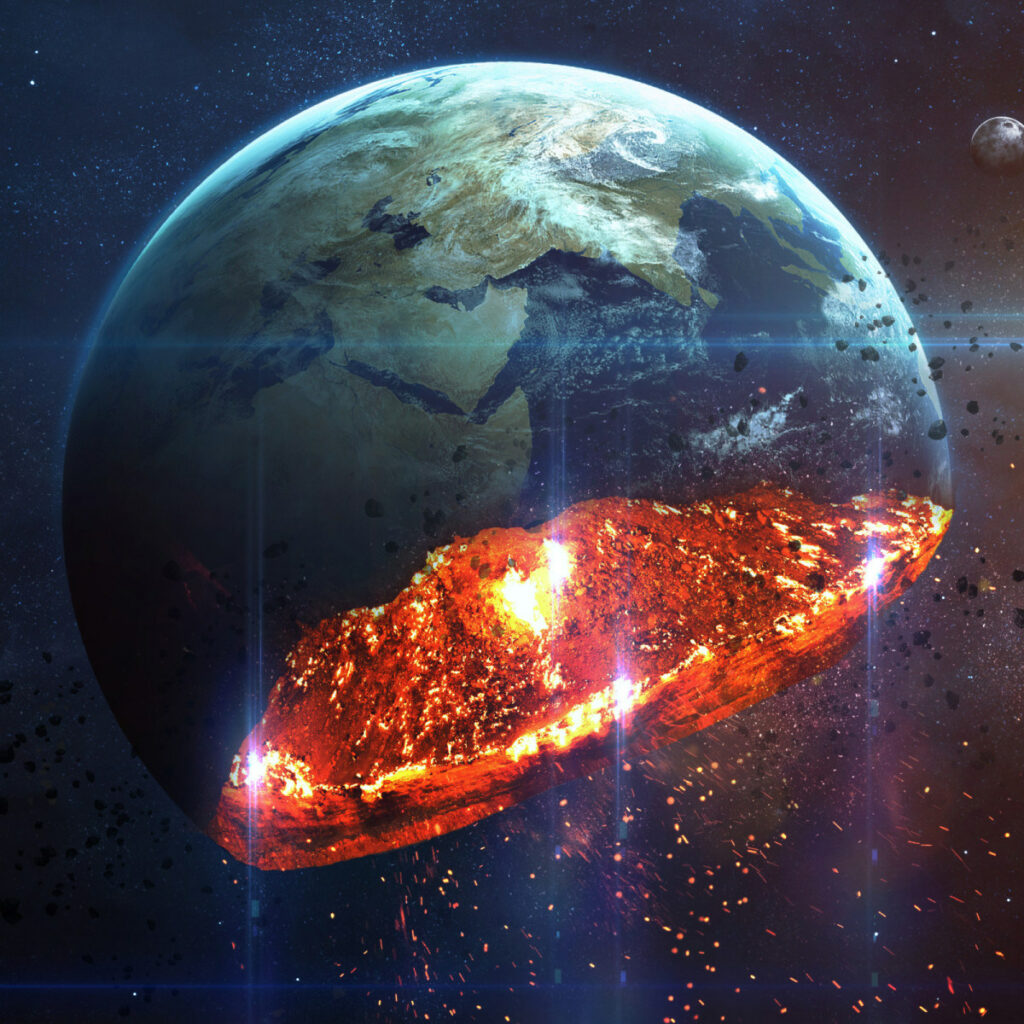
To assess if the universe’s end is fixed, it is essential to review the primary theoretical scenarios proposed by modern cosmology. These models arise from the dynamic interactions between cosmic expansion, gravity, and the mysterious influence of dark energy. The most prominent hypotheses include the Big Freeze, the Big Crunch, the Big Rip, and concepts related to multiverse decay. Each scenario offers a distinct vision of how the universe might evolve or disintegrate, depending on critical factors such as matter density, dark energy’s properties, and quantum effects on a cosmic scale.
The Big Freeze (Heat Death)
Also referred to as Heat Death, the Big Freeze is currently the most widely supported hypothesis. It predicts that the universe will continue expanding at an accelerating pace, driven by dark energy, causing matter and energy to become increasingly sparse and cold. This gradual process leads to a state of maximum entropy, where thermodynamic equilibrium prevails and no usable energy remains to sustain processes or life. Unlike catastrophic endings, the Big Freeze envisions a slow, inevitable decline into cosmic stillness. While this scenario appears highly probable under known physical laws, quantum fluctuations at microscopic levels may introduce some unpredictability, challenging the notion of absolute predetermination.
The Big Crunch
In contrast, the Big Crunch hypothesis envisions a universe where gravitational attraction eventually halts and reverses expansion, causing a collapse back into a dense, hot state similar to the conditions at the Big Bang. This cyclical model suggests the universe could undergo repeated phases of birth, expansion, contraction, and rebirth. If the universe’s total mass-energy density surpasses a critical threshold, the timing and occurrence of the Big Crunch might be predetermined. However, current astronomical observations indicate that cosmic expansion is accelerating, making this scenario less likely under present conditions. Nonetheless, changes in physical laws or parameters over vast timescales could potentially revive this possibility.
The Big Rip
The Big Rip presents a more violent and dramatic end. It hypothesizes that if dark energy’s repulsive force strengthens without bound, it could eventually overpower all fundamental forces binding matter together. This would result in the disintegration of galaxies, stars, planets, and ultimately atomic and subatomic particles. The feasibility of this outcome depends heavily on the nature and evolution of dark energy, which remains poorly understood. The determinism of the Big Rip scenario is contingent on whether these cosmic parameters remain constant or vary unpredictably, leaving room for uncertainty in the universe’s final fate.
Quantum Mechanics and Cosmic Indeterminacy
Beyond large-scale cosmological models, quantum mechanics introduces elements of randomness that complicate the idea of a predetermined cosmic end. Quantum indeterminacy implies that certain events, even on a universal scale, may occur probabilistically rather than deterministically. For example, vacuum decay-a hypothetical quantum tunneling event-could abruptly alter the fundamental constants of nature, triggering a rapid and universe-wide transformation. If such an event is inevitable or already set in motion, it would imply a predetermined end, though one currently beyond our capacity to detect or predict with certainty.
Philosophical Perspectives on Cosmic Determinism
The debate over whether the universe’s fate is fixed or open to chance also encompasses philosophical considerations. Determinism posits that immutable laws and initial conditions govern all cosmic events, leading to a single, inevitable outcome. This view aligns with classical physics and general relativity. Conversely, indeterminism emphasizes the role of randomness, chaos, and quantum uncertainty, suggesting multiple possible futures. The interplay between these viewpoints fuels ongoing discussions about fate, free will, and the nature of time on a cosmic scale.
Advances in Observational Cosmology
Technological progress has greatly enhanced our ability to study the universe’s evolution and refine models of its ultimate fate. Observations of the cosmic microwave background radiation, distant supernovae, and the behavior of dark energy provide critical data that help constrain theoretical predictions. Despite these advances, significant mysteries remain, particularly regarding dark energy’s origin and properties. A deeper understanding of dark energy could decisively influence which cosmological scenario is most accurate, thereby clarifying the question of cosmic predetermination.
The Multiverse Hypothesis and Its Implications
Some theoretical frameworks propose the existence of a multiverse-an ensemble of potentially infinite universes, each with distinct physical laws and initial conditions. Within this context, the fate of our universe might be just one among countless outcomes, possibly local or accidental rather than universally fixed. This perspective challenges the notion of a singular, predetermined cosmic destiny, suggesting instead a probabilistic landscape of diverse cosmic endings.
Why Understanding the Universe’s Fate Is Crucial
Exploring the universe’s ultimate destiny is not only a scientific endeavor but also a profound philosophical quest. It bridges disciplines, from astrophysics to metaphysics, and touches on fundamental questions about existence, time, and causality. Understanding whether the cosmos is governed by fixed laws or open to chance has implications for how we perceive reality and our place within it. Moreover, insights into cosmic evolution inform related fields such as particle physics, thermodynamics, and quantum theory, enriching our overall comprehension of the natural world.
Summary and Ongoing Questions
In conclusion, the question of whether the universe’s end is predetermined remains unresolved. Various theoretical models offer plausible scenarios based on current observations and mathematical frameworks, yet all depend on parameters still under investigation. Quantum effects and speculative ideas add layers of complexity that resist definitive answers. As scientific knowledge progresses, our understanding of the cosmos’s grand design and its final chapter will continue to evolve, inviting perpetual inquiry and wonder.
FAQ
What theories predict the end of the universe?
Theories include the Big Freeze, Big Crunch, and Big Rip, each based on different physical conditions.
What role does dark energy play in the universe's fate?
Dark energy influences cosmic expansion, affecting theories like the Big Freeze and Big Rip.

Leave a Reply