
Short Answer
Overview of the James Webb Space Telescope’s Impact on Cosmology
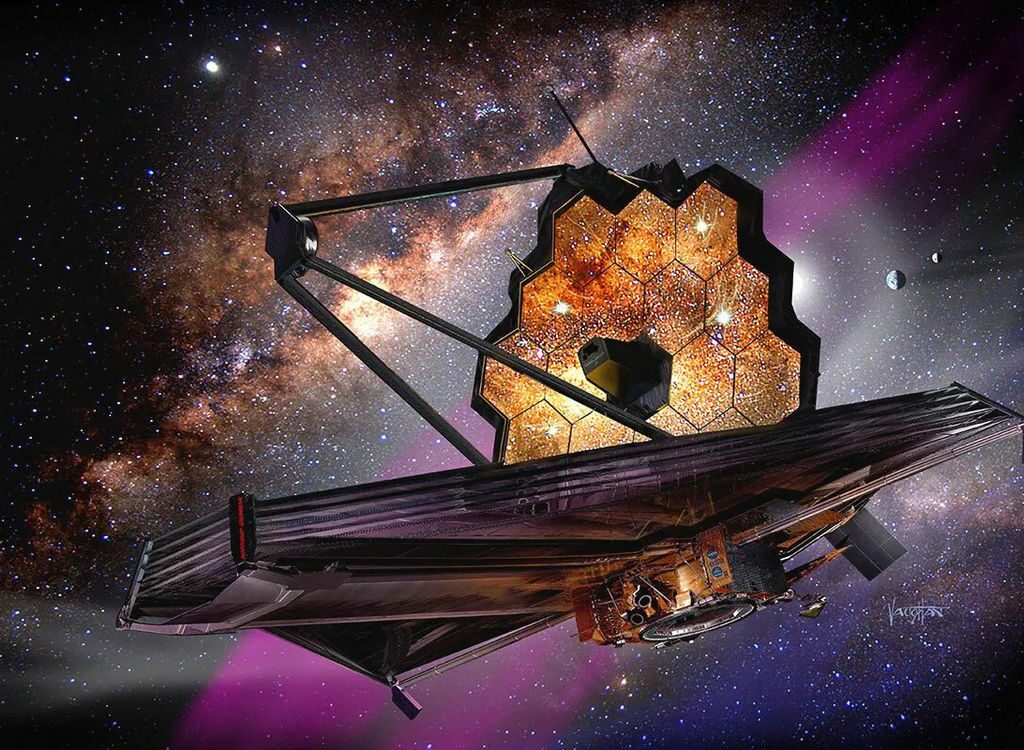
The James Webb Space Telescope (JWST), launched to explore the universe’s earliest epochs with unparalleled clarity, is challenging foundational aspects of cosmological science. Designed to observe the cosmos in infrared wavelengths, JWST reveals details about the formation and evolution of galaxies that were previously inaccessible. These groundbreaking observations are prompting scientists to reconsider long-standing models of the universe’s origin and development.
Definition and Purpose of the James Webb Space Telescope
The JWST is a space-based observatory equipped with advanced infrared instruments, enabling it to peer deeper into space and further back in time than any predecessor. Its mission is to study the first galaxies, stars, and cosmic structures that emerged after the Big Bang, providing insights into the universe’s infancy and the processes that shaped its evolution.
- Infrared Observation:
JWST’s ability to detect infrared light allows it to see through cosmic dust clouds, unveiling objects obscured in visible light. - High Resolution:
The telescope’s sophisticated optics deliver unprecedented detail, capturing the morphology and composition of distant galaxies.
Reevaluating Cosmological Models in Light of JWST Discoveries
For decades, cosmology has relied on data from instruments like the Hubble Space Telescope and cosmic microwave background measurements to construct a coherent narrative of the universe’s evolution. This standard model, often referred to as ΛCDM (Lambda Cold Dark Matter), describes a universe expanding from a hot, dense state, with structures forming gradually over billions of years. However, JWST’s observations reveal galaxies that appear more massive and mature at earlier times than this framework predicts, suggesting a need to revisit the timeline and mechanisms of cosmic structure formation.
Unexpected Early Galaxy Formation
Contrary to expectations of observing only primitive, nascent galaxies, JWST has detected surprisingly developed galactic systems in the universe’s infancy. These findings imply that star formation and matter aggregation occurred more rapidly and dynamically than previously thought, challenging assumptions about the pace and nature of early cosmic evolution.
Implications for Dark Matter and Dark Energy Theories
The anomalies uncovered by JWST raise questions about the roles of dark matter and dark energy in shaping the early universe. The telescope’s data may indicate that current models oversimplify these components or that new physics beyond the ΛCDM paradigm is necessary to explain the observed phenomena.
How JWST’s Infrared Capabilities Enhance Cosmic Understanding
Operating primarily in the infrared spectrum, JWST can penetrate dense cosmic dust clouds that obscure many celestial objects in visible light. This capability allows astronomers to study the chemical makeup, age, and structure of early galaxies with unprecedented precision, offering a clearer picture of the universe’s formative stages.
The Hubble Tension and JWST’s Role in Resolving It
The “Hubble tension” refers to the discrepancy between measurements of the universe’s expansion rate derived from local observations and those inferred from the cosmic microwave background. JWST’s insights into early galaxy formation and cosmic conditions may provide critical data to reconcile these conflicting values, potentially leading to refinements in fundamental cosmological parameters.
Reassessing Astrophysical Chronometers and Stellar Evolution
JWST’s detailed analysis of ancient stellar populations reveals unexpected patterns in metallicity and starburst activity, suggesting that traditional models of stellar evolution and star formation rates may require adjustment. These findings could lead to a more nuanced understanding of how stars and galaxies develop over cosmic time.
Common Misconceptions About JWST’s Impact on Cosmology
JWST has definitively disproven the Big Bang theory.
While JWST’s data challenge certain aspects of cosmological models, they do not invalidate the Big Bang framework but rather encourage refinement and deeper investigation.
The telescope’s findings mean all previous cosmological research is obsolete.
JWST builds upon and extends prior knowledge, offering new perspectives that complement and enhance existing theories.
Significance of JWST’s Discoveries in Modern Science
The revelations from JWST underscore the dynamic and evolving nature of scientific inquiry. By exposing gaps and inconsistencies in current cosmological understanding, the telescope drives progress and innovation in astrophysics. Its findings not only deepen our comprehension of the universe’s origins but also inspire new theoretical developments and technological advancements.
Future Directions and Theoretical Challenges
As JWST continues to collect data, cosmologists face critical decisions about how to integrate these insights. Potential avenues include revising the ΛCDM model, exploring alternative dark matter candidates such as primordial black holes, or proposing entirely new cosmological principles. Each path holds profound implications for our grasp of the cosmos and humanity’s place within it.
Conclusion: Embracing the Cosmic Enigma
The James Webb Space Telescope serves as a catalyst for renewed curiosity and critical examination in cosmology. Rather than signaling a breakdown of the field, its discoveries invite scientists to refine their models and expand their horizons. The universe remains a complex and mysterious entity, and JWST is our most powerful tool yet for unraveling its secrets, encouraging us to listen more intently to the stories written in the stars.




Leave a Reply