
Short Answer
Understanding the Concept of Dark Matter and Modified Gravity
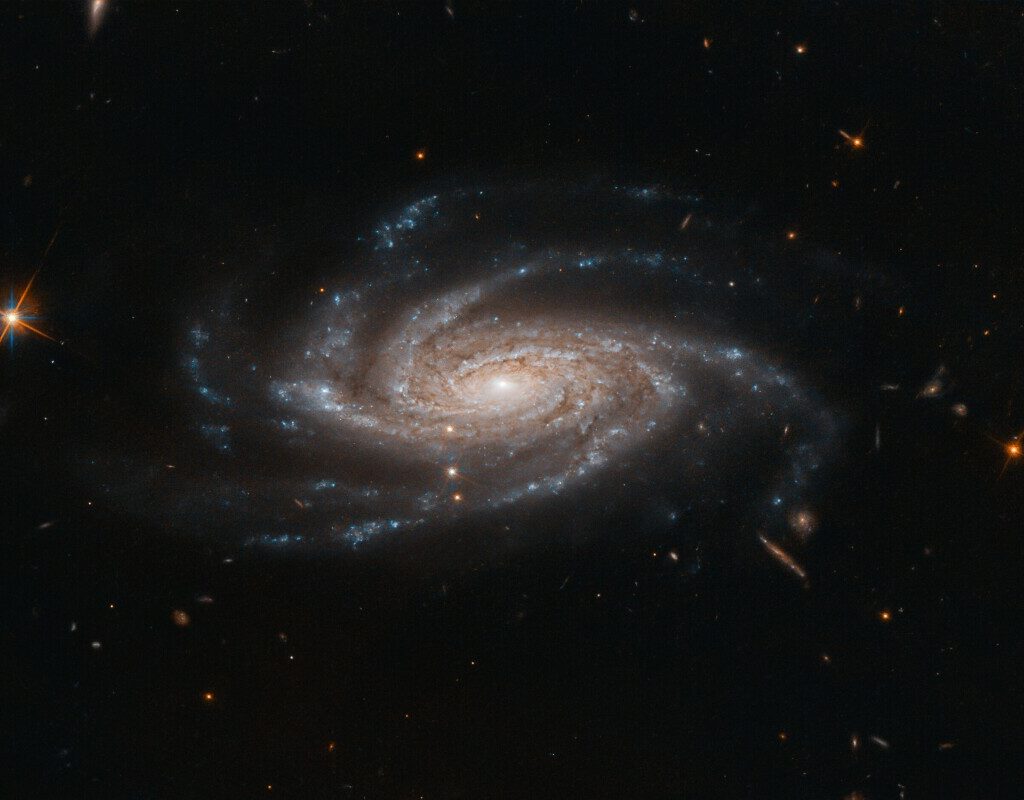
The universe can be envisioned as a vast cosmic symphony, where every celestial entity-from galaxies to stars and planets-performs in harmony under the direction of gravity. This fundamental force orchestrates the movements and interactions of cosmic bodies. However, astronomers have long observed phenomena that challenge this harmonious picture, such as galaxies rotating at speeds that visible matter alone cannot justify, and galaxy clusters moving in unexpected ways. To explain these discrepancies, scientists introduced the idea of dark matter: an invisible, yet abundant form of matter that exerts gravitational influence without emitting or absorbing light. But an alternative perspective suggests that these anomalies might not stem from unseen matter, but rather from a need to revise our understanding of gravity itself.
Definition of Dark Matter and Modified Gravity
Dark Matter: A hypothesized form of matter that does not interact with electromagnetic radiation, making it invisible to current detection methods. It is believed to constitute about 85% of the total matter in the universe and serves as the gravitational glue holding galaxies and clusters together.
Modified Gravity: A theoretical framework proposing that the laws of gravity differ from classical Newtonian and Einsteinian descriptions under certain cosmic conditions, potentially eliminating the need for dark matter by altering how gravity behaves at large scales or low accelerations.
Historical Background and Emergence of Modified Gravity Theories
The dark matter hypothesis has dominated cosmology for decades, driven by the inability of visible matter to account for observed gravitational effects. Despite extensive experimental efforts, the particles constituting dark matter remain undetected, prompting some physicists to reconsider the fundamental laws governing gravity. In the 1980s, Modified Newtonian Dynamics (MOND) was introduced, suggesting that at extremely low accelerations, gravity’s behavior deviates from Newton’s laws. This adjustment successfully explained the rotation curves of galaxies without invoking unseen matter.
Principles Behind Modified Gravity
Modified gravity theories propose that gravity is not a fixed, universal force but one that can change its strength or characteristics depending on the environment. Instead of a constant force, gravity acts like a chameleon, adapting its influence based on cosmic context. This approach treats the universe as a dynamic fabric where gravitational interactions are more complex and nuanced than previously thought.
Advanced Theoretical Models
Building on MOND, more sophisticated models such as Modified Gravity (MOG) and Scalar-Tensor-Vector Gravity (STVG) have been developed. These theories introduce additional fields and interactions that modify gravitational dynamics across different scales. Their goal is to not only explain galactic rotation curves but also address phenomena like gravitational lensing, the formation of large-scale cosmic structures, and the accelerating expansion of the universe. These frameworks aim to present gravity as a multifaceted interaction, capable of producing effects traditionally attributed to dark matter.
Mathematical Framework and Formulations
While classical gravity is described by Newton’s law of universal gravitation and Einstein’s General Relativity, modified gravity theories incorporate new terms or fields into the gravitational equations. For example, MOND modifies Newton’s second law at low accelerations:
- MOND formula:
( muleft(frac{a}{a_0}right) a = frac{GM}{r^2} )
where (a) is the acceleration, (a_0) is a characteristic acceleration scale, (G) is the gravitational constant, (M) is the mass, and (r) is the distance from the mass. The function (mu(x)) transitions between Newtonian and modified regimes.
More complex theories like MOG and STVG introduce scalar, tensor, and vector fields that modify the gravitational potential and force laws, often requiring numerical methods for precise predictions.
Empirical Evidence and Observational Tests
Galactic rotation curves remain a critical testing ground for both dark matter and modified gravity. While dark matter halos provide a straightforward explanation, modified gravity models can replicate these curves without unseen mass. Gravitational lensing, the bending of light by massive objects, offers another observational test. Historically, modified gravity struggled to fully explain lensing in galaxy clusters, but recent refinements have improved their predictive power.
Cosmological observations, including the cosmic microwave background radiation and the distribution of large-scale structures, also challenge modified gravity theories. The Lambda Cold Dark Matter (ΛCDM) model, which incorporates dark matter, has been highly successful in explaining these phenomena, whereas modified gravity models often require additional complexity to match observations.
Common Misconceptions About Dark Matter and Modified Gravity
Dark matter particles have been definitively detected.
Despite extensive searches, no direct detection of dark matter particles has been confirmed.
Modified gravity theories completely replace the need for dark matter.
While some modified gravity models explain certain phenomena without dark matter, many require additional components or fail to account for all observations.
Gravity is a fixed, unchanging force.
Modified gravity theories propose that gravitational behavior can vary depending on scale or environment.
Significance of Modified Gravity in Modern Physics
Exploring modified gravity is crucial for advancing our understanding of fundamental physics and cosmology. It challenges the prevailing paradigm by questioning whether unseen matter or new gravitational laws better explain cosmic phenomena. This inquiry has profound implications for unifying gravity with quantum mechanics and for developing a more comprehensive theory of the universe. Moreover, it reflects humanity’s quest for conceptual elegance and simplicity in describing nature.
Philosophical and Scientific Implications
The debate between dark matter and modified gravity touches on deep philosophical questions about the nature of reality and scientific methodology. Should scientists introduce unseen entities to preserve existing laws, or revise the laws themselves to fit observations? Modified gravity invites us to reconsider gravity not as a rigid law but as a dynamic, evolving interaction. This perspective enriches our cosmic narrative, portraying the universe as a complex interplay of forces that adapt and transform.
Future Directions and Open Questions
The ultimate resolution of whether dark matter or modified gravity better describes the universe remains an open question. Ongoing and future observations, including more precise measurements of galactic dynamics, gravitational lensing, and cosmological parameters, will continue to test these theories. Advances in theoretical physics, particularly in quantum gravity, may also provide new insights. Regardless of the outcome, the exploration of modified gravity deepens our appreciation of the universe’s complexity and the limits of human knowledge.
Conclusion
The proposition that dark matter might be a manifestation of a novel form of gravity represents a profound scientific and philosophical challenge. It blurs the distinction between matter and force, urging a reevaluation of fundamental cosmic principles. Whether modified gravity will ultimately supplant dark matter or coexist within a broader framework, this inquiry enriches our understanding of the cosmos and inspires continued exploration into the unseen rhythms of the universe’s grand symphony.
Leave a Reply