
Short Answer
Definition of Dark Matter and Dark Energy
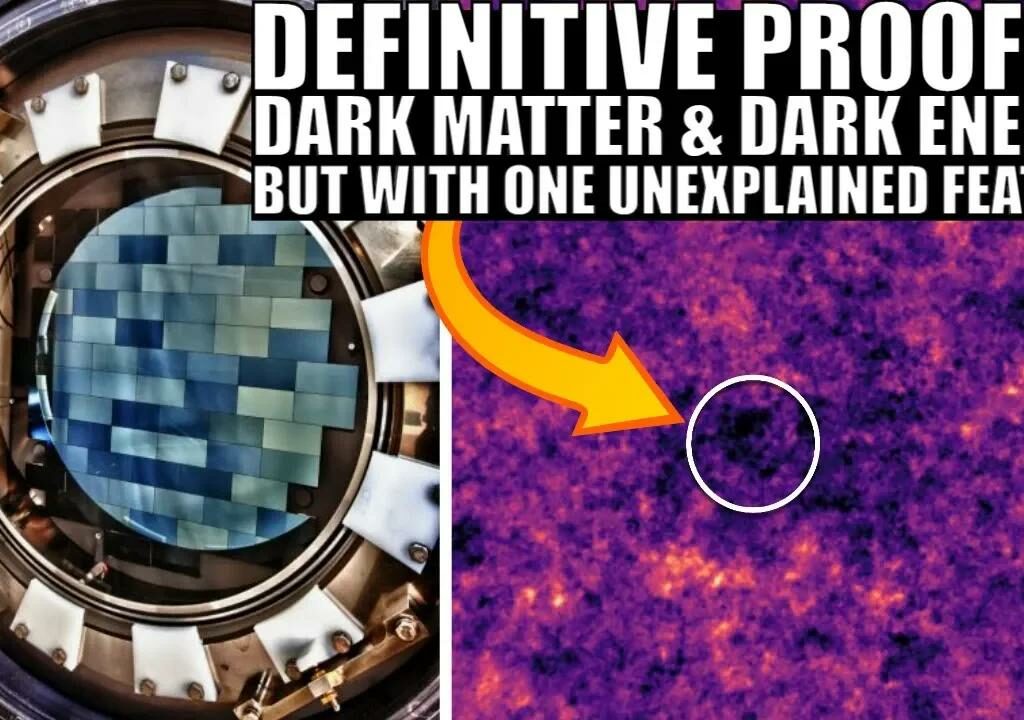
Dark matter and dark energy are two fundamental yet mysterious components believed to constitute the majority of the universe’s mass-energy content. Despite their elusive nature, they play crucial roles in shaping the cosmos.
- Dark Matter:
An invisible form of matter that does not emit, absorb, or reflect light, making it undetectable by conventional electromagnetic observations. It is inferred from gravitational effects on visible matter, radiation, and the large-scale structure of the universe. - Dark Energy:
A mysterious form of energy responsible for the accelerated expansion of the universe. It counteracts gravitational attraction on cosmic scales and is thought to make up the largest portion of the universe’s energy budget.
Historical Background and Discovery
The concept of dark matter emerged in the early 20th century when astronomers observed gravitational phenomena that could not be explained by visible matter alone. Studies of galaxy clusters and the rotational speeds of stars revealed discrepancies indicating the presence of an unseen mass exerting gravitational influence.
Dark energy was identified much later, in the late 1990s, through observations of distant supernovae that demonstrated the universe’s expansion is accelerating rather than slowing down, as previously assumed.
Composition and Proportions in the Universe
Current cosmological models estimate that dark matter constitutes about 27% of the universe’s total mass-energy, while dark energy accounts for approximately 68%. Ordinary matter-the atoms and molecules that make up stars, planets, and living beings-comprises only about 5%.
How Dark Matter and Dark Energy Influence the Universe
Dark matter’s gravitational pull is essential for the formation and stability of galaxies and galaxy clusters. It acts as a cosmic scaffold, influencing the distribution and motion of visible matter.
Dark energy, on the other hand, drives the accelerated expansion of the universe, pushing galaxies apart at an increasing rate and shaping the universe’s large-scale structure and ultimate fate.
Methods of Detection and Evidence
Since dark matter does not interact with electromagnetic radiation, its presence is inferred through indirect observations:
- Gravitational Lensing:
The bending of light from distant objects by massive invisible matter reveals the distribution of dark matter. - Cosmic Microwave Background (CMB) Fluctuations:
Variations in the CMB provide clues about the early universe’s composition, including dark matter density. - Galactic Rotation Curves:
The unexpectedly high rotational speeds of stars in galaxies suggest additional unseen mass.
Dark energy’s evidence primarily comes from observations of the universe’s accelerated expansion, measured through supernovae brightness and large-scale cosmic surveys.
Theoretical Models and Scientific Debates
Dark matter is often modeled as consisting of particles such as Weakly Interacting Massive Particles (WIMPs) or axions, which are subjects of ongoing experimental searches. Dark energy is frequently represented as a cosmological constant or dynamic fields like quintessence, though its true nature remains speculative.
Alternative theories challenge the necessity of dark matter and dark energy, proposing modifications to gravity or emergent phenomena to explain observations without invoking unseen substances. These include Modified Newtonian Dynamics (MOND) and emergent gravity frameworks.
Challenges and Open Questions
- Direct Detection:
Despite extensive efforts, no conclusive direct detection of dark matter particles has been achieved, leaving their exact properties unknown. - Nature of Dark Energy:
The fundamental origin and mechanism behind dark energy’s repulsive effect remain unresolved, with theoretical models facing significant challenges such as the cosmological constant problem. - Limits of Current Physics:
These mysteries highlight potential gaps in our understanding of fundamental physics, possibly requiring new theories beyond the Standard Model and General Relativity.
Significance in Cosmology and Physics
Understanding dark matter and dark energy is pivotal for explaining the universe’s structure, evolution, and ultimate destiny. They influence galaxy formation, cosmic expansion, and the fundamental laws governing matter and energy. Breakthroughs in this area could revolutionize physics, offering insights into quantum mechanics, gravity, and the fabric of spacetime.
Real-World Implications and Future Prospects
While dark matter and dark energy may seem abstract, their study drives technological advancements in observational astronomy, particle physics, and computational modeling. Upcoming experiments and surveys aim to refine measurements and potentially detect dark matter particles, while theoretical innovations seek to unravel dark energy’s essence.
The ongoing scientific dialogue fosters a dynamic environment where hypotheses evolve, and new paradigms may emerge, expanding humanity’s cosmic perspective.
Common Misconceptions
Dark matter and dark energy are the same.
They are distinct phenomena; dark matter exerts gravitational attraction, while dark energy causes cosmic acceleration.
Dark matter is just ordinary matter that is hidden.
Dark matter is fundamentally different from ordinary matter and does not interact electromagnetically.
Dark energy is well understood.
Dark energy’s nature is still largely theoretical and remains one of the biggest open questions in physics.
Conclusion: The Ongoing Quest to Illuminate the Dark Universe
Dark matter and dark energy epitomize the frontier of modern astrophysics and cosmology. Whether they ultimately prove to be tangible entities or placeholders for deeper physical laws, their study challenges and enriches our understanding of the cosmos. This pursuit embodies the essence of scientific exploration-balancing empirical evidence with theoretical innovation to unravel the universe’s profound mysteries beyond the visible and measurable.
FAQ
What is dark matter?
Dark matter is an invisible form of matter that does not emit light, inferred from gravitational effects.
What role does dark energy play?
Dark energy is responsible for the accelerated expansion of the universe.
How can dark matter be detected?
Dark matter's presence is inferred through gravitational lensing and cosmic microwave background observations.



Leave a Reply