
Short Answer
Overview of the James Webb Space Telescope
The James Webb Space Telescope (JWST) represents a monumental stride in humanity’s pursuit to unravel the mysteries of the cosmos. As a cutting-edge observatory, it surpasses previous space telescopes by offering unprecedented insights into the universe’s distant past and complex phenomena. This advanced instrument is designed to explore cosmic history with remarkable precision, revealing secrets that have long eluded astronomers.
Definition and Purpose
The JWST is a space-based observatory optimized for infrared astronomy, enabling scientists to study celestial objects and events that are otherwise obscured in visible light. Its primary mission is to investigate the formation of the earliest galaxies, stars, and planetary systems, as well as to analyze the atmospheres of exoplanets for potential signs of habitability.
- Infrared Observation:
The telescope focuses on the infrared spectrum, which allows it to penetrate cosmic dust clouds and observe phenomena hidden from optical telescopes. - Exploration of Cosmic Origins:
JWST aims to detect light from the universe’s first luminous bodies, providing a window into the formative epochs following the Big Bang. - Exoplanetary Studies:
By examining the chemical composition of exoplanet atmospheres, the telescope contributes to the search for extraterrestrial life.
Technical Design and Location
The JWST’s engineering marvel lies in its large segmented mirror and strategic positioning in space. Its primary mirror, composed of 18 hexagonal segments made from lightweight beryllium, measures 6.5 meters in diameter-significantly larger than the Hubble Space Telescope’s mirror. This expansive aperture enhances its ability to collect faint light from distant cosmic sources.
Positioned at the second Lagrange point (L2), approximately 1.5 million kilometers from Earth, the telescope benefits from a stable thermal environment and minimal interference from Earth’s atmosphere and radiation. This location is ideal for maintaining the cryogenic temperatures necessary for infrared observations.
How the JWST Operates
The telescope functions by capturing infrared light emitted or reflected by celestial objects. Infrared wavelengths are longer than visible light, allowing them to pass through interstellar dust clouds that typically obscure observations. This capability enables JWST to peer into star-forming regions, distant galaxies, and planetary atmospheres with exceptional clarity.
Its instruments include near-infrared and mid-infrared cameras and spectrometers, which analyze the light’s intensity and spectral composition. This data reveals physical properties such as temperature, chemical makeup, and motion, providing comprehensive insights into the observed objects.
Scientific Significance and Discoveries
One of JWST’s most groundbreaking contributions is its ability to observe the universe’s earliest galaxies and stars, formed just a few hundred million years after the Big Bang. By detecting the redshifted infrared light from these primordial objects, the telescope effectively acts as a time machine, allowing astronomers to study the conditions of the early cosmos.
Additionally, JWST’s examination of exoplanet atmospheres through spectroscopy offers the potential to identify biomarkers-chemical indicators that may suggest the presence of life. This capability marks a significant advancement in the ongoing quest to determine whether Earth is unique in hosting life.
Technological Innovations and Engineering Feats
The deployment of the JWST involved complex engineering solutions, including the unfolding of its segmented mirror and sunshield in space. The sunshield, composed of multiple layers of specialized material, protects the telescope from solar radiation and helps maintain the extremely low temperatures required for infrared detection.
These technological breakthroughs not only enable JWST’s mission but also set new standards for future space exploration instruments. The precision engineering involved has implications beyond astronomy, influencing fields such as materials science and optical engineering.
Impact on Society and Culture
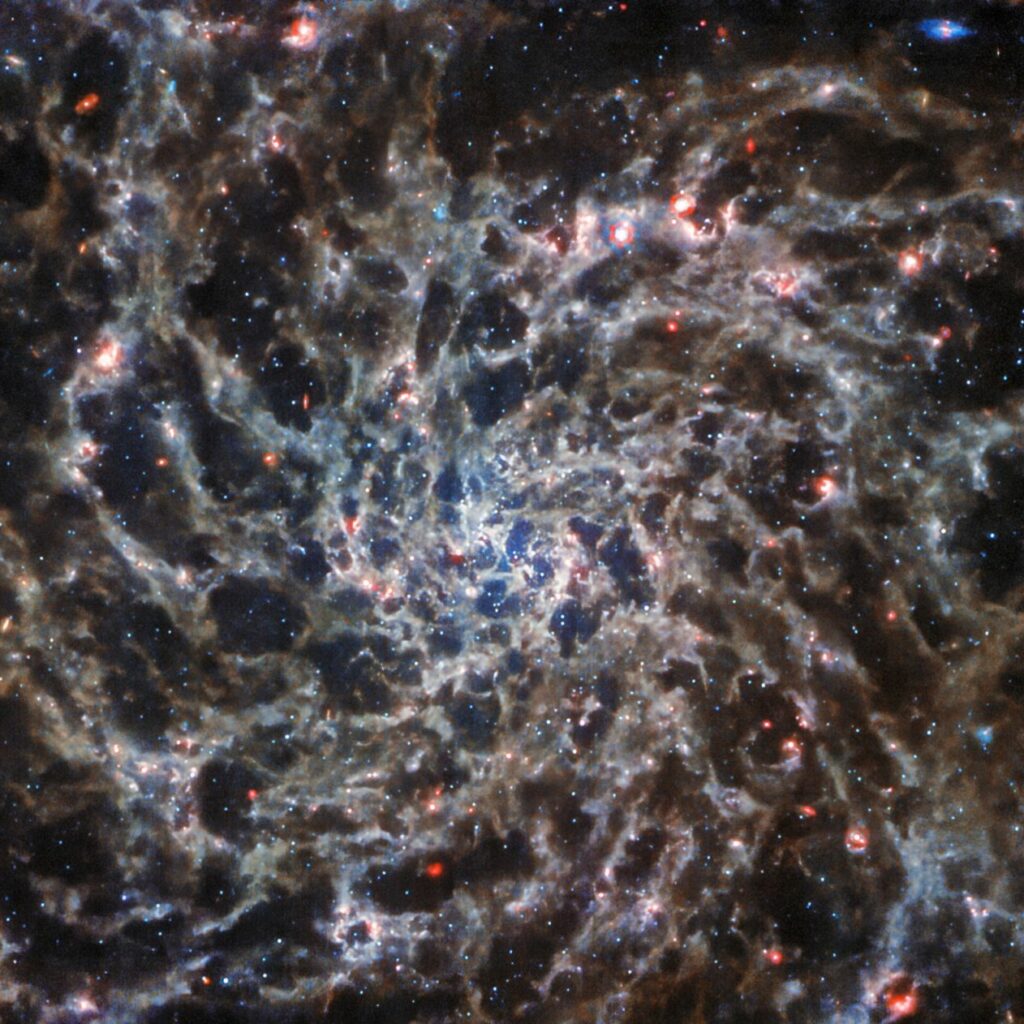
Beyond its scientific achievements, the JWST inspires a profound cultural and philosophical reflection on humanity’s place in the universe. The breathtaking images and data it provides connect the public with the grandeur of cosmic phenomena, fostering a sense of wonder and curiosity.
This fusion of science and art encourages interdisciplinary dialogue, enriching perspectives across scientific, philosophical, and artistic communities. The telescope’s revelations serve as a reminder of the intricate beauty and complexity of the cosmos.
Common Misconceptions About the JWST
JWST is simply a more powerful version of the Hubble Space Telescope.
While JWST builds on Hubble’s legacy, it operates primarily in the infrared spectrum and is designed to observe phenomena that Hubble cannot, such as the earliest galaxies and exoplanet atmospheres.
The telescope’s distance at L2 means it is unreachable and unserviceable.
Although JWST is positioned far from Earth, its design incorporates autonomous systems to ensure long-term operation without the need for servicing missions like those conducted for Hubble.
Why the James Webb Space Telescope Is Crucial
The JWST represents a transformative advancement in astrophysics and space exploration. By extending our observational reach deeper into the universe’s history and examining the conditions of distant worlds, it addresses fundamental questions about cosmic origins, evolution, and the potential for life beyond Earth.
Its discoveries will not only expand scientific knowledge but also inspire future generations of researchers and explorers. The telescope’s legacy will shape the trajectory of space science and technology for decades to come, underscoring humanity’s enduring quest to comprehend the cosmos.
Conclusion: A New Era of Cosmic Exploration
As the James Webb Space Telescope continues its mission, it opens new frontiers in our understanding of the universe. Each observation enriches the tapestry of cosmic knowledge, challenging existing theories and sparking fresh inquiries. The JWST stands as a testament to human creativity and determination, illuminating the vast and intricate universe that surrounds us.
FAQ
What is the purpose of the James Webb Space Telescope?
The JWST aims to explore cosmic history, study the formation of galaxies, and analyze exoplanet atmospheres for signs of habitability.
How does JWST differ from the Hubble Space Telescope?
Unlike Hubble, which observes in visible light, JWST primarily operates in the infrared spectrum, enabling it to see through cosmic dust and observe earlier cosmic epochs.




Leave a Reply