
Short Answer
Definition of Space Telescopes
Space telescopes are advanced observational instruments positioned beyond Earth’s atmosphere, designed to capture detailed images and data from distant celestial objects. By operating in orbit, they avoid atmospheric distortion and light pollution, enabling astronomers to study galaxies, nebulae, stars, and other cosmic phenomena with unparalleled clarity.
- Purpose:
To observe the universe in wavelengths often blocked or distorted by Earth’s atmosphere. - Location:
Placed in various orbits, from low Earth orbit to distant points like the second Lagrange point (L2). - Significance:
Provide critical insights into astrophysics, cosmology, and planetary science.
Challenges in Repairing Space Telescopes
Despite their sophisticated design and scientific value, space telescopes face significant obstacles when it comes to maintenance and repair. Unlike terrestrial equipment, these instruments are situated in remote, harsh environments that make conventional repair methods impractical or impossible.
Remote Location and Accessibility
Space telescopes orbit hundreds to thousands of kilometers above Earth, placing them far beyond the reach of routine maintenance crews. Unlike satellites that can be remotely rebooted or replaced, these observatories require highly specialized, manual servicing that current spaceflight capabilities rarely support. Repair missions demand extensive planning, training, and resources, making them infrequent and costly endeavors.
High Costs and Risks of Servicing Missions
Launching astronauts or robotic systems to conduct repairs involves complex logistics, including rocket launches, life support systems, precision tools, and mission control coordination. Each mission carries inherent risks such as equipment failure, exposure to space hazards like micrometeoroids and solar radiation, and potential threats to human life. Consequently, servicing is only undertaken when the scientific benefits justify the substantial financial and safety risks.
Delicate and Complex Design
Space telescopes incorporate ultra-precise components, such as mirrors and sensors, that require immaculate conditions to function optimally. Even minor contamination or damage can degrade performance significantly. Repairing or replacing these parts demands meticulous micromanipulation under zero-gravity conditions, a task far more challenging than terrestrial repairs.
Case Study: The Hubble Space Telescope
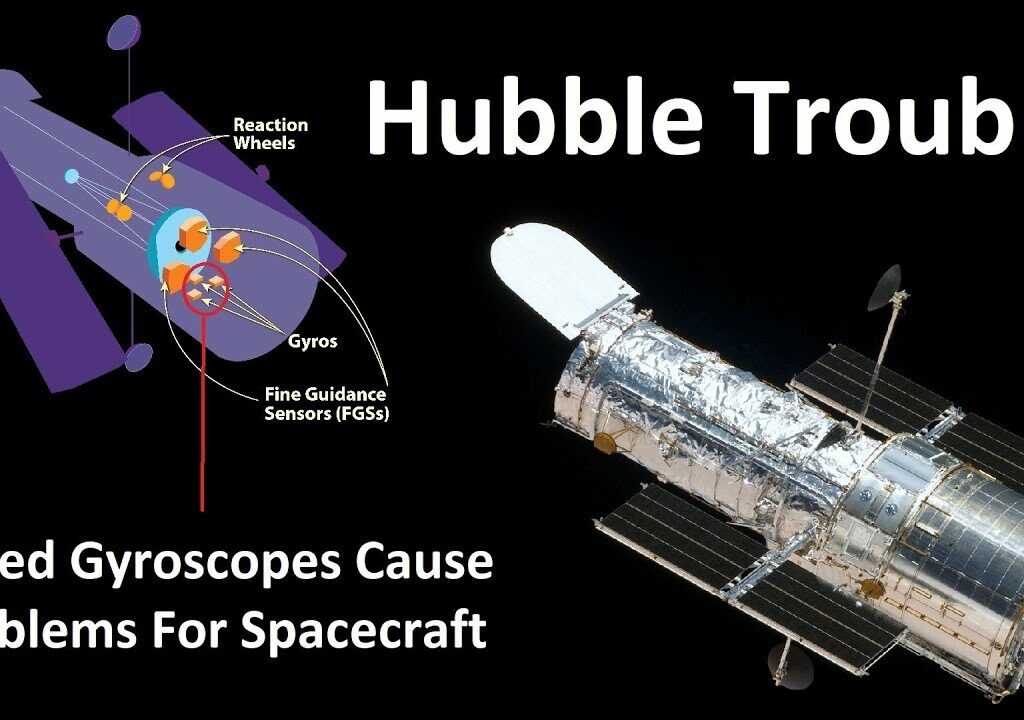
The Hubble Space Telescope exemplifies both the possibilities and difficulties of space telescope repair. Over nearly 30 years, it underwent five servicing missions via the Space Shuttle program, where astronauts performed intricate tasks like replacing gyroscopes and upgrading instruments. These missions extended Hubble’s operational life and enhanced its capabilities. However, such servicing is exceptional, enabled by Hubble’s relatively close low Earth orbit and the unique capabilities of the now-retired Space Shuttle.
Limitations of Repair for Modern Telescopes
Newer observatories, such as the James Webb Space Telescope, operate at much greater distances-near the second Lagrange point (L2), about 1.5 million kilometers from Earth. This vast separation makes human repair missions currently unfeasible due to extended travel times, lack of return paths, and logistical complexity. As a result, these telescopes must rely heavily on initial design robustness and redundancy, as in-orbit repairs are effectively impossible.
Environmental Factors Affecting Space Telescopes
The space environment subjects telescopes to extreme conditions, including:
- Temperature Extremes:
Rapid and severe fluctuations can stress materials and electronics. - Radiation Exposure:
High-energy particles degrade components over time. - Micrometeoroid Impacts:
Tiny, high-velocity particles can cause physical damage.
Protective coatings and shielding mitigate some effects, but degradation is inevitable and irreversible once deployed.
Design Strategies to Mitigate Repair Challenges
Given the impracticality of frequent repairs, engineers emphasize durability and self-sufficiency in space telescope design. Key approaches include:
- Redundancy:
Incorporating backup systems to maintain functionality if primary components fail. - Modularity:
Designing components that can be independently isolated or replaced if servicing becomes possible. - Autonomous Operation:
Implementing software and hardware capable of self-correction, remote calibration, and adaptive performance.
Future Prospects for Space Telescope Maintenance
Emerging technologies offer promising avenues to overcome current repair limitations:
- Robotic Servicing:
Advanced robots equipped with dexterous manipulators and artificial intelligence could perform repairs, upgrades, or refueling without human presence. - In-Orbit Upgrades:
Concepts for modular upgrades or component recycling may extend telescope lifespans beyond initial designs. - Distributed Satellite Networks:
Swarms of small, cost-effective nanosatellites could collectively replace the function of single large telescopes, reducing the impact of individual failures.
Common Misconceptions About Space Telescope Repairs
Space telescopes can be easily repaired like terrestrial equipment.
Their remote location, delicate design, and harsh environment make repairs highly complex and rare.
All space telescopes orbit close enough for human servicing.
Many modern telescopes operate at distant points like L2, beyond current human reach.
Significance of Repair Challenges in Space Exploration
The difficulty of repairing space telescopes profoundly influences their design, operation, and scientific impact. It drives innovation toward more resilient, autonomous systems and shapes mission planning to maximize longevity and data return. Understanding these constraints highlights the delicate balance between human ambition and the unforgiving nature of space, underscoring the remarkable achievements embodied by each telescope launched into orbit.
Conclusion
Space telescopes stand as monumental achievements in humanity’s quest to explore the universe. Their inability to be easily repaired is not merely a technical limitation but a defining characteristic that shapes their entire lifecycle. As technology advances, new strategies and innovations promise to transform how we maintain and enhance these instruments, ensuring that future generations of space observatories continue to expand our cosmic horizons.
FAQ
Why can't space telescopes be easily repaired?
Space telescopes operate in remote and harsh environments, making conventional repairs impractical due to accessibility, high costs, and the delicate nature of their components.
What are the risks associated with servicing space telescopes?
Servicing missions involve complex logistics and significant risks, including equipment failure and exposure to space hazards.


Leave a Reply