
Short Answer
Understanding the Universe: An Evolving Perspective
For millennia, humanity has been captivated by the vastness and mysteries of the cosmos. However, our grasp of the universe is far more fragile and fluid than once believed. Contrary to the classical view of a static and orderly cosmos, modern science reveals a dynamic and complex universe, shaped by enigmatic forces and intricate structures that challenge traditional understanding. This ongoing evolution in cosmology compels us to reconsider the fundamental nature of reality and question long-held intellectual assumptions.
Historical Shift in Cosmological Thought
The transformation in our cosmic worldview began with the groundbreaking realization that the universe is not a calm, eternal expanse but one that has been expanding since its origin. Initially met with skepticism, this discovery revolutionized cosmology and prompted deeper inquiries into the essence of space and time. As the 20th century progressed, advances in astrophysics unveiled a cosmos far more elaborate than previously imagined, spanning both immense and microscopic scales.
Composition of the Universe: Beyond Visible Matter
Observations have shown that the stars, galaxies, and nebulae visible through telescopes represent only a small fraction of the universe’s total content. The majority consists of two mysterious components: dark matter and dark energy. These invisible substances dominate approximately 95% of the universe’s mass-energy, exerting profound gravitational effects despite eluding direct detection.
- Dark Matter:
Acts as an unseen framework, providing the gravitational pull necessary for the formation of galaxies and larger cosmic structures. Its exact nature remains unknown, with theories proposing candidates such as weakly interacting massive particles (WIMPs) and ultra-light bosons. - Dark Energy:
Drives the accelerated expansion of the universe, counteracting gravitational attraction. This repulsive force embedded in spacetime challenges conventional physics and suggests the existence of new fundamental forces or a need to rethink gravity itself.
Spacetime and Cosmic Architecture
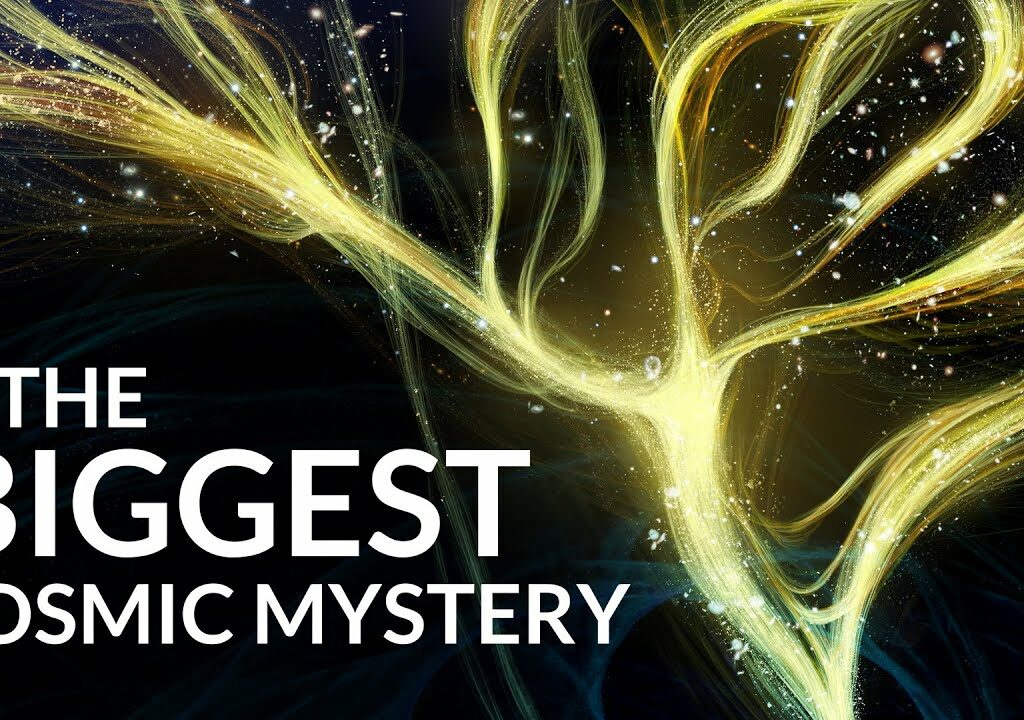
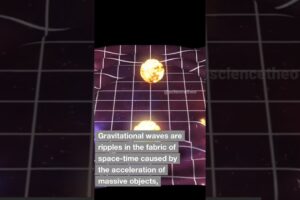
Our understanding of spacetime has evolved from viewing it as a passive backdrop to recognizing it as a flexible fabric that bends and stretches under the influence of mass and energy. Recent research highlights the universe’s large-scale structure as a cosmic web composed of voids, filaments, and sheets. This intricate network reveals a universe organized by complex patterns of clustering and emptiness extending across billions of light-years.
Accelerating Expansion and Its Implications
The discovery that the universe’s expansion is accelerating contradicts earlier models that assumed a steady or slowing rate. This acceleration implies the presence of a pervasive energy with negative pressure, confirmed by observations such as distant supernovae. Key questions arise from this phenomenon:
- Is dark energy a constant force, or does it change over time?
- What ultimate fate awaits the universe-will it experience a “big freeze,” “big rip,” or another exotic end?
Cosmic Microwave Background and Early Universe Mysteries
The cosmic microwave background radiation, the residual glow from the Big Bang, contains subtle fluctuations that seeded the formation of galaxies and large-scale structures. However, recent anomalies in this radiation challenge standard cosmological models, suggesting that the early universe may have undergone unexpected phases or processes. These findings have led scientists to explore advanced inflationary theories and even consider the possibility of a multiverse.
Quantum Mechanics and the Quest for Unified Understanding
Quantum theory adds further complexity to our cosmic picture, especially when combined with general relativity in extreme environments like black holes or the universe’s earliest moments. The search for a unified theory of quantum gravity remains unresolved, with promising but incomplete frameworks such as string theory and loop quantum gravity awaiting experimental validation.
Philosophical Reflections on the Universe
These scientific revelations prompt profound philosophical considerations. Rather than a predictable, deterministic system, the universe appears as a complex, evolving entity that continually reveals new mysteries. Each discovery deepens our understanding while simultaneously uncovering further enigmas, illustrating the dynamic relationship between knowledge and the unknown.
The Ongoing Journey of Cosmic Discovery
Our comprehension of the universe is not a fixed destination but an ever-progressing voyage. Each era of discovery challenges previous certainties and expands the horizons of possibility. The cosmos is a grand, unfolding narrative-a sophisticated interplay of forces, energies, and phenomena that transcend ordinary experience and inspire us to broaden the limits of imagination.
Significance of Cosmic Exploration
Exploring the universe is not only a scientific endeavor but also an existential one, reshaping our understanding of humanity’s place within the vast and continuously evolving cosmos. The universe is far more wondrous, elusive, and profound than once thought. This realization offers both humility and excitement, affirming that the pursuit of knowledge is infinite and that each new insight opens fresh realms of awe and curiosity.
FAQ
What is dark matter?
Dark matter is an unseen framework that provides the gravitational pull necessary for the formation of galaxies and larger cosmic structures.
What is dark energy?
Dark energy drives the accelerated expansion of the universe and is believed to have negative pressure.
How has our understanding of spacetime changed?
Spacetime is now viewed as a flexible fabric that bends and stretches under the influence of mass and energy.


Leave a Reply