
Short Answer
Definition of Famous Space Missions
Famous space missions refer to landmark journeys and explorations beyond Earth’s atmosphere that have significantly advanced human knowledge of the cosmos. These missions encompass a range of robotic and crewed expeditions that have expanded scientific understanding, demonstrated technological innovation, and reshaped humanity’s perception of its place in the universe.
- Space Exploration:
The systematic investigation of outer space through spacecraft, satellites, and human missions. - Landmark Missions:
Key expeditions that have marked milestones in space history, such as the first satellite launch, first human orbit, and moon landings. - Scientific Impact:
Contributions to planetary science, astrophysics, and astrobiology through data collection and experimentation.
Historical Milestones in Space Exploration
The journey into space began with the Soviet Union’s groundbreaking launch of Sputnik 1 in 1957, the first artificial satellite to orbit Earth. This small metallic sphere, emitting radio signals detectable worldwide, signaled the beginning of the Space Age and triggered a global geopolitical competition known as the Space Race. Beyond its political significance, Sputnik 1 symbolized humanity’s initial step into the vast cosmic arena, inspiring imaginations and scientific inquiry.
Building on this momentum, the Vostok 1 mission in 1961 propelled Yuri Gagarin as the first human to orbit Earth. His 108-minute flight was a profound technological and existential achievement, offering a new perspective on Earth’s fragility and unity as seen from space. Gagarin’s journey transformed space from an abstract concept into a tangible frontier accessible to human exploration.
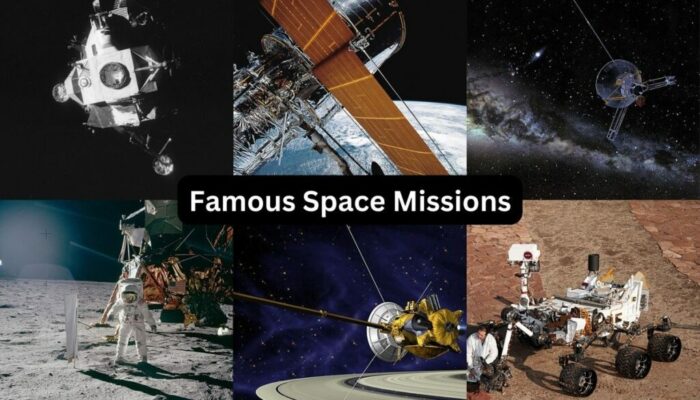
The pinnacle of early space exploration was NASA’s Apollo 11 mission in 1969, when astronauts Neil Armstrong and Buzz Aldrin became the first humans to walk on the Moon. This historic event transcended technological triumph, symbolizing the limitless potential of human ambition. Armstrong’s famous phrase, “That’s one small step for man, one giant leap for mankind,” captured the collective human spirit and the monumental achievement of reaching another celestial body.
Scientific Contributions of Lunar Exploration
The Apollo missions were not solely about human presence on the Moon; they revolutionized scientific understanding of lunar geology and the broader solar system. The lunar rock and soil samples returned to Earth provided critical insights into the Moon’s formation and evolution, offering clues about the early history of our planetary neighborhood. This research reshaped planetary science, transforming the Moon from a distant light in the night sky into a key to unlocking cosmic origins.
Expanding Horizons: Outer Planets and Deep Space
After the Moon landings, space exploration broadened its scope with the launch of the Voyager 1 and 2 spacecraft in 1977. These probes conducted an unprecedented survey of the outer planets-Jupiter, Saturn, Uranus, and Neptune-delivering invaluable data about their atmospheres, moons, and magnetic fields. Voyager’s journey extended beyond the heliosphere into interstellar space, marking humanity’s farthest reach into the cosmos. The spacecraft also carried the Golden Record, a symbolic message encapsulating Earth’s cultural and biological diversity intended for any potential extraterrestrial recipients.
In 1990, the deployment of the Hubble Space Telescope revolutionized astronomical observation by placing a powerful telescope above Earth’s atmosphere. Hubble’s images revealed stunning details of nebulae, star clusters, and distant galaxies, enabling astronomers to look billions of years into the past. This capability has deepened our understanding of the universe’s origins and evolution, providing a profound cosmic context for human existence.
Advancements in Human Spaceflight and International Cooperation
The advent of reusable spacecraft, epitomized by NASA’s Space Shuttle program (1981-2011), transformed space travel from rare feats into more routine operations. The shuttle missions facilitated the construction and maintenance of the International Space Station (ISS), a multinational orbital laboratory that fosters scientific research and international collaboration. Orbiting approximately 250 miles above Earth, the ISS serves as a platform for experiments in microgravity, medicine, and materials science, laying the groundwork for future long-duration missions to Mars and beyond.
Robotic Exploration of Mars
Robotic missions to Mars, including the Spirit, Opportunity, Curiosity, and Perseverance rovers, have dramatically enhanced our understanding of the Red Planet. Equipped with advanced scientific instruments, these rovers have analyzed Martian soil and rocks, uncovering evidence of ancient water flows and potential habitats for past microbial life. These findings have profound implications for astrobiology and the search for extraterrestrial life, fueling hopes of one day discovering life beyond Earth.
The Emerging Era of Commercial Spaceflight
Recent decades have witnessed the rise of private space enterprises such as SpaceX and Blue Origin, which are revolutionizing access to space. Projects like SpaceX’s Starship aim to make space travel more affordable and sustainable, with ambitions extending to lunar bases and Mars colonization. These commercial ventures are reshaping the future of space exploration, raising important questions about humanity’s long-term presence beyond Earth and the ethical considerations of planetary settlement.
Why Famous Space Missions Are Crucial
These landmark missions do more than achieve scientific milestones; they redefine humanity’s identity on a cosmic scale. By exploring distant worlds and the vastness of space, they prompt reflection on our planet’s fragility, the interconnectedness of life, and the boundless potential of human ingenuity. The evolving narrative of space exploration propels us from a geocentric worldview toward embracing interplanetary horizons, inspiring unity, curiosity, and the relentless pursuit of knowledge.
Common Misconceptions About Space Missions
Space missions are purely political or military endeavors.
While geopolitical factors have influenced space exploration, many missions prioritize scientific discovery, technological advancement, and international cooperation.
Human spaceflight is too dangerous and impractical to continue.
Advances in technology and safety protocols have made human spaceflight increasingly viable, with ongoing missions expanding our capabilities and understanding.
Robotic missions are less valuable than crewed missions.
Robotic explorers provide critical data from environments too hazardous or distant for humans, complementing crewed missions and expanding our reach.
Real-World Impact and Future Prospects
The achievements of famous space missions have tangible impacts on technology, science, and society. Innovations developed for space travel have led to advancements in materials science, telecommunications, and medical technologies. The collaborative spirit fostered by projects like the ISS exemplifies peaceful international partnerships. Looking ahead, the continued exploration of the Moon, Mars, and beyond promises to unlock new scientific frontiers and potentially establish humanity as a multi-planetary species, fundamentally altering our future and place in the cosmos.
FAQ
What is the significance of the Apollo missions?
The Apollo missions were pivotal in advancing lunar exploration and provided critical insights into lunar geology and the solar system.
How have recent private companies impacted space exploration?
Private companies like SpaceX and Blue Origin have made space travel more accessible and affordable, pushing the boundaries of what is possible in space exploration.




Leave a Reply