
Short Answer
Definition of the Hubble Space Telescope
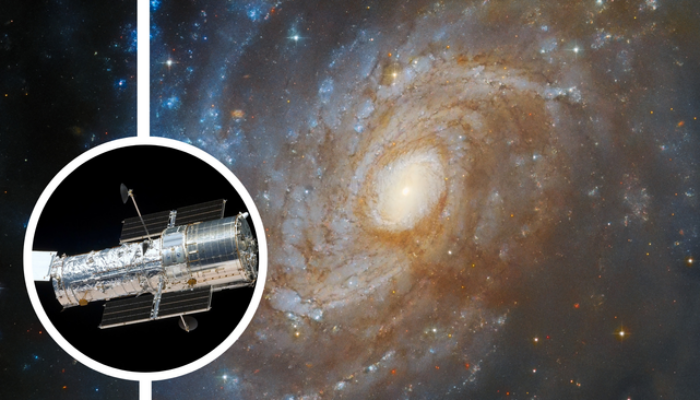
The Hubble Space Telescope (HST), launched in 1990, is a pioneering astronomical observatory positioned in low Earth orbit. It serves as a powerful tool for exploring the universe, capturing detailed images and data that have significantly advanced our understanding of celestial phenomena such as galaxies, nebulae, and the structure of space-time itself.
Operational Status and Longevity
Despite being in service for over three decades, the Hubble Space Telescope remains operational, continuing to send valuable scientific data back to Earth. Its longevity is a result of rigorous engineering efforts and multiple servicing missions, which have repaired and upgraded its systems to extend its functional lifespan. The final servicing mission occurred in 2009, during which new instruments were installed and critical repairs were made. Since then, no further physical maintenance has been possible due to the retirement of NASA’s Space Shuttle program, which previously facilitated these missions.
Technical Capabilities and Scientific Contributions
Hubble’s instruments cover a broad range of the electromagnetic spectrum, from ultraviolet to near-infrared wavelengths. Positioned above Earth’s atmosphere, it avoids atmospheric distortion, enabling it to capture images with exceptional clarity unattainable by ground-based telescopes. This vantage point allows Hubble to study diverse cosmic phenomena, including the atmospheres of exoplanets and the processes involved in star formation, maintaining its status as a vital instrument for astronomical research.
Challenges and Limitations
Over time, Hubble has faced increasing technical difficulties, particularly with its gyroscopes, which are essential for precise orientation and stability during observations. Failures in these components have reduced the telescope’s ability to maintain accurate pointing, thereby limiting the quality and quantity of data it can collect. NASA has adapted by operating Hubble with fewer gyroscopes than originally designed, but this imposes restrictions on its operational flexibility and scheduling. The aging hardware and the impossibility of in-orbit repairs without human intervention raise concerns about the telescope’s future viability.
Comparison with Newer Space Observatories
The launch of the James Webb Space Telescope (JWST) in 2021 introduced a new era of space observation with advanced infrared capabilities and cutting-edge technology. JWST complements Hubble by probing deeper into the early universe, yet the two telescopes serve distinct roles. Hubble’s ability to observe ultraviolet light, which JWST cannot detect, ensures it continues to provide unique and valuable scientific data. This complementary relationship highlights the ongoing relevance of Hubble alongside newer instruments.
Scientific Legacy and Data Archive
Beyond its active observations, Hubble’s extensive archive of data remains a critical resource for astronomers worldwide. This repository supports ongoing research and enables comparative studies that deepen our understanding of cosmic evolution. The telescope’s contributions have not only expanded scientific knowledge but also inspired generations of scientists and the public alike.
Decommissioning Plans and Legacy
Eventually, the Hubble Space Telescope will be retired through a controlled re-entry into Earth’s atmosphere to minimize risks from debris. This planned conclusion to its mission underscores the finite lifespan of even the most remarkable space instruments. Hubble’s legacy, however, extends far beyond its operational years, symbolizing human curiosity, technological achievement, and the enduring quest to explore the cosmos.
Why the Hubble Space Telescope Remains Important
Hubble’s continued operation, despite its age and challenges, exemplifies resilience and adaptability in space exploration technology. It remains a crucial asset for astronomical research, providing insights that newer telescopes alone cannot achieve. Moreover, Hubble stands as a cultural and scientific icon, reminding us of the profound impact that sustained observation and innovation can have on our understanding of the universe.
Summary: Is Hubble Still Alive in Space?
In summary, the Hubble Space Telescope is technically still active, though functioning under increasing constraints due to aging components and the lack of servicing missions. Symbolically, it endures as a testament to human ingenuity and a cornerstone of modern astronomy. Its ongoing contributions and vast data archive ensure that Hubble remains a vital and inspiring presence in the exploration of the cosmos, even as new observatories expand our cosmic horizons.
FAQ
Is the Hubble Space Telescope still operational?
Yes, Hubble is still operational and continues to send scientific data back to Earth.
What challenges does Hubble face?
Hubble faces challenges related to aging components, particularly its gyroscopes, which limit its operational capabilities.
How does Hubble compare to the James Webb Space Telescope?
Hubble observes ultraviolet light and complements JWST, which focuses on infrared observations.
What is Hubble's legacy?
Hubble's legacy includes significant contributions to astronomy, inspiring generations and providing a vast data archive for ongoing research.



Leave a Reply