

Short Answer
Definition of Gravity
Gravity is a fundamental force of nature that governs the attraction between objects with mass. It is an invisible yet omnipresent phenomenon that shapes the structure and behavior of the universe at every scale, from subatomic particles to vast galaxies. This force is responsible for the cohesion of matter, enabling the formation and maintenance of cosmic structures.
- Fundamental Interaction:
Gravity is one of the four fundamental forces, uniquely responsible for pulling matter together. - Mass-Dependent:
The strength of gravitational attraction depends on the mass of the objects involved. - Universal Influence:
It acts across the vast emptiness of space, affecting all matter regardless of distance.
Gravity’s Role in Cosmic Formation
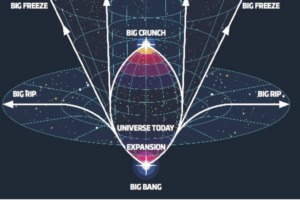
In the earliest moments following the Big Bang, the universe was a hot, dense plasma with nearly uniform density. Gravity began to amplify minute irregularities in this primordial soup, causing matter to clump together. These initial density fluctuations served as the foundation for the formation of stars, galaxies, and larger cosmic structures.
Within massive clouds of gas and dust known as molecular clouds, gravity initiates the collapse that leads to star birth. As these clouds contract, gravitational potential energy converts into heat, eventually triggering nuclear fusion in the core and igniting new stars. Without gravity’s persistent pull, the universe would lack these luminous sources of energy and life.
Gravitational Dynamics in Planetary Systems
Gravity orchestrates the orbits of planets, moons, and smaller celestial bodies, maintaining the stability of solar systems. The Earth’s consistent orbit around the Sun is a direct consequence of a delicate gravitational balance, which creates conditions suitable for life. This precise interplay ensures that planets follow predictable paths, enabling the long-term stability necessary for ecosystems to develop.
Gravity and Galactic Structures
On a grander scale, gravity binds billions of stars into galaxies, overcoming the outward forces generated by their rotation. Galaxies themselves cluster into groups and superclusters, interconnected by gravity into a vast cosmic web. This large-scale structure reveals how gravity acts as the invisible framework holding the universe’s matter together.
Dark Matter and Gravity
Dark matter is a mysterious form of matter that does not emit, absorb, or reflect light, making it invisible to traditional telescopes. Its presence is inferred solely through gravitational effects, such as the rotation curves of galaxies and gravitational lensing. Dark matter constitutes the majority of the universe’s mass and plays a crucial role in shaping cosmic structures by exerting gravitational influence beyond what visible matter can account for.
Gravity’s Extreme Manifestations: Black Holes and Neutron Stars
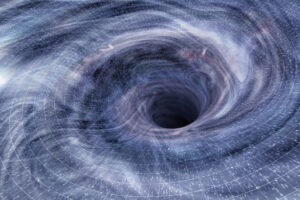
Gravity governs the life cycles of massive stars, culminating in dramatic endpoints. When a star exhausts its nuclear fuel, gravitational collapse can trigger a supernova explosion or lead to the formation of compact remnants like neutron stars and black holes. Black holes represent regions where gravity is so intense that nothing, not even light, can escape, illustrating gravity’s profound effect on spacetime geometry.
Einstein’s General Relativity and Gravity
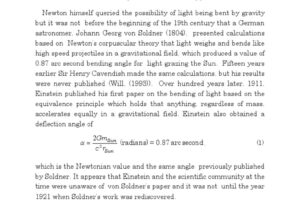
Albert Einstein’s theory of general relativity redefined gravity as the curvature of spacetime caused by mass and energy, rather than a conventional force. This framework explains phenomena such as the bending of light around massive objects (gravitational lensing) and the precise orbits of planets. It provides a deeper understanding of how gravity shapes the universe’s fabric.
Gravitational Waves: Ripples in Spacetime
Gravitational waves are disturbances in the fabric of spacetime generated by violent cosmic events like black hole mergers. Predicted by general relativity and recently detected by observatories such as LIGO, these waves offer a novel way to observe the universe. They provide insights into phenomena invisible through electromagnetic radiation, opening new frontiers in astrophysics.
Common Misconceptions About Gravity
Gravity is a force that acts instantaneously across space.
According to general relativity, changes in gravitational fields propagate at the speed of light, not instantaneously.
Gravity only affects large objects like planets and stars.
Gravity influences all objects with mass, regardless of size, including microscopic particles.
Gravity is the strongest force in nature.
Gravity is actually the weakest of the four fundamental forces but dominates at large scales due to its infinite range and cumulative effect.
Significance of Gravity in Science and Daily Life
Gravity is essential for the existence and evolution of the universe. It governs the formation of stars, planets, and galaxies, enabling the conditions necessary for life. On Earth, gravity influences everything from the flow of water to human movement. In technology, understanding gravity is crucial for satellite navigation, space exploration, and predicting natural phenomena. Its study continues to drive advances in physics, cosmology, and our comprehension of reality itself.
FAQ
What is gravity?
Gravity is a fundamental force that attracts two bodies with mass towards each other.
How does gravity affect cosmic structures?
Gravity influences the formation of stars, galaxies, and larger structures in the universe by pulling matter together.
What is dark matter?
Dark matter is an invisible form of matter that exerts gravitational effects, playing a crucial role in cosmic structure formation.
What are gravitational waves?
Gravitational waves are ripples in spacetime caused by violent cosmic events, predicted by Einstein's theory of general relativity.


Leave a Reply