
Short Answer
Definition of Universe Mapping
Universe mapping refers to the comprehensive process of charting the vast expanse of the cosmos, encompassing the identification, measurement, and representation of celestial bodies and cosmic phenomena. This endeavor aims to create detailed spatial and dynamic maps that illustrate the structure, composition, and evolution of the universe, from nearby stars to the farthest galaxies and the invisible forces shaping cosmic expansion.
- Scope:
Includes stars, galaxies, nebulae, black holes, dark matter, and dark energy within the cosmic fabric. - Objective:
To understand the universe’s structure, history, and physical laws through precise observation and modeling.
Challenges in Mapping the Universe
Mapping the universe involves overcoming immense challenges due to its staggering scale and complexity. The sheer number of celestial objects and the vast distances separating them complicate accurate measurement and representation. Light from distant galaxies can take billions of years to reach Earth, meaning observations capture snapshots of the universe’s past rather than its present state. Additionally, many cosmic components, such as dark matter and dark energy, cannot be observed directly, requiring indirect detection methods.
Technological Tools and Instruments
NASA employs an array of advanced instruments to collect data across multiple wavelengths of the electromagnetic spectrum, enabling a multi-faceted view of the cosmos.
- Optical Telescopes:
Capture visible light emitted by stars and galaxies, providing detailed images of celestial objects. - Radio Telescopes:
Detect radio waves from cosmic sources, revealing phenomena invisible in optical wavelengths. - Infrared and Ultraviolet Detectors:
Uncover hidden layers of cosmic activity by observing wavelengths beyond human vision.
By integrating data from these diverse sources, NASA constructs comprehensive, multi-dimensional maps that go beyond simple imagery to reveal physical properties and interactions within the universe.
Key Missions and Surveys
Several NASA missions play pivotal roles in universe mapping by providing critical data and insights:
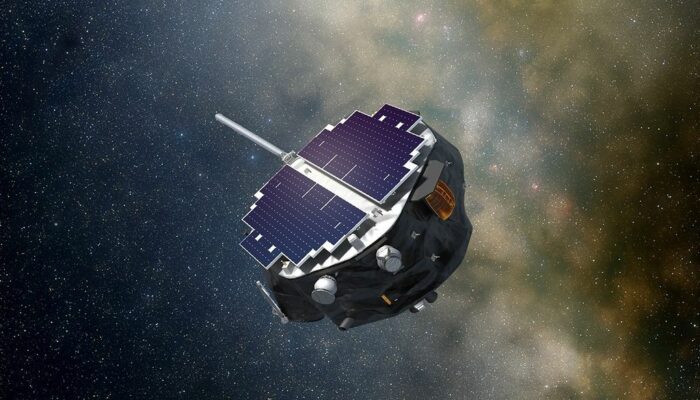
- Interstellar Mapping and Acceleration Probe (IMAP):
Focuses on studying the heliosphere-the solar wind’s protective bubble-and its boundary with interstellar space, refining our understanding of the local galactic environment. - Hubble Space Telescope:
Conducts deep-field surveys capturing light from distant galaxies, effectively looking back in time to observe galaxy formation and evolution. - James Webb Space Telescope (Upcoming):
Expected to extend deep-field observations with enhanced sensitivity, enabling unprecedented views of the early universe.
Scientific Techniques for Mapping Invisible Components
Since dark matter and dark energy dominate the universe’s mass-energy content but elude direct observation, NASA relies on indirect methods to map their influence:
- Gravitational Lensing:
The bending of light by massive objects reveals the presence and distribution of dark matter through distortions in background light sources. - Supernova Surveys and Cosmic Microwave Background (CMB) Measurements:
Provide data to constrain models of dark energy and cosmic expansion, helping to chart the universe’s dynamic evolution.
Data Processing and Computational Modeling
Transforming raw observational data into coherent cosmic maps requires sophisticated computational techniques. Massive cosmological simulations model the large-scale structure of the universe, depicting galaxy filaments and voids as a vast cosmic web. To handle the enormous volume of data and detect subtle patterns, NASA increasingly employs machine learning algorithms, which enhance the accuracy and depth of universe mapping by identifying features beyond human analytical capabilities.
Importance of Universe Mapping
Mapping the universe is fundamental to advancing our understanding of physics, cosmology, and the origins of celestial structures. These detailed cosmic charts serve as navigational aids for future space exploration missions and provide critical insights into conditions that may support life beyond Earth. Moreover, universe mapping fuels scientific discovery by continuously revealing new phenomena and refining theoretical models.
Limitations and Ongoing Exploration
Despite remarkable progress, mapping the entire universe remains an ongoing journey rather than a completed task. Limitations in observational resolution, sensitivity, and inherent biases challenge the completeness of current maps. Each new discovery prompts further questions, driving the development of more advanced instruments and methodologies. NASA’s persistent efforts bring humanity ever closer to a comprehensive cosmic understanding, even if absolute mapping remains beyond reach.
Conclusion: The Ever-Expanding Cosmic Cartography
While it may be impossible to chart the universe in its entirety with perfect precision, NASA’s relentless pursuit of cosmic mapping transforms distant and enigmatic phenomena into accessible knowledge. This endeavor embodies human curiosity and the quest to comprehend our place in the cosmos. With every new map, we deepen our connection to the universe-an immense, intricate, and dynamic realm awaiting continued exploration.
FAQ
What is universe mapping?
Universe mapping is the process of charting the cosmos, identifying and measuring celestial bodies and phenomena to create detailed maps of the universe.
What technological tools does NASA use for mapping?
NASA uses optical telescopes, radio telescopes, and infrared detectors among other instruments to collect data across the electromagnetic spectrum.
What are some key NASA missions involved in universe mapping?
Key missions include the Hubble Space Telescope, James Webb Space Telescope, and the Interstellar Mapping and Acceleration Probe (IMAP).
Why is universe mapping important?
Universe mapping is crucial for understanding the physical laws, the structure of the universe, and aiding in future space exploration.



Leave a Reply