
Short Answer
Definition of Interstellar Missions
Interstellar missions refer to space expeditions that aim to travel beyond the gravitational influence of our Sun and venture into the vast expanse between stars. Unlike conventional space exploration confined within our solar system, these missions seek to cross the immense distances separating stellar systems, marking humanity’s boldest attempt to explore the cosmos on an unprecedented scale.
- Interstellar Travel:
The journey from our solar system to other star systems, involving distances measured in light-years rather than millions of kilometers. - Interstellar Medium:
The sparse matter, including gas, dust, cosmic rays, and magnetic fields, that exists in the space between stars.
Scale and Challenges of Interstellar Travel
The vastness of space is the defining challenge of interstellar missions. Our solar system, with its planets and moons, is minuscule compared to the Milky Way galaxy. The closest star system, Alpha Centauri, is approximately 4.37 light-years away, which translates to nearly 25 trillion miles. To visualize this, if Earth were reduced to the size of a grain of sand, Alpha Centauri would be about 25 miles distant. This enormous gap transforms interstellar travel from a simple extension of space exploration into a monumental voyage across an almost unfathomable void.
Current Achievements in Interstellar Exploration
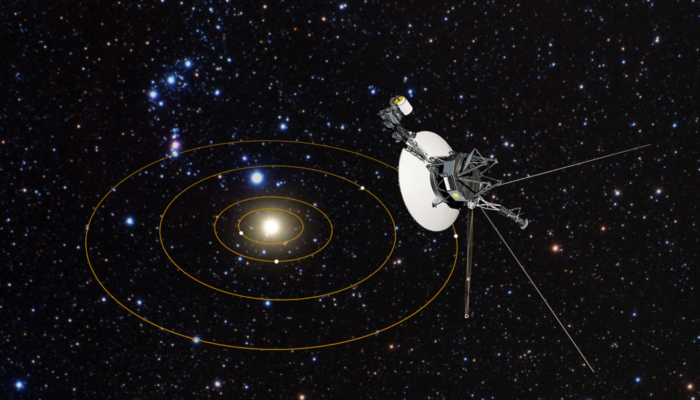
Humanity’s initial forays into interstellar space have been marked by the achievements of spacecraft such as Voyager 1 and Voyager 2. Launched in 1977, these probes have journeyed beyond the heliosphere-the Sun’s protective bubble of solar wind-and entered true interstellar space. Voyager 1 currently holds the record as the most distant human-made object, silently traversing a region devoid of sunlight and guided only by the legacy of our star.
Despite their historic significance, these spacecraft travel at speeds around 17 kilometers per second, which, while impressive for their era, are insufficient for reaching even the nearest stars within a human lifetime. At these velocities, a trip to Alpha Centauri would span tens of thousands of years.
Scientific Contributions of Pioneer Probes
Beyond their symbolic value, missions like the Voyagers serve as pathfinders into the interstellar medium. They collect critical data on the composition, magnetic fields, and cosmic radiation of the space between stars, enriching our understanding of the galactic environment. This information is essential for designing future missions capable of deeper and faster interstellar travel.
Conceptual and Future Interstellar Missions
While no spacecraft has yet been launched with the explicit goal of reaching another star at relativistic speeds, visionary projects are pushing the boundaries of possibility. One notable example is Breakthrough Starshot, an ambitious initiative proposing to accelerate ultra-light nanocrafts to about 20% of the speed of light using powerful ground-based lasers. If successful, such technology could reduce the journey to Alpha Centauri to roughly two decades, a revolutionary improvement over current capabilities.
Other propulsion technologies under investigation include ion engines, nuclear thermal propulsion, and speculative exotic drives, all of which could one day enable faster and more efficient interstellar voyages.
Cultural and Philosophical Significance
Interstellar missions carry profound symbolic weight beyond their scientific objectives. The Voyager probes, for instance, carry Golden Records containing sounds and images representing Earth’s diverse cultures, effectively serving as messages in a cosmic bottle. These artifacts embody humanity’s hope to communicate with potential extraterrestrial intelligences and to leave a lasting imprint on the universe.
Philosophically, these missions reflect humanity’s innate curiosity and desire to explore the unknown, echoing the spirit of ancient explorers who charted new territories on Earth. They represent a quest for knowledge, connection, and the defiance of cosmic isolation.
Technological Innovations Enabling Interstellar Exploration
Advancements in propulsion and communication technologies are critical to making interstellar travel feasible. Techniques such as gravitational assists have been refined to maximize spacecraft velocity using planetary flybys. Solar sails harness the momentum of photons to propel spacecraft without fuel. Emerging quantum communication methods hold promise for transmitting information across vast interstellar distances with minimal delay.
Common Misconceptions About Interstellar Missions
Interstellar travel is already achievable with current spacecraft.
While probes like Voyager 1 have entered interstellar space, their speeds are too slow to reach other stars within a human lifetime.
Interstellar missions are purely science fiction.
Although many concepts remain theoretical, ongoing research and projects like Breakthrough Starshot demonstrate serious scientific efforts toward realizing interstellar travel.
Why Interstellar Missions Are Important
Exploring beyond our solar system is vital for expanding humanity’s scientific horizons and understanding our place in the cosmos. Interstellar missions provide insights into the galactic environment, test new technologies, and inspire generations to pursue knowledge and innovation. They also hold the potential to answer fundamental questions about life beyond Earth and the nature of the universe.
Summary and Future Outlook
Currently, real interstellar missions exist primarily as pioneering endeavors rather than rapid journeys to other stars. The Voyager spacecraft have begun humanity’s physical presence in interstellar space, while conceptual projects hint at the possibilities of future exploration. As propulsion technologies advance and our understanding deepens, the dream of traversing the cosmic ocean may transform from aspiration to reality. Until then, the stars remain distant beacons, inviting us to continue our quest for discovery and connection across the universe.




Leave a Reply