
Short Answer
Understanding the Drive Behind Cosmic Exploration
What inspires physicists to delve into the immense expanse of the universe, seeking to unravel the intricate web of particles and forces that shape existence? Is it simply curiosity, or does it stem from a deeper, more elusive motivation? The endeavor to decode the cosmos transcends mere scientific inquiry; it is a complex mosaic woven from strands of awe, challenge, and an unyielding quest for knowledge. The universe, with its staggering scale and mysterious phenomena, poses questions that resist straightforward answers. Physicists, captivated by these enigmas, embark on intellectual journeys that blend rigorous analysis with a profound sense of wonder.
Fundamental Laws: The Core of Cosmic Inquiry
Central to this exploration is the ambition to reveal the fundamental principles that govern reality. The universe functions according to laws that are simultaneously elegantly simple and astonishingly intricate. Physicists endeavor to extract these laws through sophisticated mathematics and innovative experiments, aiming to develop theories capable of predicting the behavior of everything from the tiniest subatomic particles to vast galactic structures. This pursuit embodies a bold intellectual aspiration: to discover a unified framework-often called the “theory of everything”-that reconciles gravity with quantum mechanics and offers a comprehensive explanation of the cosmos.
The Human Impulse: Seeking Our Place in the Cosmos
Beyond abstract equations, the motivation to study the universe is deeply rooted in a fundamental human desire: to understand our position within the grand cosmic dance. The star-studded night sky serves as a mirror reflecting our innate curiosity about origins-of matter, energy, space, and time. It provokes the timeless question: where do we come from, and what is our destiny? This quest blurs the lines between physics and philosophy, merging empirical investigation with existential reflection. Through probing phenomena such as cosmic microwave background radiation, dark matter, and black holes, physicists gradually lift the veil on these profound mysteries.
Challenges in Cosmic Research
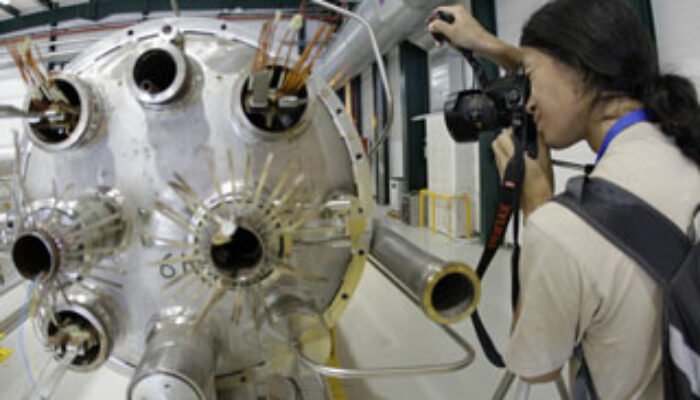
The obstacles confronting physicists in this field are immense, often bordering on the extraordinarily complex. For instance, detecting elusive particles like neutrinos or observing events at the Planck scale-dimensions trillions of times smaller than a proton-pushes the boundaries of human ingenuity and technological precision. Massive particle accelerators and extensive observatories worldwide stand as monuments to scientific ambition and the collective effort to manipulate the fundamental fabric of matter and energy. Each experiment represents a calculated risk, a delicate engagement with the unknown, fueling the drive to persevere.
Practical Implications of Cosmic Discoveries
The motivations extend beyond intellectual curiosity or the thrill of challenge; many physicists are inspired by the potential practical benefits their research may yield. Historically, fundamental studies of the universe have sparked revolutionary technologies-from semiconductors and lasers to advances in medical imaging and the creation of the internet. The possibility of unlocking transformative innovations imbues cosmic research with a sense of urgent purpose. This dynamic interplay between pure theoretical knowledge and tangible applications propels ongoing inquiry.
Collaborative Spirit in Modern Physics
Another significant factor driving physicists is the collaborative nature of contemporary research. Large-scale cosmic investigations are rarely solitary endeavors; instead, they involve extensive international collaborations comprising thousands of scientists, engineers, and theorists. This cooperative environment fosters intellectual exchange and shared ambition across continents and generations. The chance to contribute to a collective mission that expands human understanding and to join a legacy of groundbreaking discovery serves as a powerful motivator.
The Emotional Connection to Cosmic Exploration
The emotional dimension binding physicists to their work is equally important. Feelings of awe and wonder, though often fleeting, provide potent inspiration. The realization that we are observing echoes of the Big Bang or witnessing the intricate interplay of cosmic phenomena evokes a profound sense of humility-acknowledging our smallness in the vast universe-while simultaneously affirming the remarkable capacity of human intellect. Engaging with the universe’s secrets allows physicists to partake in a grand narrative that transcends individual existence.
The Paradox of Predictability and Randomness
The universe presents a fascinating paradox: the coexistence of deterministic laws, as seen in classical mechanics, alongside the inherent randomness of quantum phenomena. This duality challenges physicists to develop refined conceptual frameworks and fosters creative thinking. The intellectual freedom arising from grappling with these puzzles encourages questioning and sometimes overturning established paradigms, making the pursuit of cosmic understanding a dynamic and evolving endeavor.
The Spirit of Exploration: A Cosmic Voyage
The deeply rooted human drive to explore-once manifest in charting unknown seas and lands-now takes the form of a cosmic journey. Through telescopes, particle accelerators, and space probes, physicists become explorers of both the invisible and the immense. This urge to illuminate the unknown and extend the boundaries of observable reality transforms what was once incomprehensible into tangible knowledge.
Conclusion: The Enduring Quest to Comprehend the Universe
Studying the universe is an enigmatic and exhilarating odyssey. It involves chasing the faint echoes of creation, translating the cosmic symphony into human understanding, and confronting questions that may never be fully resolved. Yet, this very uncertainty intensifies motivation, driving physicists to push the frontiers of knowledge. The desire to grasp the unfathomable, the challenge of expanding human comprehension, and the aspiration to leave a lasting intellectual legacy converge to make the exploration of the cosmos one of humanity’s most profound and enduring pursuits.





Leave a Reply