
Short Answer
Understanding Cosmic Mysteries
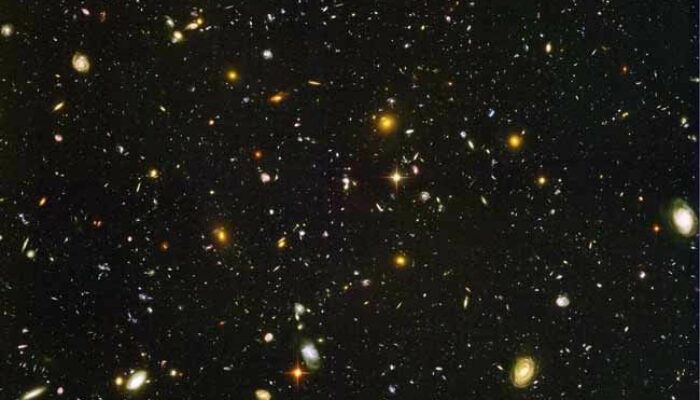
The universe, with its vast expanse filled with countless stars and celestial wonders, continues to conceal secrets that evade even our most sophisticated instruments. It resembles a cosmic puzzle, where the cosmos presents enigmatic phenomena that challenge our scientific knowledge. From sudden bursts of energy to puzzling cosmic formations, the universe is alive with mysteries that defy current explanations. This raises a profound question: can humanity ever fully grasp the infinite complexities of space, or will some secrets remain forever beyond our reach?
Dark Matter: The Invisible Majority
One of the most compelling puzzles in modern astronomy is the nature of dark matter. Comprising about 27% of the universe’s total mass-energy content, dark matter is undetectable through direct observation because it neither emits nor absorbs electromagnetic radiation. Its presence is inferred solely through gravitational influences on visible matter, such as the unexpectedly high rotational speeds of galaxies. The true composition of dark matter remains unknown. Hypotheses range from exotic particles outside the Standard Model of particle physics to alternative theories modifying gravitational laws. This uncertainty highlights a significant gap in our understanding of the cosmos.
Characteristics of Dark Matter
- Invisible:
Does not interact with light, making it undetectable by conventional telescopes. - Gravitational Effects:
Influences the motion of stars and galaxies, providing indirect evidence of its existence. - Unknown Composition:
Potentially made of particles like WIMPs (Weakly Interacting Massive Particles) or axions, though none have been confirmed.
Dark Energy: The Force Behind Cosmic Expansion
Even more perplexing than dark matter is dark energy, which constitutes approximately 68% of the universe. This mysterious entity is responsible for the accelerated expansion of the cosmos, a phenomenon that challenges our understanding of space and time. Dark energy appears to exert a repulsive force, causing galaxies to drift apart at an increasing rate. Its nature raises fundamental questions about the fabric of space-time and the ultimate fate of the universe-whether it will continue expanding indefinitely or face a different cosmic destiny.
Key Aspects of Dark Energy
- Acceleration Driver:
Causes the universe’s expansion to speed up rather than slow down. - Space-Time Influence:
Suggests that empty space itself has energy with repulsive gravitational effects. - Cosmic Fate:
Plays a crucial role in determining whether the universe will expand forever or collapse.
The Early Universe and the Cosmic Microwave Background
The Cosmic Microwave Background (CMB) radiation offers a glimpse into the universe’s infancy, serving as a relic from the Big Bang. This faint glow permeates all of space and provides critical data about the early cosmos. However, subtle irregularities in the CMB, such as temperature fluctuations and unusual alignments known as the “Axis of Evil,” challenge the simplicity of standard cosmological models. These anomalies may hint at unknown physical processes, hidden dimensions, or new cosmic structures, prompting ongoing investigation into the universe’s origin and initial conditions.
Explosive Phenomena: Gamma-Ray Bursts and Fast Radio Bursts
Among the most dramatic cosmic events are gamma-ray bursts (GRBs), intense flashes of gamma radiation that can outshine entire galaxies for brief moments. Originating from distant galaxies, these bursts last from milliseconds to several minutes and are believed to result from catastrophic events like neutron star mergers or black hole formations. Despite progress, the exact mechanisms, especially for short-duration GRBs, remain elusive.
Similarly, fast radio bursts (FRBs) are millisecond-long pulses of radio waves from unknown cosmic sources. Discovered only recently, their origins are hotly debated, with theories ranging from highly magnetized neutron stars (magnetars) to collisions of compact objects, or even speculative ideas involving extraterrestrial intelligence. Each new detection deepens the mystery and drives the development of advanced observational techniques.
Black Holes: Gravity’s Enigmatic Titans
Black holes, once theoretical constructs, are now central to astrophysical research. These regions of spacetime exhibit gravitational fields so intense that nothing, not even light, can escape. Despite extensive study, puzzles like the information paradox persist. This paradox arises because quantum mechanics dictates that information cannot be destroyed, yet matter falling into a black hole seems to vanish from the observable universe. Resolving this contradiction is key to uniting general relativity with quantum theory and could revolutionize our understanding of fundamental physics.
Exotic Stellar Objects: Pulsars and Magnetars
Neutron stars, remnants of massive stars, manifest in fascinating forms such as pulsars and magnetars. Pulsars emit highly regular pulses of radiation due to their rapid rotation and strong magnetic fields, which can be trillions of times stronger than Earth’s. Magnetars exhibit even more extreme magnetic intensities and sporadically release powerful bursts of X-rays and gamma rays. Understanding these objects sheds light on stellar evolution, magnetic field generation, and the dynamics of the interstellar medium.
The Cosmic Web: The Universe’s Grand Design
The large-scale structure of the universe is organized into a vast cosmic web, where galaxies cluster along filaments separated by enormous voids. This intricate pattern results from gravitational interactions and the influence of dark matter, but the precise mechanisms governing its formation and evolution remain under study. Investigating the cosmic web may reveal unknown forces or particles that shape the universe’s architecture and destiny.
Significance of Unraveling Cosmic Mysteries
As technology advances and observational tools become more refined, each unresolved cosmic enigma motivates deeper inquiry and innovation. These mysteries remind us of the vastness and complexity of the universe, encouraging scientific humility and curiosity. Understanding these phenomena not only enriches our knowledge of the cosmos but also drives progress in physics, astronomy, and related fields, potentially leading to groundbreaking discoveries that transform our view of reality.
Looking Ahead: The Future of Cosmic Exploration
The next generations of astronomers and physicists are poised to uncover new insights into these enduring mysteries. With ever-improving instruments and collaborative research, humanity continues its quest to decode the universe’s secrets. Until then, these cosmic puzzles remain a testament to the universe’s grandeur and an invitation to explore the profound and beautiful unknowns beyond our world.





Leave a Reply