
Short Answer
Definition of Quantum Dot Data Storage
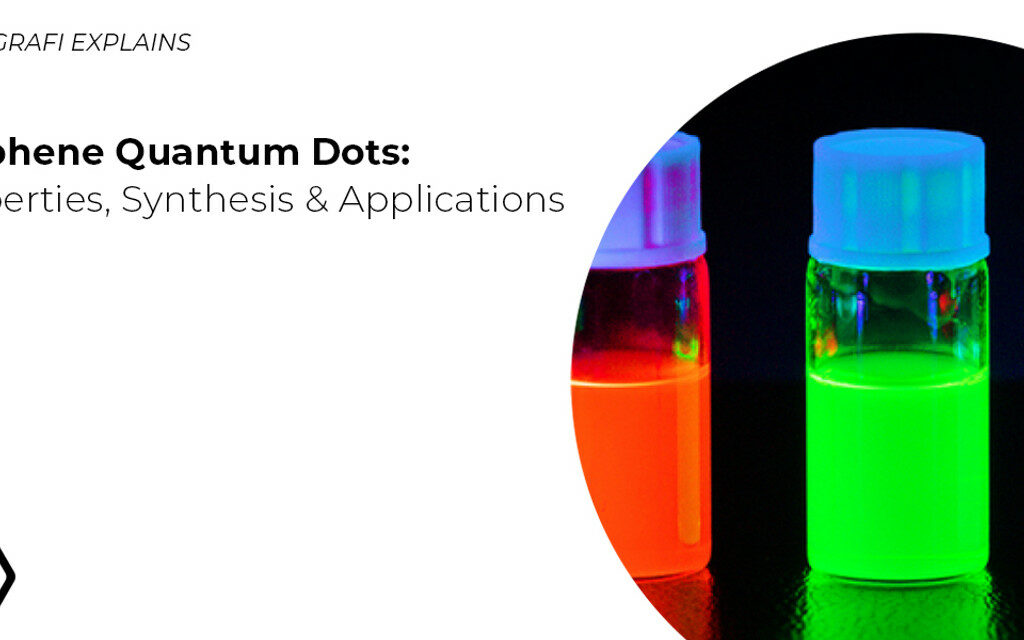
Quantum dot data storage refers to the use of nanoscale semiconductor particles, known as quantum dots, to store digital information. These particles, typically ranging from 1 to 10 nanometers in size, exhibit unique quantum mechanical properties that enable new methods of encoding and preserving data. Unlike traditional storage media, quantum dots leverage quantum confinement effects to create discrete energy levels, which can be precisely controlled by adjusting their size or material composition. This capability allows for innovative approaches to data storage that promise significant improvements in capacity, speed, and durability.
Fundamental Properties of Quantum Dots
Quantum dots are distinguished by their quantum confinement, a phenomenon where electrons are confined in all three spatial dimensions, leading to quantized energy states. This results in:
- Size-dependent electronic behavior:
The energy levels and optical properties of quantum dots can be tuned by changing their dimensions, enabling customizable data encoding. - Discrete energy states:
Unlike bulk materials, quantum dots have distinct energy levels that facilitate precise control over electron states, essential for quantum information storage.
Advantages of Quantum Dot Storage
Quantum dot technology offers several key benefits over conventional data storage methods:
- High storage density:
Quantum dots can be packed densely within a medium, enabling storage capacities reaching terabits per square inch, far surpassing current magnetic and optical storage limits. - Long-term stability:
Quantum dots maintain coherence and stability of their quantum states over extended periods, reducing data degradation and enhancing longevity. - Rapid data access:
The quantum parallelism inherent in these systems allows simultaneous reading of information, accelerating data retrieval and processing speeds. - Advanced encoding schemes:
Moving beyond binary encoding, quantum dots can utilize quantum superposition to represent multiple bits within a single particle, revolutionizing data representation.
Mechanism Behind Quantum Dot Data Storage
The core principle of quantum dot storage lies in manipulating the quantum states of electrons confined within the dots. By controlling the size and composition of each quantum dot, specific energy levels are established, which correspond to different data states. Information is encoded by placing electrons in these discrete energy states or superpositions thereof. The quantum coherence of these states allows for stable storage, while quantum parallelism enables simultaneous data operations, enhancing speed and efficiency.
Mathematical Framework and Encoding
The behavior of electrons in quantum dots can be described using quantum mechanics, particularly the Schrödinger equation for a particle in a potential well. The energy levels (E_n) are quantized and depend on the dot’s size (L) and material properties:
E_n = (h² n²) / (8 m L²)
- E_n: Energy of the nth quantum state
- h: Planck’s constant
- n: Quantum number (integer)
- m: Effective mass of the electron
- L: Size of the quantum dot
This quantization enables discrete data encoding by associating specific energy states with binary or quantum bits (qubits), facilitating complex data storage schemes such as superposition and entanglement.
Practical Applications and Examples
Quantum dot storage technology is poised to impact various sectors:
- Big Data Analytics:
The high-density and rapid access capabilities support the massive data processing demands of analytics platforms. - Healthcare:
Enables secure, long-term storage of sensitive medical records with fast retrieval for real-time diagnostics. - Financial Services:
Facilitates quick processing of large transaction datasets, improving decision-making speed and accuracy. - Scientific Research:
Supports storage and manipulation of complex datasets generated by experiments and simulations.
Challenges and Limitations
Despite its promise, quantum dot data storage faces several hurdles:
- Manufacturing consistency:
Producing quantum dots with uniform size, purity, and quantum properties at scale remains a technical challenge. - Cost considerations:
Current fabrication methods are expensive, necessitating advances to achieve cost-effective mass production. - Integration issues:
Incorporating quantum dot storage into existing hardware and software ecosystems requires significant adaptation and innovation. - Security and compatibility:
Ensuring data security and compatibility with conventional data management systems demands new protocols tailored to quantum technologies.
Ethical and Societal Implications
The deployment of quantum dot storage systems raises important ethical questions, particularly regarding data privacy and surveillance. The ability to store vast amounts of personal and sensitive information necessitates robust regulatory frameworks and ethical guidelines to prevent misuse. Policymakers and organizations must collaborate to establish standards that protect individual rights while fostering technological advancement.
Significance and Future Outlook
Quantum dot data storage represents a transformative leap in how information is managed, offering unprecedented storage densities, durability, and processing speeds. As data generation continues to accelerate globally, these technologies will be critical in sustaining the digital infrastructure of the future. The ongoing research and development efforts promise to overcome current challenges, paving the way for widespread adoption. Ultimately, quantum dot storage could redefine our interaction with data, enabling smarter, faster, and more secure information systems that align with the demands of emerging technologies such as artificial intelligence and quantum computing.
FAQ
What is quantum dot data storage?
Quantum dot data storage refers to the use of nanoscale semiconductor particles, known as quantum dots, to store digital information.
How does quantum dot technology improve data storage?
It allows for higher storage density, enhanced speed of data access, and improved long-term stability of stored data.






Leave a Reply