
Short Answer
Understanding Nuclear Physics
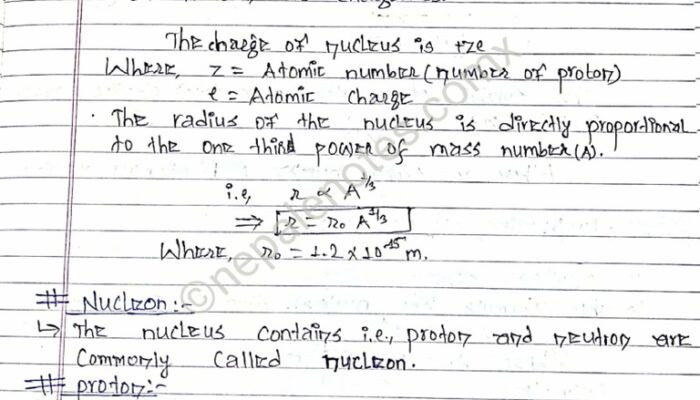
Nuclear physics is a branch of science that explores the components and behavior of atomic nuclei. It investigates the forces and interactions that govern the particles within the nucleus, such as protons and neutrons, and examines phenomena like radioactive decay, nuclear fission, and fusion. This field bridges the microscopic world of subatomic particles with vast cosmic processes, offering insights into both fundamental physics and practical applications.
Foundational Knowledge Required
Before diving into nuclear physics, it is essential to build a strong base in core physics and mathematics disciplines. These foundational subjects provide the necessary tools to comprehend the more intricate aspects of nuclear phenomena.
- Classical Physics:
Familiarity with Newtonian mechanics, electromagnetism, and thermodynamics is crucial. Understanding Newton’s laws of motion, Maxwell’s equations, and the principles governing energy and heat transfer lays the groundwork for nuclear studies. - Mathematical Skills:
Proficiency in calculus, differential equations, and linear algebra is indispensable. Calculus helps analyze changing systems, differential equations model dynamic processes, and linear algebra is vital for quantum mechanics, which underpins nuclear theory.
Approaches to Self-Learning Nuclear Physics
Embarking on a self-directed study of nuclear physics requires a strategic approach that combines theoretical learning, practical application, and community engagement.
Structured Study Materials
Begin with introductory textbooks that clearly explain fundamental concepts and gradually introduce complex topics. Recommended readings include works like “Introductory Nuclear Physics” by David Halliday and Robert Resnick, and “Concepts of Nuclear Physics” by Edington. These texts not only clarify theory but also connect it to real-world applications, enhancing comprehension.
Utilizing Multimedia and Online Courses
Supplement your reading with online courses from reputable platforms such as Coursera and edX. These courses often feature lectures by leading experts, interactive assignments, and forums for discussion, providing a comprehensive and engaging learning experience.
Active Problem Solving and Simulations
To deepen understanding, actively solve problems from textbooks and online resources. Engaging with exercises transforms theoretical knowledge into practical skills. Additionally, interactive simulations-like those offered by PhET Interactive Simulations-visually demonstrate nuclear processes such as radioactive decay and nuclear reactions, reinforcing learning through visualization.
Organizing Your Study Routine
Consistency is key when mastering a complex subject like nuclear physics. Establish a regular study schedule that balances reading, problem-solving, and interactive learning. Setting clear, measurable goals-such as completing specific chapters or mastering particular problem sets within a timeframe-helps maintain motivation and track progress.
Engagement with Scientific Communities
Joining physics clubs, attending lectures, or participating in online forums can significantly enhance your learning journey. Interaction with peers and experts fosters intellectual curiosity, provides opportunities to clarify doubts, and encourages collaborative problem-solving. Social media groups and specialized discussion boards are excellent venues for such exchanges.
Exploring Current Research and Literature
To stay abreast of the latest developments, delve into scientific journals and preprint archives like arXiv. Reading contemporary research papers exposes you to cutting-edge discoveries and unresolved questions in nuclear physics, broadening your perspective and inspiring further inquiry.
Overcoming Challenges in Self-Study
Self-learning nuclear physics can be demanding and may involve periods of difficulty. Embrace these challenges as integral to the learning process. When encountering complex topics, take breaks, revisit foundational concepts, and seek assistance through tutoring or online communities. Persistence and resilience are vital to mastering this intricate field.
Significance of Studying Nuclear Physics
Nuclear physics holds profound importance across multiple domains. It underpins technologies such as nuclear energy production, medical imaging, and radiation therapy. Moreover, it enhances our understanding of the universe’s origins and the fundamental forces shaping matter. By studying nuclear physics, learners connect microscopic atomic interactions to grand cosmic phenomena, contributing to scientific advancement and technological innovation.
Summary
Mastering nuclear physics through self-study involves a blend of foundational knowledge acquisition, strategic use of educational resources, active problem-solving, community involvement, and perseverance. This journey not only enriches intellectual understanding but also opens pathways to contribute to a field that explores the very essence of matter and energy in the universe.
FAQ
How do I start learning nuclear physics on my own?
Begin by strengthening your understanding of core physics and mathematics, then progress to reading introductory textbooks and taking online courses.
Are online simulations useful for learning nuclear physics?
Yes, simulations like those from PhET can help visualize complex nuclear processes and enhance conceptual understanding.
What role does mathematics play in nuclear physics?
Mathematics, especially calculus and linear algebra, is essential for solving nuclear physics problems and understanding quantum mechanics.
Can I learn nuclear physics without formal education?
Self-study is possible with discipline, access to quality resources, and active engagement with the material and scientific community.
Where can I find support during my nuclear physics studies?
Joining physics forums, online communities, and local clubs can provide support and enrich your learning experience.






Leave a Reply