
Short Answer
Definition of Trigonometry in Nuclear Physics
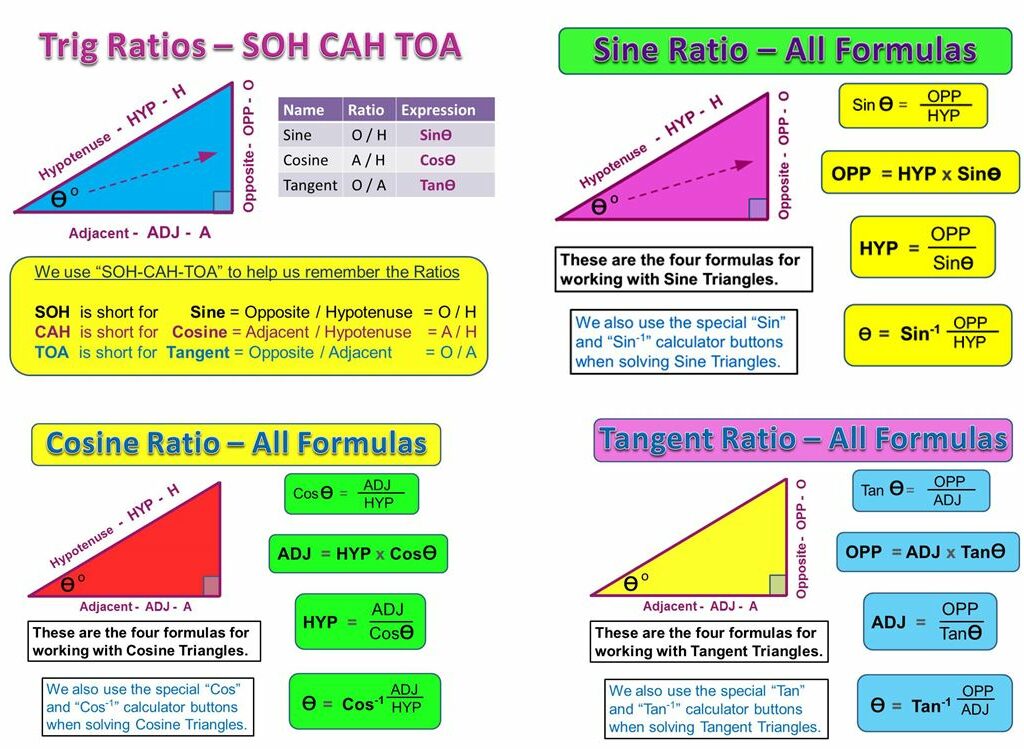
Trigonometry, a mathematical discipline focused on the relationships between angles and sides of triangles, extends far beyond simple geometric problems. In nuclear physics, it serves as a critical tool for analyzing angular relationships and periodic phenomena that govern atomic and subatomic processes. This branch of mathematics provides the framework necessary to understand and quantify the spatial and angular dynamics inherent in nuclear interactions.
Angular Measurements and Particle Trajectories
At the core of nuclear physics lies the study of nuclear reactions, where atomic nuclei undergo collisions, transformations, or decay. These events involve particles moving along complex paths influenced by their energy and interaction angles. Trigonometric functions such as sine, cosine, and tangent are essential for calculating these trajectories, enabling physicists to determine distances, angles, and resultant motions with precision.
Trigonometry in Radiation Detection
One of the most tangible applications of trigonometry in nuclear physics is in the measurement of radiation. Radiation detectors are strategically positioned at specific angles to optimize the detection of various types and intensities of emitted radiation. The geometric arrangement of these detectors relies heavily on trigonometric principles, particularly the sine and cosine laws, to decompose radiation vectors into orthogonal components. This decomposition facilitates accurate data interpretation, which is crucial for both scientific research and safety monitoring.
Role in Particle Accelerator Design
Particle accelerators, vital instruments in nuclear physics research, depend on trigonometric calculations to guide charged particles along desired paths at near-light speeds. The spatial configuration of magnetic fields and particle beams requires precise angular and distance measurements. Understanding trigonometric relationships allows physicists to identify and correct deviations in particle trajectories, thereby maximizing collision efficiency and improving experimental results.
Trigonometry in Nuclear Decay Processes
Subatomic decay events, such as alpha and beta decay, involve the emission of particles at specific angles relative to the parent nucleus. These emissions are often described using spherical coordinate systems, where trigonometric functions model the azimuthal and polar distributions of emitted particles. This mathematical framework is indispensable for accurately predicting particle behavior and energy distributions during decay.
Application in Nuclear Fusion
Nuclear fusion, the process powering stars including the sun, relies on the precise alignment of atomic nuclei to overcome electromagnetic repulsion and fuse. The likelihood of fusion depends significantly on the relative angles at which nuclei approach each other. Trigonometric analysis of these angles aids in understanding and optimizing fusion conditions, which is critical for advancing controlled fusion energy technologies on Earth.
Quantum Mechanical Implications
In the quantum realm, where particles exhibit wave-particle duality, trigonometric functions become fundamental in describing wave functions. These functions, often expressed as sine and cosine waves, represent the probability amplitudes of locating particles in specific states or positions. The angular components of these wave functions are crucial for modeling spatial configurations and interactions within the nucleus.
Visualization and Communication of Nuclear Phenomena
Trigonometry also plays a vital role in the graphical representation of nuclear events. Three-dimensional models and visualizations employ trigonometric principles to depict complex nuclear interactions, making abstract concepts more accessible. These visual tools enhance the communication of intricate scientific ideas to both specialists and the general public.
Summary of Trigonometry’s Impact on Nuclear Physics
The integration of trigonometric principles into nuclear physics forms a multifaceted framework that connects geometry, angular dynamics, and wave mechanics. This synergy enriches our understanding of nuclear processes and supports ongoing research and technological advancements in energy production and nuclear science.
Why Trigonometry is Essential in Nuclear Physics
Trigonometry’s role in nuclear physics transcends mere calculation; it provides a fundamental perspective for interpreting the natural world at the atomic level. By enabling precise angular measurements, trajectory predictions, and wave function descriptions, trigonometry underpins critical scientific discoveries and innovations. Its application fosters deeper insights into the behavior of matter and energy, highlighting the elegance and complexity of physical laws.
FAQ
What is the role of trigonometry in nuclear physics?
Trigonometry provides the mathematical framework to calculate angles and distances essential for understanding particle motion, radiation patterns, and nuclear interactions.
How do trigonometric functions help in radiation measurement?
They allow physicists to decompose radiation vectors into components and determine optimal detector positions for accurate measurements.
Why is angular measurement critical in nuclear reactions?
Because particle interactions depend on precise angles that affect trajectories, collision rates, and energy transfer.
Can trigonometry improve nuclear fusion research?
Yes, by modeling the relative angles of nuclei collisions to optimize fusion conditions.
Is trigonometry connected to quantum mechanics in nuclear physics?
Yes, trigonometric wave functions describe particle probabilities and spatial configurations in quantum nuclear contexts.





Leave a Reply