
Short Answer
Definition of “How Many”
The phrase “how many” fundamentally addresses the concept of quantifying existence, serving as a gateway to understanding the numerical aspects of reality. It transcends simple counting, inviting inquiry into the measurement of objects, ideas, and abstract phenomena that shape human comprehension across various disciplines such as mathematics, linguistics, and philosophy.
- Quantification:
The process of determining the number or amount of something. - Numerical Representation:
Expressing quantities through numbers and symbols. - Philosophical Inquiry:
Reflecting on the meaning and significance behind numerical values.
Historical and Educational Perspectives
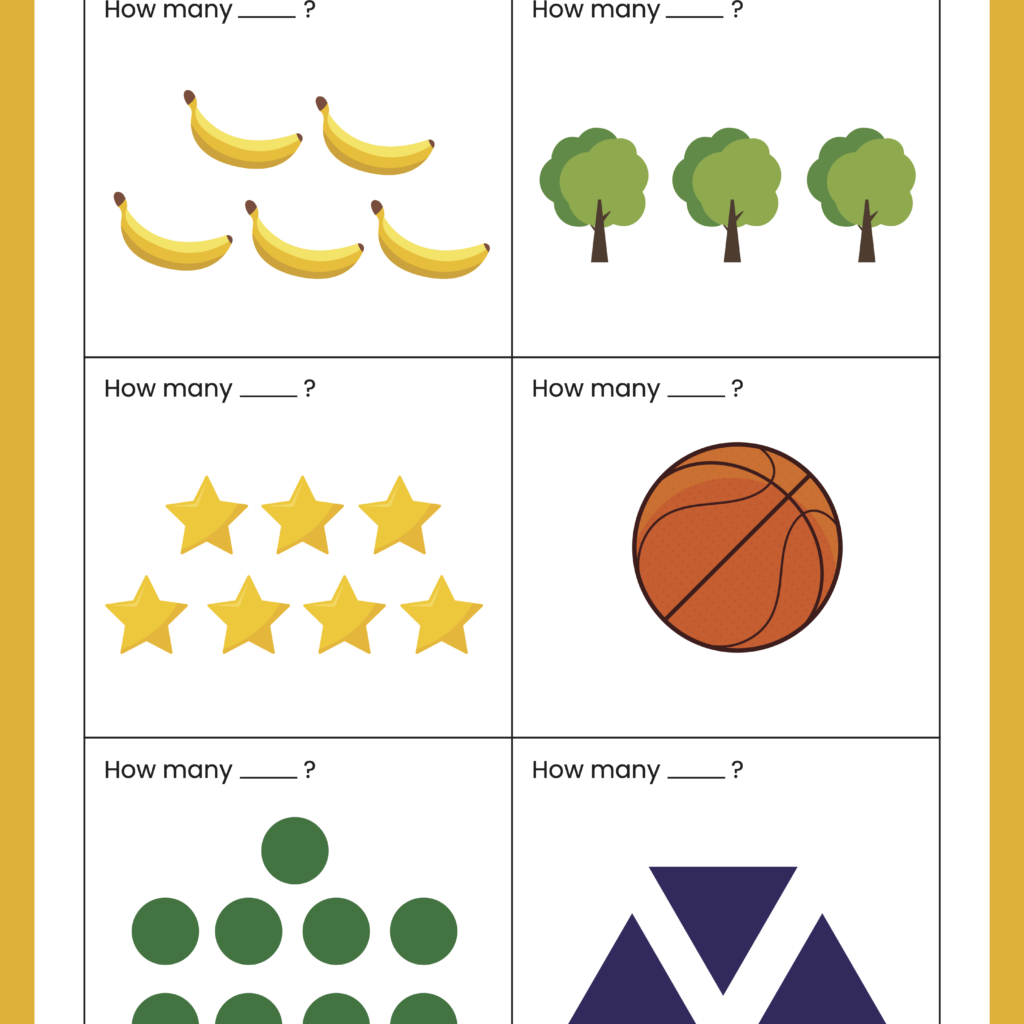
From early childhood, the ability to answer “how many” forms the foundation of numerical literacy. Children develop counting skills by associating numbers with tangible objects, which later evolve into more complex mathematical reasoning. This progression not only enhances arithmetic abilities but also fosters an understanding of patterns, relationships, and the intrinsic properties of quantities.
Educational systems emphasize this developmental trajectory by employing interactive tools and assessments designed to deepen students’ grasp of quantity and number concepts. These pedagogical strategies aim to transform abstract numerical ideas into accessible knowledge, nurturing critical thinking and curiosity.
Mathematical Foundations: Combinatorics and Permutations
Advancing beyond basic counting, the question of “how many” leads to the study of combinatorial mathematics, where the focus shifts to the number of possible arrangements and combinations within a set. Permutations, which consider the order of elements, exemplify this complexity. For instance, a set of ten unique items can be arranged in 3,628,800 distinct ways, illustrating the exponential growth of possibilities as elements increase.
Formula for Permutations
The number of permutations of n distinct objects is given by the factorial function:
P(n) = n! = n × (n-1) × (n-2) × … × 1
- n: Total number of distinct elements.
- n! (n factorial): The product of all positive integers up to n.
Philosophical and Sociological Dimensions
The inquiry into “how many” extends into philosophical realms, prompting reflection on existence, value, and human relationships. Questions such as “how many friends do I truly have?” challenge the distinction between superficial contacts and meaningful connections, highlighting the qualitative aspects behind numerical counts.
Similarly, when considering life experiences or significant moments, the attempt to quantify these can reveal the limitations of numbers in capturing the depth of human identity and memory. This intersection of quantity and quality underscores the complexity of measuring intangible phenomena.
Applications in Ecology and Environmental Science
In ecological studies, determining “how many” organisms inhabit a particular environment is crucial for understanding population dynamics and ecosystem health. Accurate quantification informs conservation strategies and reveals the intricate interdependencies among species and their habitats.
Population estimates must account for variables such as birth rates, mortality, migration, and environmental factors, making the task both scientifically challenging and vital for biodiversity preservation.
Role in Data Science and Information Technology
With the advent of big data, the question of “how many” takes on new significance in analyzing vast datasets. Data scientists employ statistical techniques to extract meaningful patterns from enormous quantities of information, transforming raw counts into insights about societal trends, behaviors, and preferences.
Moreover, the digital age presents challenges related to information overload, where the sheer volume of data processed daily raises concerns about cognitive capacity and decision-making efficacy. Understanding the scale of data flow is essential for developing tools that manage and interpret information effectively.
Measurement Systems and Scientific Scale
Scientific inquiry relies heavily on standardized measurement systems to express quantities across a vast range of scales. The metric system, for example, provides a universal framework for quantifying everything from subatomic particles to celestial bodies.
This ability to measure both the infinitesimally small and the astronomically large exemplifies the dual nature of “how many” as a question that spans microcosmic and macrocosmic dimensions, influencing disciplines from physics to astronomy.
Common Misconceptions About Quantification
Counting is only about numbers.
Counting also involves understanding relationships, patterns, and the context behind quantities.
More data always means better understanding.
Excessive data can lead to overload, requiring effective analysis to extract meaningful insights.
All quantities can be precisely measured.
Some experiences and abstract concepts resist exact quantification, necessitating qualitative approaches.
Significance of Understanding “How Many”
Grasping the concept of “how many” is essential across scientific, technological, and everyday contexts. It underpins mathematical reasoning, informs ecological conservation, drives data analytics, and enriches philosophical discourse. By exploring this question, individuals and scholars deepen their appreciation of the complexities inherent in quantification, fostering a more nuanced understanding of the world and our place within it.
Conclusion: The Endless Quest for Quantification
The exploration of “how many” transcends simple enumeration, evolving into a multidisciplinary pursuit that bridges numbers with meaning. This ongoing inquiry challenges conventional limits, encouraging continuous reflection on existence, relationships, and knowledge. Ultimately, engaging with the question “how many” ignites a timeless intellectual journey that resonates throughout human history and into the future.
FAQ
What is the significance of "how many" in mathematics?
"How many" initiates the study of counting and combinatorics, allowing understanding of quantities and complex arrangements.
Can "how many" be applied beyond numbers?
Yes, it extends into philosophy and sociology to explore qualitative aspects like relationships and experiences.
Why is measurement important in the context of "how many"?
Measurement provides standardized units to quantify and compare quantities across different scales and disciplines.




Leave a Reply