

Short Answer
Understanding Nuclear Physics and Chemistry
The boundary between nuclear physics and chemistry often appears as indistinct as the subatomic particles they investigate. Both fields explore the microscopic realm, akin to examining different facets of a complex gem. To truly grasp their distinctions and connections, it is essential to analyze their core principles, investigative techniques, and practical uses, while recognizing their overlapping nature.
Definition and Scope
Nuclear Physics: This branch of physics concentrates on the atomic nucleus, studying its constituents-protons and neutrons-and the fundamental forces that hold them together. It delves into the heart of matter, seeking to understand the universe at its most elemental level.
Chemistry: Chemistry focuses on the composition, structure, properties, and transformations of matter, primarily at the level of atoms and molecules. It investigates how substances interact and combine to form new materials, emphasizing the behavior of electrons and chemical bonds.
Atomic Structure: The Common Ground
Both nuclear physics and chemistry share a foundational interest in the atom’s architecture. An atom consists of a dense nucleus surrounded by electrons arranged in orbitals. However, their investigative focus diverges:
- Nuclear Physics: Examines the nucleus itself, exploring nuclear forces such as the strong and weak interactions that govern its stability and reactions.
- Chemistry: Concentrates on the electron cloud, applying quantum mechanics to explain chemical bonding, molecular shapes, and reactivity.
Metaphorical Perspectives
To visualize their differences, imagine nuclear physics as an exploration of the deep ocean, probing the profound depths of atomic cores and fundamental forces. Chemistry, by contrast, resembles a vibrant garden filled with diverse plants, symbolizing the variety of chemical substances and reactions observable at the surface. While the ocean’s mysteries form the foundation for both, the garden represents the tangible outcomes chemistry offers, such as medicines, materials, and energy solutions.
Research Techniques and Methodologies
The approaches used in each discipline highlight their unique characteristics:
- Nuclear Physics: Employs advanced experimental setups like particle accelerators and detectors to study phenomena including radioactive decay, nuclear fission, and fusion. Data analysis plays a crucial role in interpreting results.
- Chemistry: Utilizes synthetic methods in laboratories to design and produce new compounds, investigating their properties and reactions through controlled experiments and iterative testing.
Interdependence and Shared Foundations
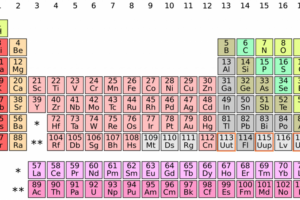
Despite their differences, nuclear physics and chemistry are deeply interconnected. The periodic table, a fundamental tool in chemistry, is grounded in nuclear physics principles. Each element’s identity is defined by its number of protons, linking chemical properties directly to nuclear structure. This interrelation underscores a symbiotic relationship that enriches our comprehension of matter.
Common Scientific Questions
Both fields pursue similar fundamental inquiries:
- What constitutes matter at the most basic level?
- How do elements and atoms interact and combine?
- What are the effects of modifying atomic components?
While their methods and perspectives differ, these shared questions drive a collective quest to unravel the mysteries of atomic and molecular behavior.
Applications and Impact
The collaboration and individual contributions of nuclear physics and chemistry have led to significant technological and societal advancements:
- Nuclear Physics Applications: Development of nuclear energy, medical imaging technologies, and cancer treatments through radiation therapy.
- Chemistry Applications: Creation of new materials, environmentally sustainable chemical processes, and pharmaceuticals that improve quality of life.
Interdisciplinary Synergy: Nuclear Medicine
A prime example of the fusion between nuclear physics and chemistry is nuclear medicine. This field combines chemical synthesis of radiopharmaceuticals with nuclear decay principles to innovate diagnostic and therapeutic techniques. Such interdisciplinary collaboration highlights how merging distinct scientific approaches can yield groundbreaking solutions.
Conclusion: A Unified Exploration of Matter
Although nuclear physics and chemistry can be seen as separate symphonies with unique melodies, together they compose a harmonious understanding of the natural world. Their shared focus on matter and its interactions, approached through different lenses and methods, fosters a comprehensive perspective. Recognizing both their individual contributions and their interconnectedness enriches our pursuit of scientific knowledge as a collective endeavor.
FAQ
How does nuclear physics differ from chemistry?
Nuclear physics studies the nucleus and nuclear forces, while chemistry studies the electron cloud and molecular interactions.
Why are nuclear physics and chemistry considered related fields?
Both explore matter at the atomic level, with nuclear physics explaining the nucleus structure that determines chemical elements.
What are practical applications of nuclear physics and chemistry?
Nuclear physics applications include nuclear power and medical imaging; chemistry applications include drug development and materials creation.
What is nuclear medicine?
Nuclear medicine is an interdisciplinary field combining nuclear physics and chemistry principles to develop radiopharmaceuticals for diagnosis and treatment.





Leave a Reply