
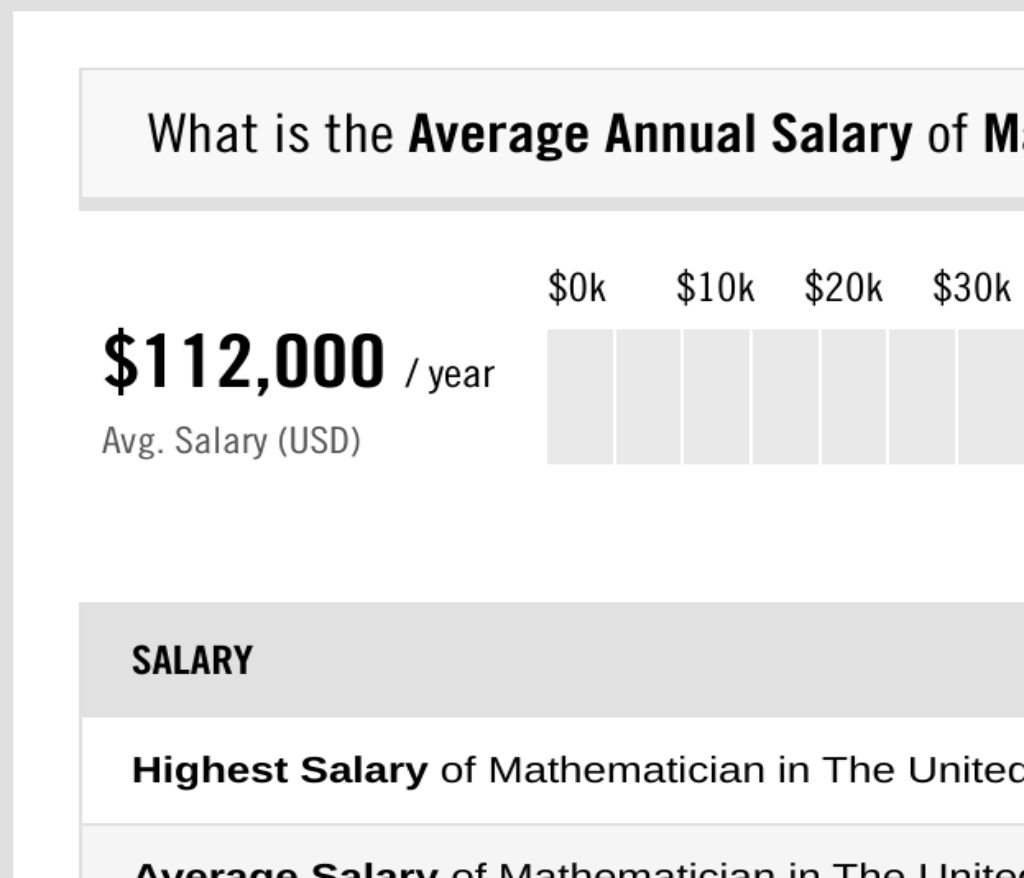
Short Answer
Definition of a Mathematician’s Average Salary
The average salary of a mathematician represents the typical financial compensation earned by professionals in the field of mathematics. This figure serves as an indicator of the economic value attributed to mathematical expertise across various sectors and geographic regions. It is influenced by multiple factors including education, experience, location, and industry, providing a comprehensive overview of earning potential within the profession.
Educational Influence on Earnings
Academic qualifications are foundational in shaping a mathematician’s salary prospects. Most mathematicians begin their careers with a bachelor’s degree in mathematics or a related field. However, pursuing advanced degrees such as a master’s or doctorate significantly enhances earning capacity. Graduate education not only equips individuals with deeper analytical skills but also opens doors to specialized roles in academia, research, and industry, often accompanied by higher remuneration.
Impact of Professional Experience
Experience plays a crucial role in salary progression for mathematicians. Entry-level professionals typically earn salaries near the median range, but as they accumulate years of practice and develop advanced problem-solving abilities, their compensation tends to increase. This growth reflects the value of accumulated knowledge and the ability to address more complex challenges within their organizations.
Geographical Variations in Salary
Location significantly affects mathematicians’ earnings, much like environmental factors influence natural growth. Urban areas, especially those with a concentration of corporate headquarters, research institutions, and government agencies, generally offer higher salaries. For example, regions such as Silicon Valley and major financial hubs provide competitive pay due to high demand for analytical talent. Conversely, mathematicians in rural or less economically vibrant areas may experience lower salaries, often balanced by a reduced cost of living.
Industry-Specific Salary Differences
The sector in which a mathematician is employed greatly influences their income. Key industries include finance, technology, academia, healthcare, and government. Mathematicians working in finance, particularly in roles involving statistical modeling and predictive analytics, often command some of the highest salaries due to their critical role in risk management and investment strategies. In contrast, academic mathematicians, while contributing significantly through research and education, may receive comparatively modest financial rewards but often gain intrinsic satisfaction from their work.
The Rise of Data Science and Its Effect on Salaries
Data science represents a rapidly growing interdisciplinary field that merges mathematics, statistics, and computer science. Mathematicians entering this domain frequently enjoy salaries that surpass those of traditional roles, as organizations increasingly invest in data-driven decision-making. This trend highlights the expanding opportunities for mathematicians to apply their skills in innovative and financially rewarding ways.
Future Outlook and Demand for Mathematicians
Looking ahead, the demand for mathematicians is expected to grow steadily. Advances in technology and the increasing reliance on data analytics across industries suggest a robust job market. Economic forecasts predict that careers in mathematics and related disciplines will offer expanding opportunities and competitive salaries, making the profession an attractive choice for future generations.
Why Understanding Average Salary Matters
Comprehending the average salary of mathematicians is important for prospective professionals as it provides insight into the economic landscape of the field. It helps individuals make informed decisions about education, career paths, and geographic relocation. Moreover, salary trends reflect broader societal and technological shifts, underscoring the evolving role of mathematics in solving real-world problems.
Common Misconceptions About Mathematician Salaries
All mathematicians earn high salaries.
Salaries vary widely depending on education, experience, industry, and location, with some roles offering modest pay.
Academic mathematicians have the same earning potential as those in industry.
Academics often earn less than industry professionals but may gain other non-monetary benefits such as intellectual fulfillment and job stability.
A bachelor’s degree is sufficient for top-paying jobs.
Advanced degrees typically open doors to higher-paying and more specialized positions.
Summary
The average salary of a mathematician is a multifaceted concept shaped by education, experience, geographic location, and industry sector. While financial compensation is a significant consideration, many mathematicians also value intellectual challenge and personal fulfillment. As the demand for mathematical expertise grows in an increasingly data-driven world, the profession offers diverse and rewarding opportunities for those passionate about numbers and problem-solving.
FAQ
What is the average salary of a mathematician?
The average salary varies but generally falls between $60,000 and $130,000 annually, depending on several factors.
How does location affect mathematician salaries?
Salaries tend to be higher in urban and economically vibrant regions, such as Silicon Valley and major financial hubs.
What industries pay mathematicians the most?
Finance, technology, and data science industries typically offer the highest salaries for mathematicians.
Why are advanced degrees important for mathematicians?
Advanced degrees enhance analytical skills and open opportunities for specialized and higher-paying roles.





Leave a Reply