

Short Answer
Early Life and Cultural Background
Hans Bethe, a distinguished figure in theoretical physics, was shaped by a unique blend of cultural influences and historical upheavals. Born on July 2, 1906, in Strasbourg-a city caught between French and German control-Bethe’s upbringing was steeped in a rich cultural milieu. His father, an educator committed to progressive teaching methods, instilled in him a deep respect for learning and intellectual curiosity. This nurturing environment laid the foundation for Bethe’s lifelong passion for scientific exploration.
Impact of Socio-Political Environment
The aftermath of World War I brought significant economic and social instability to Europe, profoundly affecting Bethe’s formative years. These turbulent times were not merely a backdrop but actively influenced his worldview and intellectual development. Immersed in a period marked by uncertainty and ideological shifts, Bethe engaged deeply with scientific and philosophical texts, which helped shape his analytical thinking. His early fascination with physics and mathematics emerged as a response to the complex realities surrounding him.
Academic Formation and Intellectual Growth
At 18, Bethe commenced his higher education at the University of Frankfurt, where he encountered influential mentors such as Friedrich R. R. Gold. The rigorous academic atmosphere challenged him to refine his understanding of emerging scientific theories, including quantum mechanics and relativity. This phase was critical in molding Bethe’s scientific perspective, as he grappled with concepts that were still evolving within the scientific community.
Challenges and Emigration
The rise of the Nazi regime in 1933 posed severe obstacles for Bethe, who was Jewish. Facing persecution, he emigrated to the United States in 1935, a move that demanded considerable resilience. This displacement, while fraught with difficulty, also acted as a catalyst for his intellectual advancement. Adapting to a new academic environment, Bethe’s determination and creativity flourished, demonstrating how adversity can sometimes fuel scientific innovation.
Scientific Contributions at Cornell University
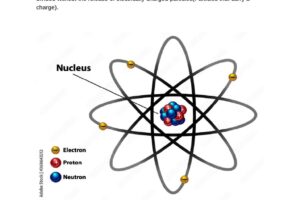
Upon settling in the United States, Bethe joined Cornell University, where he became part of a dynamic scientific community. This environment enabled him to deepen his research in nuclear physics and astrophysics. Collaborating with leading scientists, Bethe made significant strides, most notably developing the Bethe-Weizsäcker formula. This formula provided critical insights into the binding energy of atomic nuclei, enhancing the understanding of nuclear reactions that power stars.
Ethical Reflections and World War II Involvement
Bethe’s career was marked not only by scientific achievement but also by a profound awareness of the ethical implications of his work. During World War II, he contributed to the Manhattan Project, which developed the atomic bomb. This experience highlighted the dual nature of scientific progress-the capacity to create and to destroy. Bethe’s introspection on the moral responsibilities of scientists remains a vital discourse on the intersection of science and society.
Legacy and Contemporary Relevance
Hans Bethe’s early experiences-shaped by cultural diversity, personal challenges, and rigorous scholarship-crafted a scientist who combined intellectual brilliance with ethical mindfulness. His life invites ongoing reflection on how modern scientists can responsibly navigate the complex consequences of their discoveries. In an era where scientific advancements increasingly impact global society, Bethe’s legacy underscores the importance of balancing innovation with conscientious stewardship of knowledge.
FAQ
Who was Hans Bethe?
Hans Bethe was a German-American theoretical physicist renowned for his work in quantum mechanics and nuclear physics.
What major scientific formula did Hans Bethe develop?
He developed the Bethe-Weizsäcker formula, which describes the binding energy of atomic nuclei.
Why did Hans Bethe emigrate to the United States?
Bethe emigrated due to persecution under the Nazi regime as a Jewish scientist.
What role did Hans Bethe play during World War II?
He contributed to the Manhattan Project, the U.S. research project that developed the atomic bomb.



Leave a Reply