

Short Answer
Overview of Atomic, Molecular, and Optical Physics and Condensed Matter Physics
Atomic, Molecular, and Optical (AMO) physics and Condensed Matter (CM) physics represent two prominent branches within the broader field of physics. Although they investigate different scales and phenomena, these disciplines are deeply interconnected, each contributing unique perspectives, experimental methods, and theoretical frameworks. This article provides a comprehensive comparison of AMO and CM physics, highlighting their core principles, experimental approaches, key phenomena, practical applications, and the synergy between them.
Definition and Core Concepts
Atomic, Molecular, and Optical Physics
AMO physics centers on the study of atoms, molecules, and their interactions with electromagnetic radiation. It explores discrete quantum states, electron transitions, and fundamental quantum phenomena such as coherence and entanglement. The field is grounded in quantum mechanics, emphasizing principles like wave-particle duality and the Heisenberg uncertainty principle to describe particle behavior at microscopic scales.
Condensed Matter Physics
In contrast, CM physics investigates the collective properties of large assemblies of atoms or molecules. It focuses on emergent phenomena arising from interactions within bulk materials, including phase transitions, electrical conductivity, magnetism, and superconductivity. The discipline relies heavily on statistical mechanics and thermodynamics to explain material properties from a macroscopic viewpoint rather than individual particles.
Experimental Methodologies
Techniques in AMO Physics
AMO experiments often employ sophisticated tools designed to manipulate and measure individual atoms and molecules with high precision. Techniques such as laser cooling, magneto-optical trapping, and femtosecond spectroscopy enable researchers to control quantum states and perform ultra-precise measurements of fundamental constants.
- Ultracold Atomic Gases:
These systems allow the study of quantum phenomena like Bose-Einstein condensates, where atoms occupy a single quantum state, exhibiting collective quantum behavior. - Atomic Interferometry:
Utilizing the wave nature of particles, this method facilitates high-precision measurements that probe fundamental physical laws.
Techniques in Condensed Matter Physics
CM physics employs macroscopic experimental methods to analyze the structure and electronic properties of materials. Techniques such as X-ray diffraction, neutron scattering, and tunneling spectroscopy are pivotal in revealing atomic arrangements and electronic configurations.
- Scanning Tunneling Microscopy (STM):
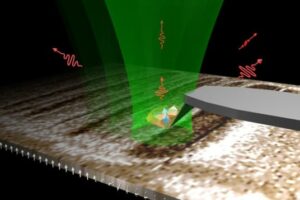
This technique provides atomic-scale images of surface structures, enabling detailed studies of electronic properties and atomic interactions. - Neutron Scattering:
Used to investigate magnetic and structural properties of materials by observing how neutrons interact with atomic nuclei.
Phenomena Explored in AMO and CM Physics
Quantum Phenomena in AMO Physics
AMO research delves into the quantum mechanical behavior of individual particles, focusing on phenomena such as quantum coherence, laser cooling, and atom-light interactions. Studies of quantum entanglement reveal the intricate correlations between particles that defy classical explanations.
Emergent Properties in Condensed Matter Physics
CM physics examines collective effects that manifest in materials under various conditions, such as temperature and pressure changes. Key topics include phase transitions (e.g., solid-liquid-gas changes), superconductivity characterized by zero electrical resistance, and magnetism arising from electron interactions within solids.
Applications and Technological Impact
Contributions of AMO Physics
AMO physics has driven significant technological advancements, particularly in precision measurement and quantum technologies. Innovations include:
- Atomic Clocks:
Providing the most accurate timekeeping devices based on atomic transitions. - Quantum Computing:
Utilizing controlled quantum states of atoms and molecules to perform computations beyond classical capabilities. - Quantum Cryptography:
Ensuring secure communication through principles of quantum mechanics. - Quantum Simulation:
Employing ultracold atomic systems to model complex many-body physics phenomena.
Contributions of Condensed Matter Physics
CM physics underpins the development of advanced materials and electronic devices, impacting areas such as:
- Semiconductor Technology:
Enhancing electronic components through understanding conductivity and magnetism. - Superconductors:
Creating materials that conduct electricity without resistance, improving energy transmission efficiency. - Energy Storage:
Innovating batteries and capacitors based on material properties.
Interdisciplinary Connections
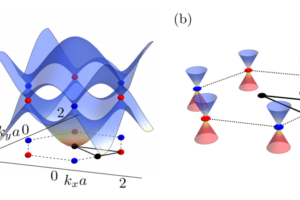
The distinction between AMO and CM physics is often fluid, with significant overlap fostering collaborative research. AMO techniques are increasingly applied to probe condensed matter systems at the quantum level, while discoveries in CM physics inspire new quantum experiments.
- Quantum Gases and Novel States:
Research on quantum gases and exotic phases like topological insulators bridges both fields, offering insights into fundamental interactions. - Cross-Disciplinary Techniques:
Methods developed in AMO physics, such as precise control of quantum states, are instrumental in exploring complex condensed matter phenomena.
Common Misunderstandings
- Misconception: AMO physics only deals with isolated atoms and has no relevance to bulk materials.
Correction: AMO techniques are crucial for understanding and manipulating quantum properties that influence bulk material behavior, linking closely with condensed matter studies. - Misconception: Condensed matter physics ignores quantum mechanics.
Correction: Quantum mechanics is fundamental to CM physics, especially in explaining phenomena like superconductivity and magnetism.
Significance in Science and Technology
Both AMO and CM physics are vital for advancing our comprehension of the physical universe. AMO physics provides the precision tools and theoretical foundation to explore quantum phenomena, while CM physics addresses the complex behaviors emerging from large-scale particle interactions. Together, they drive innovation in quantum technologies, materials science, and fundamental physics, shaping modern scientific and technological landscapes.
FAQ
What is AMO Physics?
AMO Physics focuses on the study of atoms, molecules, and their interactions with electromagnetic radiation, emphasizing quantum phenomena.
What does CM Physics study?
CM Physics investigates the collective properties of large assemblies of atoms or molecules, focusing on emergent phenomena in bulk materials.


Leave a Reply