
Short Answer
Definition of High-Velocity Atomic Collisions
A high-velocity atomic collision refers to the event where a single atom, traveling at an extremely fast speed-often approaching a significant fraction of the speed of light-impacts a target, such as the human body. This phenomenon, while rare in everyday life, is governed by fundamental principles of physics that describe atomic interactions and the behavior of particles at relativistic speeds.
Atomic Structure and Forces Involved
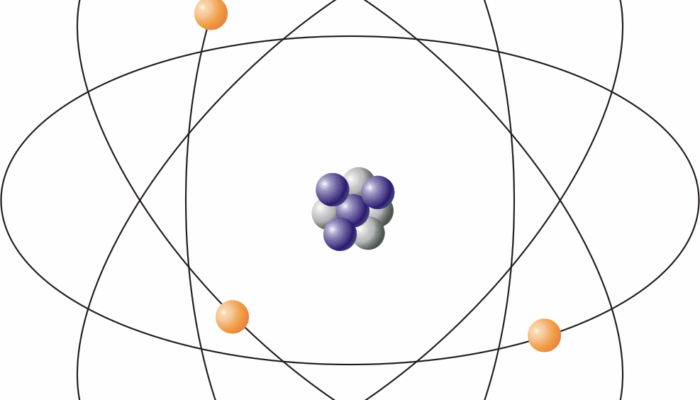
Atoms consist of subatomic particles: protons, neutrons, and electrons. These particles are held together and interact through fundamental forces:
- Electromagnetic Force:
Governs the attraction and repulsion between charged particles, influencing electron behavior around the nucleus. - Strong Nuclear Force:
Acts within the nucleus to bind protons and neutrons together, overcoming electromagnetic repulsion among protons.
When an atom is energized or ionized, it can behave similarly to a small projectile, especially when moving at high velocities. At speeds nearing that of light, relativistic effects such as time dilation and Lorentz contraction alter the atom’s effective mass and interaction dynamics.
Relativistic Energy and Its Implications
As an atom accelerates to relativistic speeds, its kinetic energy increases dramatically. According to Einstein’s mass-energy equivalence principle, expressed by the equation E = mc², the total energy of the atom escalates, resulting in a powerful impact upon collision. The energy transferred during such an event depends on factors including the atom’s mass, charge, and velocity.
Immediate Biological Effects of Atomic Collisions
When a high-speed atom strikes biological tissue, several immediate phenomena may occur:
- Energy Transfer and Ionization:
The atom imparts kinetic energy to tissue atoms, causing ionization-where electrons are stripped from atoms-leading to the formation of free radicals. - Chemical Bond Disruption:
The collision can break molecular bonds, damaging cellular structures and biomolecules such as DNA. - Thermal Effects and Plasma Formation:
Intense localized heating may occur, potentially generating plasma, a state where electrons are separated from nuclei.
These effects can result in cellular injury or death, with the severity influenced by the atom’s mass-heavier atoms like gold cause more damage than lighter ones such as hydrogen.
Long-Term Biological Consequences
Beyond the immediate damage, high-energy atomic impacts can trigger prolonged biological responses:
- Genetic Mutations:
DNA damage may lead to mutations, increasing the risk of cancer or triggering programmed cell death (apoptosis). - Free Radical Propagation:
Ionization generates free radicals that can spread damage beyond the initial impact site, overwhelming cellular repair mechanisms. - Chronic Health Effects:
Persistent cellular damage may contribute to long-term conditions, including degenerative diseases.
Influence of Impact Angle on Damage
The angle at which the atom collides with tissue significantly affects the outcome:
- Direct Impact:
Concentrates energy in a small area, causing intense localized damage. - Glancing Blow:
Distributes energy over a wider region, potentially reducing focal damage but increasing shock wave propagation through bodily fluids, which can cause broader tissue disruption.
Natural Protective Mechanisms Against High-Energy Particles
Earth’s atmosphere and magnetic fields serve as critical shields against high-energy atomic and subatomic particles originating from cosmic sources:
- Atmospheric Shielding:
Cosmic rays collide with atmospheric molecules, producing cascades of secondary particles and dissipating energy before reaching the surface. - Magnetosphere Protection:
Earth’s magnetic field deflects charged particles, reducing the flux of high-energy impacts on living organisms.
Without these natural defenses, the frequency and severity of high-velocity atomic collisions with biological tissue would increase substantially.
Comparisons with High-Energy Physics Experiments
Particle accelerators replicate conditions similar to high-velocity atomic collisions by accelerating particles to near-light speeds and inducing collisions. These experiments produce exotic particles and reveal fundamental interactions, paralleling the theoretical effects of an atom striking human tissue at relativistic velocities. This intersection highlights the relevance of high-energy physics to understanding biological impacts at the atomic scale.
Significance of Studying High-Speed Atomic Collisions
Exploring the effects of atoms colliding with biological matter at high speeds enhances our comprehension of energy transfer, ionization processes, and cellular damage mechanisms. Although such events are extraordinarily rare in everyday life, they provide valuable insights into radiation biology, cosmic ray interactions, and the fundamental physics governing matter. This knowledge is crucial for fields ranging from medical radiation therapy to space exploration safety.
Summary
In summary, a high-velocity atomic collision involves an atom moving at relativistic speeds impacting biological tissue, resulting in complex physical and biological effects. Immediate consequences include ionization and thermal damage, while long-term effects may involve genetic mutations and chronic health issues. Natural protective barriers like the atmosphere mitigate these risks, but understanding these interactions deepens our grasp of atomic physics and its biological implications.
FAQ
What happens when a high-speed atom collides with biological tissue?
A high-speed atom can cause ionization, break chemical bonds, and produce thermal effects, leading to cellular damage or death.
What are the long-term effects of atomic collisions?
Long-term effects may include genetic mutations, chronic health issues, and free radical propagation.
How does the angle of impact affect damage?
A direct impact causes localized damage, while a glancing blow distributes energy over a wider area.
What natural defenses protect against high-energy atomic impacts?
Earth’s atmosphere and magnetic fields shield against cosmic rays and high-energy particles.



Leave a Reply