
Short Answer
Definition of Quantum Cooling
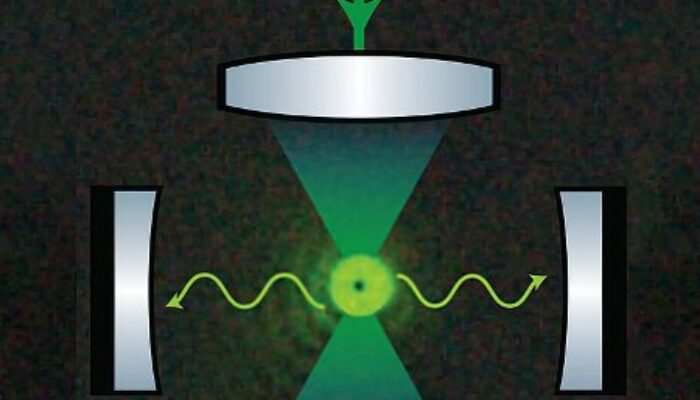
Quantum cooling refers to a sophisticated process that leverages the principles of quantum mechanics to reduce the temperature of materials, particularly at the nanoscale, by manipulating light. This technique involves controlling the thermal energy of particles through interactions with photons, the fundamental particles of light, enabling the achievement of ultra-low temperatures that are otherwise difficult to reach using classical cooling methods.
Fundamental Principles Behind Quantum Cooling
At its essence, quantum cooling exploits the interaction between light and matter to extract thermal energy from particles. By carefully tuning laser light, it is possible to influence the motion and vibrational states of atoms or ions, thereby lowering their kinetic energy and effectively cooling the system. Two primary methods exemplify this approach: Doppler cooling and resolved sideband cooling, each with distinct mechanisms and applications.
Doppler Cooling Explained
Doppler cooling is one of the pioneering quantum cooling techniques. It operates by directing laser beams at particles moving at specific velocities. Due to the Doppler effect, the frequency of the incoming light shifts relative to the particle’s motion. When photons collide with these particles, they transfer momentum that slows the particles down, reducing their velocity and consequently their thermal energy. This process results in a net cooling effect, making it a straightforward yet powerful method for lowering temperatures in atomic gases.
Resolved Sideband Cooling Mechanism
Resolved sideband cooling is a more advanced technique designed for systems requiring high precision, such as trapped ions or atoms. This method targets the quantized vibrational modes of particles confined in electromagnetic traps. By selectively removing energy from specific vibrational states using finely tuned lasers, the amplitude of these vibrations diminishes, leading to a significant reduction in thermal energy. This approach is capable of reaching temperatures near absolute zero, which is crucial for applications in quantum computing and quantum information processing where thermal noise must be minimized.
Quantum Cooling and Its Role in Quantum Phenomena
Beyond temperature reduction, quantum cooling facilitates the exploration of fundamental quantum states and transitions. Cooling particles to extremely low temperatures enables the observation of phenomena such as Bose-Einstein condensation, where bosons collectively occupy the same quantum state, exhibiting macroscopic quantum effects. This state provides valuable insights into quantum phase transitions and the delicate balance between temperature and quantum coherence.
Applications in Quantum Technologies
Quantum cooling is instrumental in advancing experimental quantum technologies. By achieving ultra-cold conditions, researchers can manipulate and entangle quantum states with enhanced control, which is essential for the development of robust quantum computers and secure quantum communication systems. The ability to maintain qubits with minimal decoherence directly impacts the efficiency and scalability of quantum processors.
Precision Measurement Enhancements
In precision metrology, quantum cooling improves the performance of atomic clocks and gravitational wave detectors by reducing thermal noise. Cooled atoms serve as highly stable references, enabling unprecedented sensitivity and accuracy in timekeeping and astrophysical observations.
Impact on Optomechanics
Quantum cooling also plays a vital role in optomechanics, where the interaction between light and mechanical oscillators is studied. Cooling mechanical modes to near their quantum ground state allows researchers to probe quantum effects in macroscopic objects and develop innovative quantum sensors and communication devices that bridge classical and quantum physics.
Recent Advances and Experimental Techniques
Ongoing research in quantum cooling continues to push the boundaries of what is achievable. Innovations such as optical lattices provide refined control over atomic ensembles, enabling the study of complex quantum phases and interactions. These advancements open new pathways for investigating exotic quantum materials and phenomena that were previously inaccessible.
Future Prospects and Technological Integration
Looking ahead, quantum cooling is poised to influence a broad spectrum of technologies. Its integration with semiconductor devices at the nanoscale could lead to significant improvements in electronic efficiency and energy consumption, aligning with global efforts toward sustainable technology development. The potential to incorporate quantum cooling into everyday devices heralds a new era of performance optimization and miniaturization.
Summary and Significance
Quantum cooling stands as a transformative field at the crossroads of quantum mechanics and applied science. Techniques like Doppler and resolved sideband cooling enable unprecedented control over particle states, facilitating breakthroughs in both fundamental research and practical applications. By harnessing the subtle interactions between light and matter, quantum cooling not only deepens our understanding of quantum behavior but also drives innovation across multiple scientific and engineering disciplines, marking a significant milestone in the quest to master the quantum world.
FAQ
What is quantum cooling?
Quantum cooling is a process that uses light, particularly laser photons, to reduce the thermal motion of particles, achieving extremely low temperatures.
How does Doppler cooling work?
Doppler cooling uses the Doppler effect where laser light slows particles moving towards the light source, reducing their velocity and thermal energy.
What is resolved sideband cooling?
Resolved sideband cooling targets specific vibrational modes of trapped ions or atoms to selectively remove energy and cool the system with high precision.
Why is cooling necessary in quantum computing?
Cooling reduces thermal noise and decoherence, which are major obstacles to maintaining stable quantum states in qubits.
What are some applications of quantum cooling?
Applications include atomic clocks, gravitational wave detectors, quantum sensors, and the development of quantum materials.






Leave a Reply