
Short Answer
Definition of Atom Formation
Atom formation refers to the process by which fundamental particles combine to create atoms, the essential units of matter that constitute all physical substances in the universe. This phenomenon encompasses the initial creation of atomic nuclei, the binding of electrons, and the subsequent development of complex elements that form the diverse matter observed today.
Origins of Atoms in the Early Universe
The genesis of atoms dates back to the moments immediately following the Big Bang, approximately 13.8 billion years ago. Initially, the universe existed as an extremely hot and dense plasma of energy and elementary particles. Within fractions of a second, quarks and gluons combined to form protons and neutrons, the primary components of atomic nuclei. This phase, known as neutronization, led to the creation of the first nuclei, predominantly hydrogen and helium isotopes.
Recombination and the Birth of Neutral Atoms
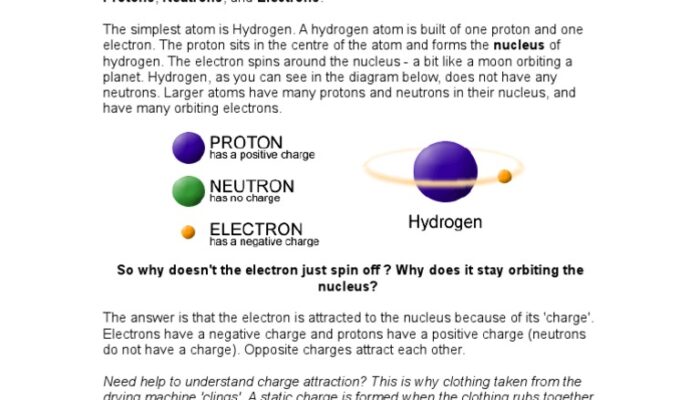
About 380,000 years after the Big Bang, the universe underwent a critical transition called recombination. During this period, the temperature dropped sufficiently for free electrons to attach to protons, forming neutral hydrogen atoms. This event marked the decoupling of matter from radiation, allowing photons to travel freely and giving rise to the cosmic microwave background radiation that permeates the universe today.
Stellar Nucleosynthesis: Creating Heavier Elements
Following recombination, the universe’s matter began to clump under gravity, leading to the formation of stars and galaxies. Stars act as cosmic forges where nuclear fusion processes convert lighter elements like hydrogen and helium into heavier elements such as carbon, oxygen, and iron. This stellar nucleosynthesis enriches the universe with a variety of elements essential for the complexity of matter and life.
The Role of Supernovae in Element Distribution
Massive stars conclude their life cycles in spectacular explosions called supernovae. These events scatter heavy elements synthesized in stellar cores into the interstellar medium, seeding future generations of stars and planetary systems with the building blocks necessary for chemical diversity and biological potential.
Planetary Formation and Atomic Aggregation
Planets emerge from protoplanetary disks-rotating accumulations of gas and dust encircling young stars. Through a process called accretion, atoms and molecules gradually coalesce into planetesimals, which further combine to form planets. This aggregation transforms simple atomic structures into complex, solid bodies, including terrestrial and gas giant planets found within our solar system and beyond.
Atomic Interactions and the Evolution of Life on Earth
On Earth, the interplay of various elements has driven geological and biological evolution. Theories such as the primordial soup hypothesis suggest that life originated from organic molecules formed through chemical reactions among atoms. Water, a compound of hydrogen and oxygen atoms, plays a vital role as a solvent facilitating biochemical processes essential for life.
The Periodic Table and Atomic Properties
The periodic table organizes elements based on their atomic number and electron configuration, highlighting the diversity of atomic characteristics. Properties such as electronegativity, atomic radius, and ionization energy determine how atoms bond-whether ionically, covalently, or metallically-resulting in the vast array of chemical compounds that compose the material universe.
Isotopes: Variations Within Elements
Isotopes are forms of the same element that differ in neutron number, affecting atomic mass and nuclear stability. These differences influence radioactive decay rates and have significant applications in fields like archaeology, medicine, and nuclear physics, providing insights into both the age of materials and atomic behavior.
Modern Applications of Atomic Science
Advancements in atomic manipulation have ushered in innovative technologies such as nanotechnology, which exploits atomic and molecular properties to engineer materials with customized features. These breakthroughs have transformative potential across medicine, electronics, and materials science, shaping future technological landscapes.
Why Understanding Atom Formation Is Crucial
Comprehending how atoms form and evolve is fundamental to grasping the nature of the universe and the matter within it. From the explosive origins of the cosmos to the intricate processes that create stars, planets, and life, the study of atomic formation reveals the interconnectedness of all existence. This knowledge not only deepens scientific understanding but also inspires curiosity about the complexity and beauty of the world around us.
FAQ
What is atom formation?
Atom formation is the process by which fundamental particles combine to create atoms, essential units of matter.
How did atoms originate in the universe?
Atoms originated shortly after the Big Bang through processes involving quarks, gluons, and nuclear reactions in stars.






Leave a Reply