
Short Answer
Definition of Fundamental Chemical Entities
The universe at its most basic level is composed of a complex network of atoms, molecules, compounds, and elements. These fundamental units form the foundation of all matter, providing essential insights into the composition and behavior of substances. Understanding these entities reveals the intricate connections that drive chemical reactions and the diverse material forms encountered in everyday life.
Atoms: The Core Units of Matter
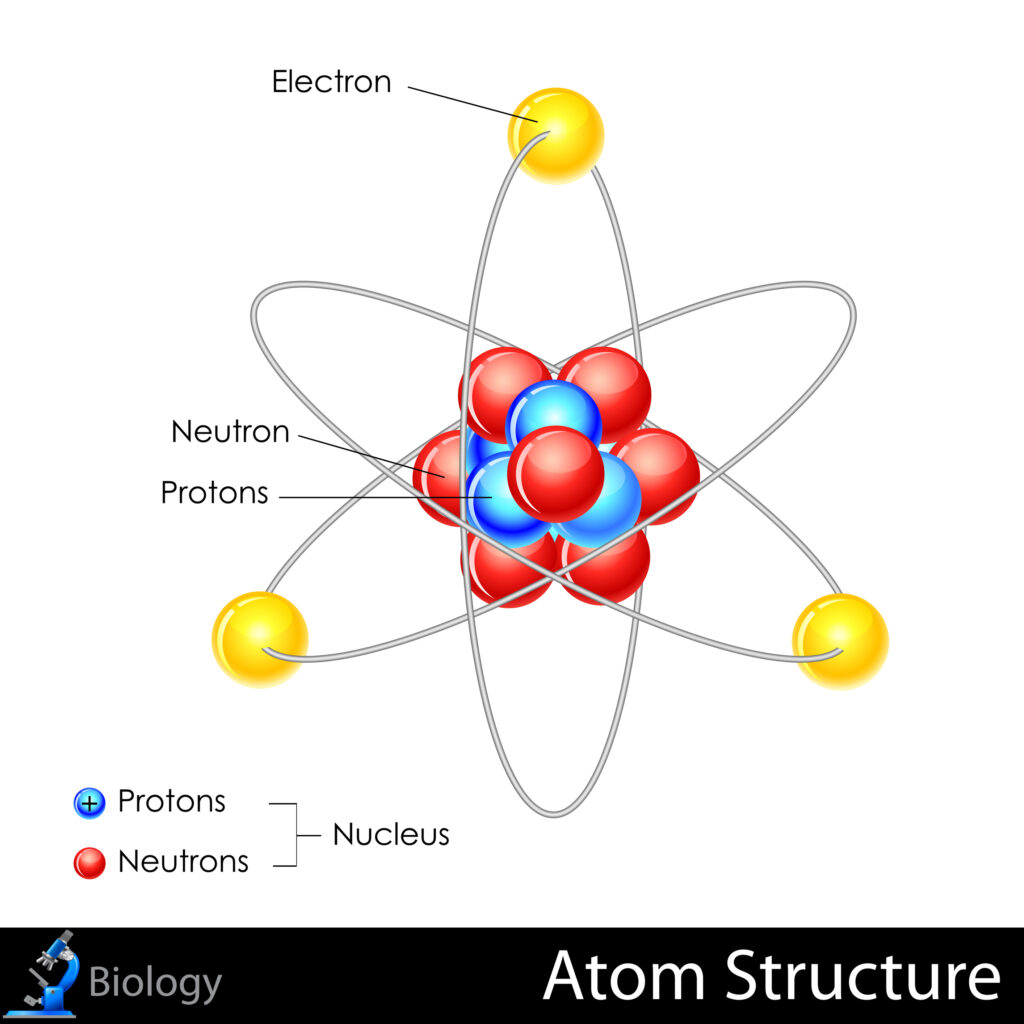
Atoms represent the smallest indivisible units of an element that retain its chemical identity. Each atom consists of a central nucleus containing positively charged protons and neutral neutrons, encircled by negatively charged electrons arranged in discrete energy levels. The configuration of these electrons, especially those in the outermost shell known as valence electrons, plays a crucial role in determining an atom’s chemical properties and its ability to form bonds.
- Atomic Structure:
The nucleus houses protons and neutrons, while electrons orbit in shells or energy levels. - Electron Configuration:
The distribution of electrons influences atomic stability and reactivity, exemplified by noble gases with full outer shells exhibiting chemical inertness.
Elements: Pure Chemical Substances
Elements are pure substances that cannot be decomposed into simpler substances through chemical reactions. Each element is uniquely identified by its atomic number, which corresponds to the number of protons in its nucleus. This atomic number forms the basis for the organization of the periodic table, which categorizes elements and predicts their properties.
- Atomic Number:
Defines the identity of an element by the count of protons. - Periodic Table Classification:
Elements are grouped as metals, nonmetals, and metalloids based on shared physical and chemical traits such as conductivity and reactivity. - Examples:
Oxygen is vital for respiration, while carbon forms the backbone of organic molecules.
Compounds: Chemical Combinations of Elements
Compounds arise when two or more elements chemically bond in fixed proportions, resulting in substances with properties distinct from their individual components. The formation of compounds involves either the sharing or transfer of electrons, leading to covalent or ionic bonds respectively.
- Covalent Bonds:
Formed by the sharing of electrons between atoms, creating molecules with specific shapes and properties. - Ionic Bonds:
Result from the transfer of electrons, producing charged ions that attract each other to form ionic compounds. - Example:
Water (H2O) is a compound with unique characteristics different from hydrogen and oxygen gases. - Stoichiometry:
Governs the precise ratios in which elements combine to form compounds.
Molecules: Groups of Bonded Atoms
Molecules consist of two or more atoms bonded together, either of the same element or different elements. They serve as the fundamental units in chemistry, defining the limits of chemical reactions and interactions.
- Homogeneous Molecules:
Composed of identical atoms, such as oxygen gas (O2). - Heterogeneous Molecules:
Contain different atoms, like carbon dioxide (CO2). - Complexity:
Molecules range from simple diatomic gases to large macromolecules like proteins and nucleic acids essential for life.
Interconnections Among Atoms, Molecules, Compounds, and Elements
The relationships between these chemical entities become evident in natural processes. For example, photosynthesis involves the transformation of carbon dioxide and water into glucose and oxygen, showcasing the dynamic interactions of molecules and compounds. These interactions are further illuminated by quantum mechanics, which explains the probabilistic behavior of electrons and subatomic particles, enriching our understanding of chemical bonding and reactions.
Quantum Mechanics and Chemical Behavior
Quantum theory provides a framework for understanding the behavior of electrons within atoms and molecules. Unlike classical physics, it describes electron positions as probabilities rather than fixed orbits, influencing how atoms bond and interact. This perspective deepens our comprehension of chemical phenomena and the fundamental nature of matter.
Significance of Studying Matter’s Building Blocks
The exploration of atoms, elements, compounds, and molecules is not only central to scientific inquiry but also pivotal for technological advancement. From the synthesis of elements in stars to the development of new materials and medicines, understanding these fundamental units drives innovation and expands our grasp of the universe’s complexity. This knowledge enhances scientific literacy and fosters appreciation for the intricate design underlying the natural world.
FAQ
What is an atom?
An atom is the smallest indivisible unit of an element that retains its chemical identity, consisting of protons, neutrons, and electrons.
How are compounds different from molecules?
Compounds are substances formed when two or more different elements chemically bond in fixed proportions, whereas molecules can consist of atoms of the same or different elements bonded together.
What role does the periodic table play in chemistry?
The periodic table organizes elements by their atomic number and groups them based on shared physical and chemical properties, helping to predict element behavior.
What is the difference between ionic and covalent bonds?
Ionic bonds form through the transfer of electrons creating charged ions, while covalent bonds form by sharing electrons between atoms.
Why is quantum mechanics important in understanding chemical behavior?
Quantum mechanics explains the probabilistic behavior of electrons within atoms and molecules, which influences bonding and chemical reactions.






Leave a Reply