

Short Answer
Understanding the Search for Earth 2.0
The human fascination with discovering a second Earth-often dubbed Earth 2.0-spans numerous scientific fields, including astrobiology and planetary science. This pursuit hinges on identifying specific chemical markers that could signal the presence of life beyond our planet. By examining these biochemical indicators, researchers aim to answer a profound question: what unique chemical footprints should we expect when hunting for extraterrestrial worlds that resemble Earth?
Exoplanet Exploration: Methods and Habitability
The cosmos is unimaginably vast, containing billions of galaxies filled with stars and their orbiting planets. Since the early 1990s, the study of exoplanets has accelerated dramatically, thanks to advanced telescopes and innovative detection techniques. Two primary methods dominate this field:
- Transit Method:
Observes the slight dimming of a star’s light as a planet crosses its face, revealing the planet’s presence. - Radial Velocity:
Measures the gravitational influence of a planet on its star, detected through shifts in the star’s spectral lines.
Discovering planets within the “Goldilocks Zone”-the orbital region where temperatures allow liquid water to exist-raises the possibility of habitability. However, the mere presence of water is insufficient to confirm life, emphasizing the need to detect chemical signatures linked to biological activity.
Spectroscopy: Decoding Planetary Atmospheres
Spectroscopy serves as a cornerstone technique in analyzing the atmospheres of distant exoplanets. By studying the light that passes through or reflects off a planet’s atmosphere during transit, scientists can identify molecular signatures. Key gases of interest include:
- Oxygen (O2):
On Earth, oxygen is primarily produced by photosynthetic organisms, making it a potential biosignature. - Methane (CH4):
Its coexistence with oxygen is particularly significant because, under non-biological conditions, these gases would react and neutralize each other. - Carbon Dioxide (CO2):
A common atmospheric component that can indicate geological or biological processes.
The simultaneous detection of oxygen and methane suggests active biological processes, as their coexistence is difficult to maintain without continuous replenishment by living organisms.
Water Vapor and Its Role in Habitability
Water vapor is another critical marker in the search for life. Although water molecules are abundant throughout the universe, their state-vapor, liquid, or ice-and concentration on a planet provide clues about its potential to support life. Planets situated at optimal distances from their stars, where liquid water can persist, are prime candidates for hosting life-supporting biochemical reactions.
Challenges in Interpreting Chemical Signatures
Detecting potential biosignatures is only part of the challenge; interpreting their origins is equally complex. Non-biological processes can produce gases that mimic signs of life, leading to false positives. For example:
- Volcanic Activity:
Can release methane without any biological involvement. - Abiotic Oxygen Production:
Certain photochemical reactions can generate oxygen-rich atmospheres absent of life.
Therefore, distinguishing genuine biosignatures requires integrating knowledge from chemistry, biology, and physics to avoid misinterpretation.
Biosignatures Beyond the Basics
Expanding the scope of biosignatures includes examining more complex molecules that may indicate life or its evolutionary stages. For instance:
- Nitrous Oxide (N2O):
On Earth, this gas is produced by microbial activity and human processes, suggesting that its detection could hint at both biological presence and advanced life forms. - Phosphine (PH3):
Primarily generated by anaerobic organisms on Earth, phosphine’s detection in unexpected environments, such as Venus’s atmosphere, challenges current understanding and raises questions about alternative life forms or unknown geochemical processes.
Technological Advances in Detecting Chemical Signatures
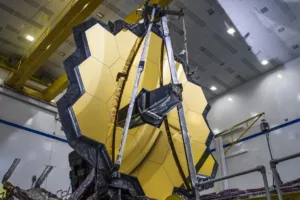
Mapping chemical markers across exoplanetary atmospheres is a formidable task that demands cutting-edge technology. Upcoming observatories, like the James Webb Space Telescope (JWST), are equipped with enhanced infrared sensitivity, enabling unprecedented precision in identifying atmospheric constituents. These advancements will help scientists differentiate between true biosignatures and abiotic mimics, refining the search for life beyond Earth.
The Philosophical and Scientific Significance of Finding Earth 2.0
The endeavor to locate Earth 2.0 transcends scientific inquiry, touching on philosophical questions about humanity’s place in the universe. Discovering chemical evidence of life on distant worlds could reshape our understanding of existence and the prevalence of life in the cosmos. While uncertainties and interpretative challenges persist, each new observation and technological breakthrough brings us closer to unveiling the mysteries of alien environments and their potential inhabitants. The enduring question remains: will we identify a true Earth analog among the stars, or will the search continue to fuel our longing for a cosmic home?
FAQ
What is Earth 2.0?
Earth 2.0 refers to a hypothetical exoplanet that shares similar characteristics to Earth, particularly its potential to support life.
How do scientists detect exoplanets?
Scientists primarily use the transit method, observing a star’s light dimming as a planet crosses it, and the radial velocity method, measuring star’s spectral shifts caused by gravitational pull of orbiting planets.
What are chemical biosignatures?
Chemical biosignatures are specific molecules or gases in a planet’s atmosphere, such as oxygen and methane, that may indicate the presence of biological activity.
Why is it challenging to interpret biosignatures?
Some gases linked to life can also be produced by non-biological processes, like volcanic activity or photochemical reactions, leading to potential false positives.
What role does the James Webb Space Telescope play in this research?
The James Webb Space Telescope offers enhanced infrared sensitivity that allows precise detection and analysis of atmospheric chemical signatures on exoplanets.



Leave a Reply