
Short Answer
Definition and Historical Context
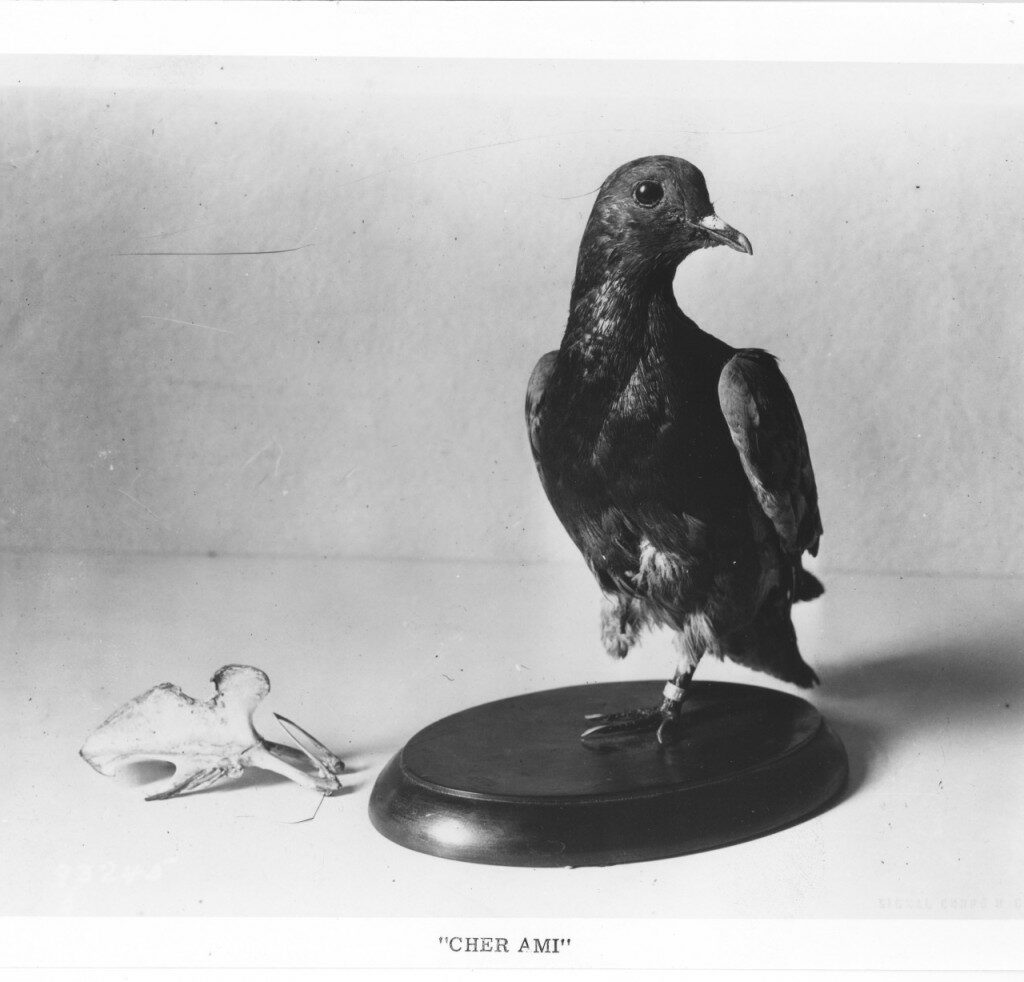
The story of Cher Ami, a distinguished messenger pigeon from World War I, represents a compelling blend of heroism, biology, and physics. Cher Ami’s mission during the Meuse-Argonne Offensive in 1918 highlights the critical role of avian messengers in wartime communication, as well as the scientific principles underlying their extraordinary capabilities. This narrative not only commemorates a remarkable act of bravery but also exemplifies how modern scientific understanding can illuminate historical events.
The Role of Cher Ami in World War I
During the intense and chaotic battles of the Meuse-Argonne Offensive, Cher Ami was deployed by the U.S. Army Signal Corps to carry vital messages across dangerous enemy territory. Despite sustaining severe injuries, this small pigeon successfully delivered a message that saved approximately 194 soldiers of the “Lost Battalion,” who were trapped behind enemy lines. Cher Ami’s survival and heroic feat sparked widespread interest in the physiological and psychological factors that enabled such resilience under extreme conditions.
Avian Navigation: Biological Mechanisms
Homing pigeons like Cher Ami possess remarkable navigational skills, which have fascinated scientists for decades. Their ability to find their way over long distances is attributed to a combination of sensory inputs and cognitive processes:
- Visual Landmarks:
Pigeons use familiar geographic features to orient themselves during flight. - Magnetic Field Detection:
Specialized cells in their brains allow them to sense Earth’s magnetic field, aiding in navigation. - Olfactory Cues:
Smell plays a role in helping pigeons recognize their home area and navigate accordingly.
These biological navigation systems demonstrate a complex interaction between environmental stimuli and the bird’s internal cognitive map.
Physics of Flight: Aerodynamics and Forces
The flight of Cher Ami can be better understood through the lens of physics, particularly the principles governing aerodynamics and motion. Key concepts include:
- Bernoulli’s Principle:
Explains how differences in air pressure above and below the wings generate lift, enabling flight. - Newton’s Laws of Motion:
Describe how forces such as thrust, drag, and gravity influence the bird’s movement through the air. - Lift and Drag Balance:
The interplay between upward lift and opposing drag forces determines flight efficiency and endurance.
Understanding these forces clarifies how Cher Ami managed to sustain flight over long distances despite injury and adverse conditions.
Mathematical Modeling of Cher Ami’s Flight
By applying fundamental kinematic equations, one can approximate the trajectory and velocity of Cher Ami’s flight. Variables involved include:
- Initial Velocity (v₀):
The speed at which Cher Ami began his flight. - Angle of Ascent (θ):
The angle relative to the horizontal plane at which the bird took off. - External Factors:
Wind resistance and other environmental conditions affecting flight path.
Using vector analysis and motion equations, researchers can estimate the speed and distance Cher Ami covered, providing insight into the physical demands of his mission.
Interdisciplinary Insights: Physics Meets History
The investigation into Cher Ami’s story exemplifies how combining physics with historical research enriches our understanding of past events. By examining both the biological traits of pigeons and the physical laws governing flight, scholars gain a more comprehensive picture of how extraordinary acts of courage are supported by natural phenomena. This interdisciplinary approach reveals the underlying mechanisms that enable resilience and survival in extreme situations.
Symbolism and Human Resilience
Cher Ami’s journey transcends its historical context to symbolize the broader human spirit of perseverance. The pigeon’s ability to overcome injury and adversity mirrors the determination that drives individuals to achieve remarkable feats despite overwhelming challenges. This metaphor highlights the intricate relationship between physical forces and human willpower, inspiring reflection on the limits of endurance and the nature of heroism.
Conclusion: The Legacy of Cher Ami
The tale of Cher Ami encapsulates the essence of resilience through the combined perspectives of biology, physics, and history. Scientific analysis not only demystifies the physical challenges faced by this extraordinary pigeon but also deepens our appreciation of the Great War’s human stories. Ultimately, Cher Ami’s flight stands as a powerful reminder that the answers to enduring mysteries often lie at the crossroads of multiple disciplines, waiting to be uncovered by curious minds.
FAQ
What was Cher Ami's role in World War I?
Cher Ami was a messenger pigeon that carried critical messages for the U.S. Army, notably saving the Lost Battalion by delivering a vital message despite severe injuries.
How do pigeons navigate during flight?
Pigeons use a combination of visual landmarks, Earth's magnetic fields, and olfactory cues to navigate and orient themselves over long distances.
What physics principles explain Cher Ami's flight?
Cher Ami's flight is explained by aerodynamics, including Bernoulli's principle, Newton's laws of motion, lift, drag, and the effects of gravity and wind resistance.
Why is Cher Ami a symbol of resilience?
Despite grave injuries, Cher Ami completed his mission, demonstrating extraordinary endurance and courage, symbolizing the human and animal spirit of resilience.




Leave a Reply