
Short Answer
Definition of Spiral Galaxies and Dark Matter
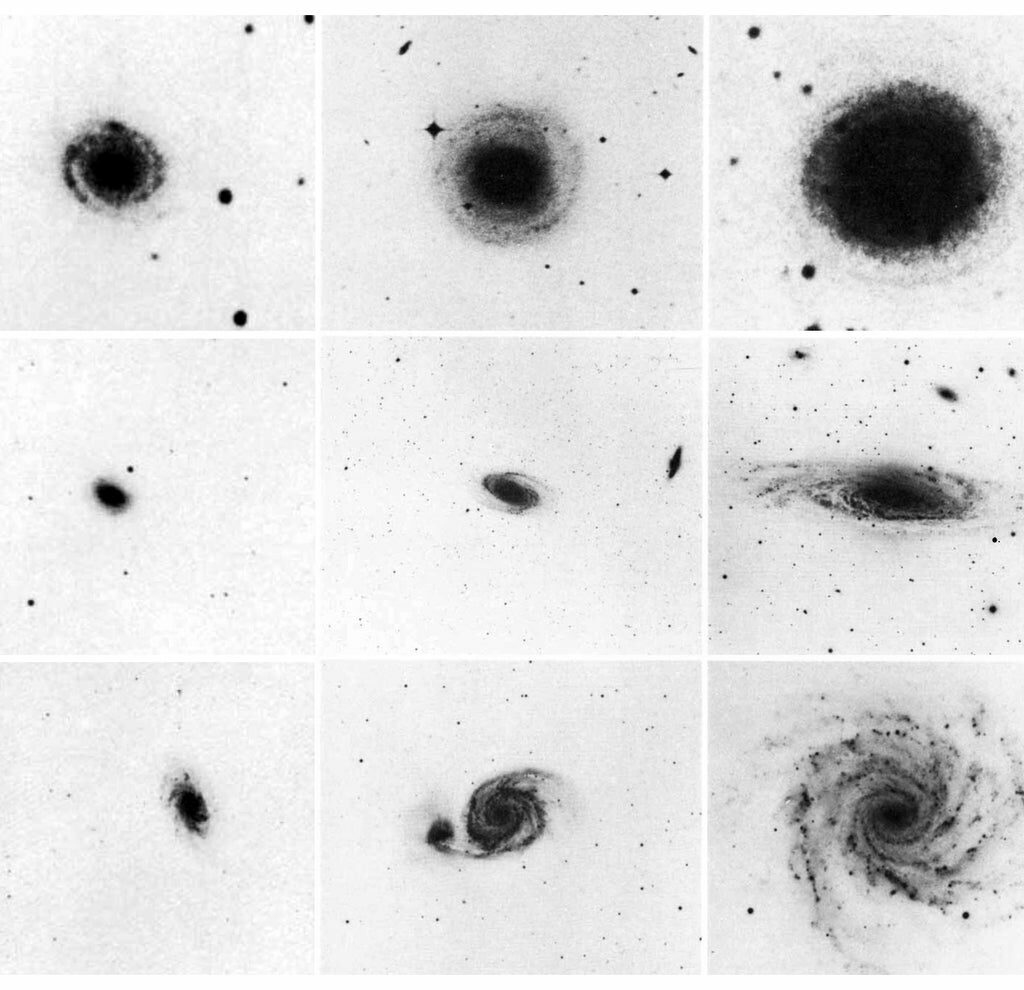
Spiral galaxies are vast cosmic systems composed of stars, gas, and dust arranged in graceful, rotating arms that extend from a dense central core. These galaxies are not only visually stunning but also serve as crucial cosmic laboratories for understanding the universe’s hidden components. One of the most profound mysteries they help unravel is the existence of dark matter-an invisible form of mass that neither emits nor absorbs light but exerts a significant gravitational pull.
- Spiral Galaxies:
Large, rotating galaxies characterized by spiral arms filled with young, bright stars and a central bulge containing older stars. - Dark Matter:
A non-luminous substance that dominates the mass of galaxies and the universe, detectable only through its gravitational effects.
Structure and Composition of Spiral Galaxies
Spiral galaxies consist of several distinct components that contribute to their overall dynamics and appearance. The bright spiral arms are rich in gas and young stars, while the central bulge contains older, redder stars. Surrounding this visible matter is an extensive, spherical halo of dark matter, which plays a critical role in maintaining the galaxy’s structural integrity and rotational behavior.
- Spiral Arms:
Regions of active star formation, glowing with the light of young, massive stars. - Galactic Bulge:
The dense, central region populated by older stars. - Dark Matter Halo:
An invisible, massive envelope that extends beyond the visible galaxy, providing the gravitational glue that holds the galaxy together.
Galactic Rotation and the Dark Matter Puzzle
The rotation of spiral galaxies presents a compelling enigma. According to classical Newtonian physics, stars farther from the galactic center should orbit more slowly, similar to planets in the solar system. However, observations reveal that stars in the outer regions maintain unexpectedly high velocities, defying these predictions. This discrepancy suggests the presence of an unseen mass-dark matter-that influences the galaxy’s rotation.
Rotation Curves as Evidence
A key piece of evidence comes from galactic rotation curves, which plot the orbital speed of stars and gas against their distance from the center. Instead of declining at greater distances, these curves tend to flatten, indicating a constant orbital velocity. This phenomenon implies that the visible matter alone cannot account for the gravitational forces at play, necessitating a massive, invisible halo enveloping the galaxy.
Mechanism Behind Spiral Galaxy Rotation
The gravitational pull from both visible and dark matter governs the rotational dynamics of spiral galaxies. While stars and gas contribute to the galaxy’s mass, the dominant influence comes from the dark matter halo. This halo’s gravitational field ensures that stars in the outer arms remain bound to the galaxy, preventing them from flying off despite their high speeds.
Mathematical Description of Galactic Rotation
The rotational velocity ( v(r) ) of a star at a distance ( r ) from the galactic center can be described by the equation:
v(r) = sqrt{frac{G M(r)}{r}}
- v(r): Orbital velocity at radius ( r )
- G: Gravitational constant
- M(r): Total mass enclosed within radius ( r )
In the absence of dark matter, ( M(r) ) would correspond only to visible matter, predicting a decrease in ( v(r) ) with increasing ( r ). The observed flat rotation curves imply that ( M(r) ) continues to grow with radius, consistent with a dark matter halo extending beyond the visible galaxy.
Spiral Galaxies as Cosmic Laboratories
Unlike elliptical galaxies, which have more chaotic stellar motions, spiral galaxies exhibit ordered rotation patterns. This regularity allows astronomers to precisely measure and model the distribution of dark matter within them. By analyzing rotation curves and mass distribution, scientists can test various dark matter theories, including particle candidates and alternative gravity models.
Influence of Dark Matter on Galactic Morphology
Dark matter not only affects the motion of stars but also shapes the physical structure of spiral galaxies. It stabilizes the galactic disk against gravitational collapse and supports the formation of spiral arms through density waves. This interplay between dark matter and visible matter sculpts the galaxy’s elegant form, making dark matter an unseen architect of cosmic beauty.
Dark Matter and the Large-Scale Structure of the Universe
Beyond individual galaxies, the spatial distribution and clustering of spiral galaxies reflect the underlying dark matter framework of the cosmos. These galaxies trace the cosmic web, a vast network of dark matter filaments that dictate the large-scale structure of the universe. Thus, spiral galaxies serve as both indicators and constituents of the universe’s invisible scaffolding.
Common Misconceptions About Dark Matter and Spiral Galaxies
Dark matter emits light and can be directly observed.
Dark matter does not emit, absorb, or reflect light, making it detectable only through its gravitational effects.
The rotation of stars in spiral galaxies can be fully explained by visible matter.
Visible matter alone cannot account for the flat rotation curves; dark matter’s gravitational influence is essential.
Spiral galaxies are the only galaxies containing dark matter.
Dark matter is believed to be present in all galaxy types, but spiral galaxies provide clearer evidence due to their ordered rotation.
Significance of Spiral Galaxies in Astrophysics
Spiral galaxies are indispensable in advancing our understanding of dark matter and the fundamental forces shaping the universe. Their rotational dynamics offer direct, observable evidence of dark matter’s existence and properties. By serving as natural experiments, these galaxies help refine cosmological models, guide particle physics research, and deepen our comprehension of cosmic evolution.
Conclusion: The Cosmic Dance of Light and Shadow
In the grand cosmic ballet, spiral galaxies perform a mesmerizing dance that reveals the universe’s hidden architecture. Their luminous arms and steady rotation trace the contours of an invisible mass-dark matter-that governs the formation and stability of cosmic structures. As long as these galaxies spin across the night sky, they will continue to illuminate the profound mysteries of the cosmos, bridging the gap between the seen and the unseen.


Leave a Reply