
Short Answer
Understanding Matter Beyond Atoms
When contemplating the fundamental nature of the universe, the common viewpoint often centers on atoms as the basic constituents of all matter. However, the reality is far more complex. Matter encompasses a variety of forms and states that do not strictly conform to the atomic framework. Exploring what constitutes matter beyond atoms leads us into a fascinating domain involving energy, waves, and subatomic phenomena that challenge traditional scientific perspectives and invite deeper investigation.
Definition of Matter
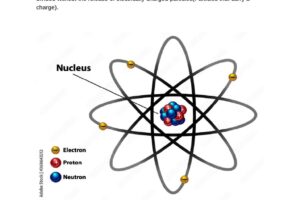
Matter is generally defined as any substance that possesses mass and occupies space. Traditionally, matter is understood through the lens of atomic theory, which states that all matter is composed of atoms-units made up of electrons, protons, and neutrons. This atomic model has been the cornerstone of scientific understanding for centuries. Yet, certain states and phenomena exist that do not fit neatly into this atomic paradigm, prompting a broader examination of what matter truly entails.
States of Matter Beyond the Atomic Norm
Plasma: The Fourth State of Matter
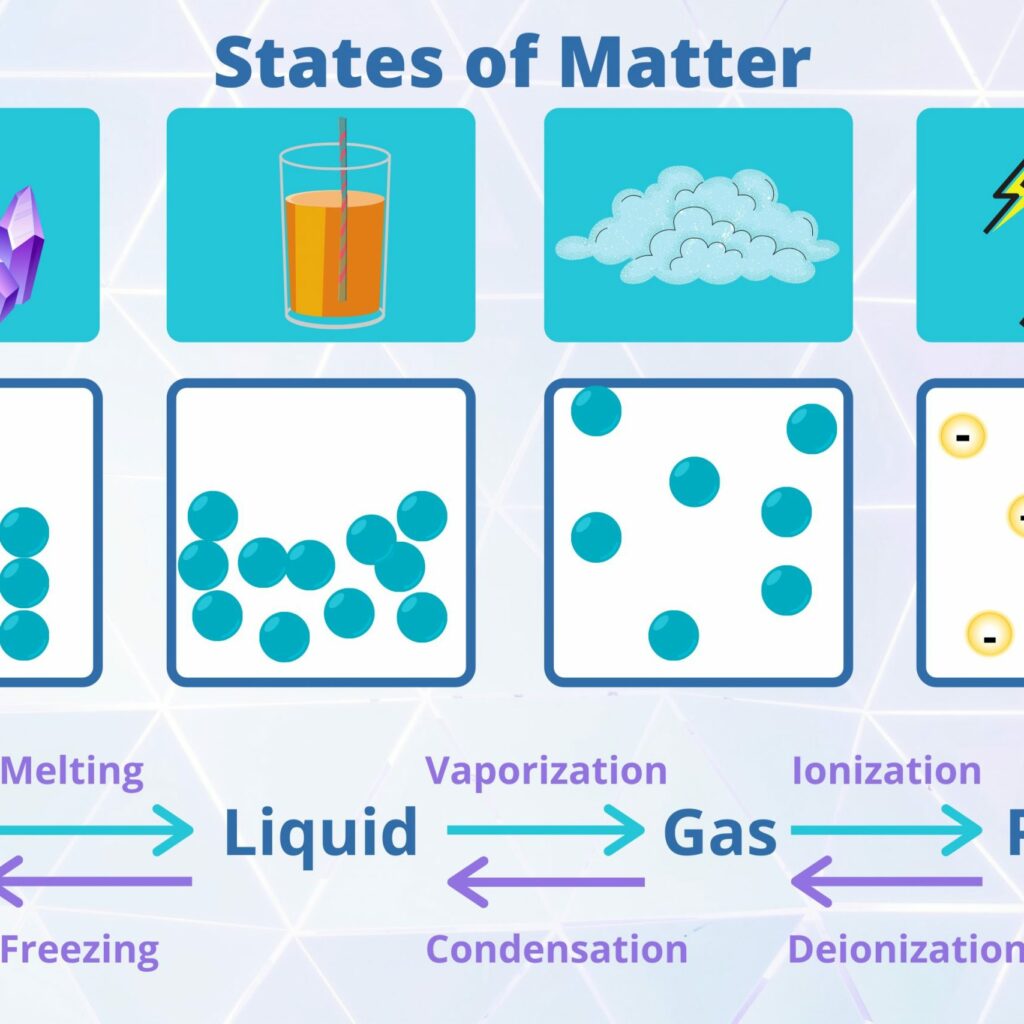
Plasma is often described as the fourth state of matter, distinct from solids, liquids, and gases. Although plasma consists of ions and free electrons-components derived from atoms-it behaves differently because its electrons are not bound to nuclei. This freedom imparts unique electrical conductivity and magnetic properties, setting plasma apart from conventional atomic matter.
Dark Matter: The Invisible Cosmic Component
Dark matter is a mysterious and hypothetical form of matter that constitutes about 27% of the universe’s total mass-energy content. Unlike ordinary matter, dark matter neither emits nor absorbs light or other electromagnetic radiation, rendering it invisible to direct observation. Its presence is inferred solely through gravitational effects on visible matter, radiation, and the large-scale structure of the cosmos. This enigmatic substance challenges the atomic-centric view of matter, suggesting the universe contains entities fundamentally different from atoms.
Vacuum and Quantum Fields
While a vacuum is classically defined as a space devoid of matter, quantum mechanics reveals that it is far from empty. Quantum fields permeate the vacuum, and particles can emerge as excitations within these fields. These energy fluctuations imply that the vacuum itself holds a dynamic quality, blurring the line between “empty space” and matter. This concept raises profound questions about the nature of reality and whether such energy-rich vacuums can be considered a form of matter despite lacking atomic structure.
Exotic and Antimatter Forms
Antimatter: The Particle Counterpart
Antimatter consists of antiparticles that mirror the properties of ordinary particles but with opposite charges. When matter and antimatter meet, they annihilate each other, releasing energy according to Einstein’s famous equation, E=mc². Although antimatter interacts with matter at the quantum level, it does not possess classical atomic structures, positioning it as a unique form of matter that challenges traditional definitions.
Exotic Matter: Theoretical Substances with Unusual Properties
Exotic matter refers to hypothetical materials that exhibit unconventional characteristics, such as negative mass or extraordinary stability. These theoretical constructs are important in advanced physics and cosmology, often invoked in discussions about wormholes, faster-than-light travel, and the fabric of spacetime. Their existence, while not yet empirically confirmed, pushes the boundaries of how matter is conceptualized beyond atomic norms.
Collapsed Stellar Matter and Cosmological Implications
Collapsed stellar remnants, such as neutron stars, represent forms of matter that defy typical atomic arrangements. These objects are primarily composed of densely packed neutrons, resulting from the gravitational collapse of massive stars after supernova explosions. This “collapsar matter” exhibits properties distinct from ordinary atomic matter, highlighting the diversity of matter’s manifestations in the universe.
Additionally, cosmological theories like inflation suggest that certain quantum fields can manifest in ways that do not correspond to standard atomic matter. These phenomena underscore the layered complexity of reality, where matter exists in forms that transcend classical atomic structures.
Philosophical and Scientific Reflections
The existence of non-atomic forms of matter invites profound philosophical contemplation about the nature of existence and the limits of human understanding. These entities challenge simplistic classifications and demonstrate that the concept of matter is dynamic, evolving alongside scientific advancements. As research progresses into dark energy, quantum foam, and other frontier topics, our definitions of matter continue to expand, prompting ongoing dialogue about the fundamental fabric of the universe.
Summary: Expanding the Concept of Matter
Exploring matter beyond atoms reveals a rich and intricate tapestry of physical reality. From the ionized state of plasma and the elusive dark matter to the quantum fields permeating the vacuum, the universe presents a multitude of forms that defy traditional atomic theory. The study of antimatter, exotic matter, and collapsed stellar remnants further broadens our understanding, encouraging a reevaluation of what constitutes matter. This expanded perspective not only deepens scientific knowledge but also fuels curiosity about the fundamental nature of existence, inviting us to look beyond the familiar and embrace the complexity of the cosmos.
FAQ
What types of matter are not made up of atoms?
Matter not made up of atoms includes plasma, dark matter, antimatter, exotic matter, and certain states related to quantum fields and neutron stars.
How does plasma differ from ordinary atomic matter?
Plasma consists of free ions and electrons not bound into atoms, giving it properties distinct from solids, liquids, and gases.
What is dark matter and why is it considered non-atomic?
Dark matter is a hypothetical form of matter that does not emit light or energy and cannot be detected directly; it does not interact via atomic processes and is inferred from gravitational effects.
Can antimatter be considered atomic matter?
Antimatter consists of antiparticles that correspond to particles in atoms but does not have classical atomic structure; when it meets matter, they annihilate into energy.
What is exotic matter?
Exotic matter includes theoretical substances with unusual properties such as negative mass or stability that do not conform to standard atomic matter.




Leave a Reply