
Short Answer
Definition of Matter-Energy Content in the Universe
The matter-energy content of the universe refers to the total composition of all physical substances and energy forms that exist throughout the cosmos. This includes everything from the familiar atoms that make up stars and planets to the elusive components that influence the universe’s structure and expansion. Understanding this composition is fundamental to cosmology, as it reveals the underlying fabric and dynamics governing the universe.
- Baryonic Matter:
The ordinary matter composed of protons, neutrons, and electrons, forming stars, planets, and living beings. - Dark Matter:
A non-luminous form of matter that does not interact with electromagnetic radiation but exerts gravitational influence. - Dark Energy:
A mysterious energy form responsible for the accelerated expansion of the universe.
Composition Breakdown and Cosmic Significance
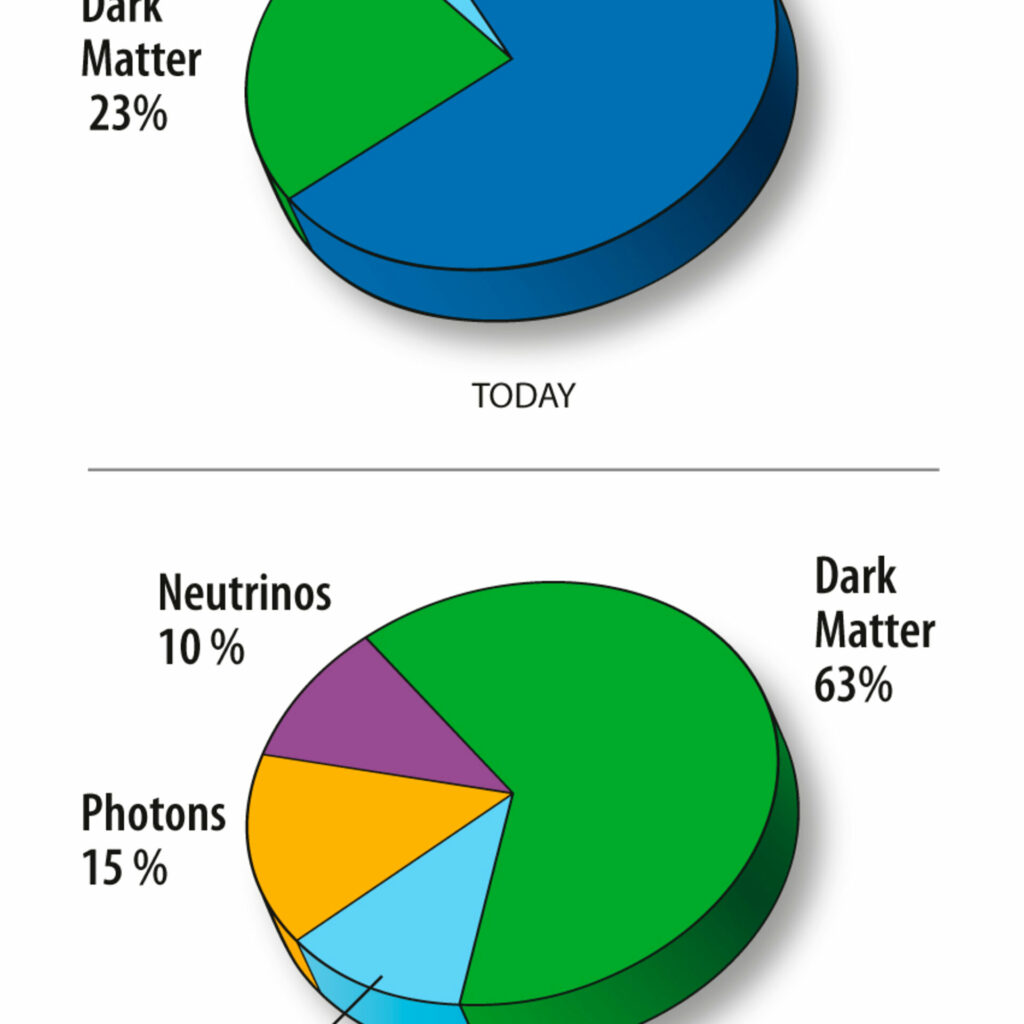
While the universe appears to be a vast collection of luminous objects such as stars and galaxies, these visible components represent only a small fraction of the total cosmic inventory. Baryonic matter, which constitutes all the atoms we are familiar with, accounts for roughly 5% of the universe’s total energy density. The remaining 95% is dominated by dark matter and dark energy, which remain largely undetectable by conventional means but are critical to the universe’s behavior and evolution.
Characteristics and Roles of Cosmic Constituents
Baryonic Matter
This form of matter includes all particles that make up the visible universe-protons, neutrons, and electrons. It forms the stars, planets, gas clouds, and dust that telescopes can observe. Despite its familiarity, baryonic matter is surprisingly scarce in the grand cosmic scheme.
Dark Matter
Dark matter is an invisible substance that neither emits nor absorbs light, making it undetectable through direct electromagnetic observations. Its existence is inferred from gravitational effects, such as the rotational speeds of galaxies and gravitational lensing phenomena. Dark matter constitutes about 27% of the universe’s total matter-energy content and acts as a gravitational scaffold, enabling the formation and stability of large-scale cosmic structures.
Dark Energy
Dark energy is a hypothesized form of energy permeating all space, exerting a repulsive force that accelerates the universe’s expansion. It accounts for nearly 68% of the universe’s total energy content. Observations of distant supernovae and the cosmic microwave background radiation have confirmed this accelerated expansion, yet the fundamental nature of dark energy remains one of the most profound mysteries in modern cosmology.
How the Matter-Energy Content Shapes the Universe
The interplay between baryonic matter, dark matter, and dark energy determines the universe’s structure, evolution, and ultimate fate. Following the Big Bang, the universe was an extremely hot and dense environment where matter and radiation were tightly coupled. As expansion and cooling progressed, matter began to coalesce under gravity, forming the first stars and galaxies. Dark matter’s gravitational influence was essential in this process, providing the invisible framework upon which visible matter accumulated.
Meanwhile, dark energy gradually became dominant, driving the accelerated expansion observed today. This dynamic balance between attractive gravitational forces and repulsive dark energy shapes the large-scale cosmic web and influences the universe’s long-term trajectory.
Scientific Methods for Investigating Cosmic Composition
Researchers employ various observational and experimental techniques to study the universe’s matter-energy content:
- Cosmic Microwave Background (CMB) Radiation:
The relic radiation from the Big Bang offers a snapshot of the early universe’s matter and energy distribution, providing critical data for cosmological models. - Gravitational Lensing:
The bending of light by massive objects reveals the presence and distribution of dark matter, which cannot be seen directly. - Supernova Surveys:
Observations of distant exploding stars help measure the rate of cosmic expansion and the influence of dark energy.
Theoretical Perspectives and Ongoing Research
The quest to understand dark matter and dark energy intersects with fundamental physics, prompting exploration beyond the Standard Model. Candidates for dark matter include hypothetical particles such as weakly interacting massive particles (WIMPs), axions, and supersymmetric particles. Dark energy theories often involve concepts like vacuum energy and the cosmological constant, linking quantum field theory with general relativity. These investigations aim to unify our understanding of the universe’s largest scales with the quantum realm.
Common Misconceptions About Cosmic Matter and Energy
The universe is mostly made up of visible matter.
Visible, baryonic matter constitutes only about 5% of the universe’s total matter-energy content; the majority is dark matter and dark energy.
Dark matter and dark energy are the same.
Dark matter is a form of matter that exerts gravitational attraction, while dark energy is a form of energy causing the accelerated expansion of the universe.
Why Understanding Matter-Energy Content Is Crucial
Grasping the universe’s matter-energy composition is vital for comprehending its origin, structure, and destiny. It challenges our perception of reality by revealing that most of the cosmos is composed of unseen and poorly understood components. This knowledge drives advancements in physics, astronomy, and cosmology, inspiring new technologies and deepening humanity’s quest to unravel the fundamental laws governing existence.
Real-World Implications and Future Directions
While the matter-energy content may seem abstract, its study has practical implications. Technologies developed for detecting dark matter particles or measuring cosmic phenomena often lead to innovations in imaging, data analysis, and particle physics. Moreover, understanding cosmic acceleration influences models of the universe’s fate, impacting philosophical and scientific perspectives on existence. As observational tools and theoretical models improve, humanity moves closer to unveiling the profound secrets hidden within the universe’s vast expanse.
FAQ
What is the matter-energy content of the universe?
It refers to the total amount of all physical substances and energy forms in the universe, including baryonic matter, dark matter, and dark energy.
Why is dark matter important?
Dark matter is crucial as it provides the gravitational framework for the formation and stability of galaxies and large-scale structures in the universe.
What role does dark energy play in the universe?
Dark energy is responsible for the accelerated expansion of the universe, making up about 68% of its total energy content.


Leave a Reply