
Short Answer
Definition of Dark Energy and Black Holes
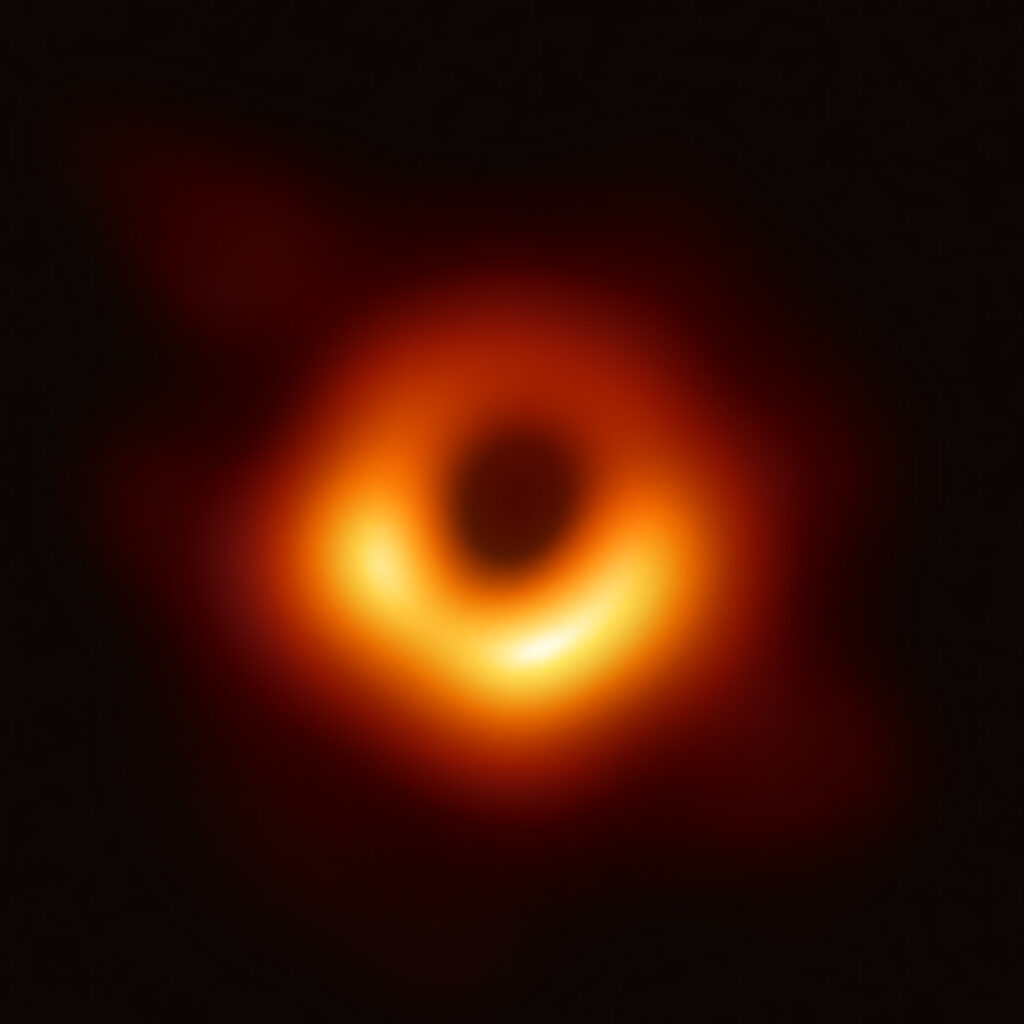
Dark energy is a mysterious and pervasive force that fills the universe, driving its accelerated expansion. It stands as one of the most perplexing subjects in contemporary cosmology, defying conventional gravitational theories and prompting a reevaluation of fundamental physics. Black holes, in contrast, are regions of spacetime exhibiting gravitational fields so intense that nothing, not even light, can escape their grasp once crossing the event horizon. Together, these two cosmic phenomena represent extremes of the universe’s structure and behavior.
Characteristics of Dark Energy
Unlike ordinary matter or dark matter, dark energy is uniformly distributed throughout space and exerts a repulsive gravitational effect. This repulsion counterbalances the attractive force of gravity on large scales, causing the universe’s expansion to accelerate. The nature of dark energy is often described by its equation of state parameter w, which is close to -1, indicating a nearly constant energy density despite the universe’s growth. This uniformity and persistence distinguish dark energy from other cosmic components.
- Uniform Distribution:
Dark energy is isotropic and homogeneous, permeating all of space evenly. - Repulsive Gravity:
It generates a negative pressure that accelerates cosmic expansion. - Equation of State:
The parameter w ≈ -1 signifies its near-constant density over time.
Fundamentals of Black Holes
Black holes are gravitational wells formed from collapsed massive stars or other processes, characterized by an event horizon beyond which escape is impossible. They typically grow by accreting matter from their surroundings, sometimes emitting energetic jets from their accretion disks. Their influence is highly localized, contrasting with the diffuse and omnipresent nature of dark energy.
- Event Horizon:
The boundary beyond which nothing can escape the black hole’s gravity. - Mass Accretion:
Black holes increase in mass by absorbing matter and energy. - High-Energy Phenomena:
Accretion disks can produce powerful jets and radiation.
Interaction Between Dark Energy and Black Holes
Considering the hypothetical scenario of dark energy falling into a black hole raises complex questions. Since dark energy is a property of spacetime itself rather than a collection of particles, it does not cluster or form localized structures that can be accreted in the traditional sense. This challenges the notion of whether black holes can absorb dark energy and how event horizons might affect this omnipresent field.
One theoretical approach models dark energy as a scalar field, such as quintessence or phantom energy. In this framework, the intense gravitational field of a black hole could locally distort the scalar field, potentially causing a flow of dark energy into the black hole. The consequences of this process depend heavily on the specific dark energy model:
- Quintessence Models:
Dark energy behaves like a dynamic scalar field that might be partially absorbed, influencing black hole mass. - Phantom Energy:
With an equation of state parameter w less than -1, phantom energy could cause black holes to lose mass upon accretion, defying classical expectations. - Cosmological Constant:
If dark energy is a true cosmological constant, it remains uniform and unaffected by black holes, making accretion negligible.
Mathematical Perspective on Dark Energy Accretion
The interaction can be analyzed through the equation of state parameter w, defined as the ratio of pressure p to energy density ρ:
w = p / ρ
For dark energy:
- If w = -1, it corresponds to a cosmological constant with constant energy density.
- If w > -1, it represents quintessence, a dynamic scalar field.
- If w < -1, it describes phantom energy, which violates certain energy conditions.
The mass change rate of a black hole due to dark energy accretion can be expressed as:
𝑑M/𝑑t ∝ (1 + w) ρ
Here, M is the black hole mass, and ρ is the dark energy density near the black hole. For phantom energy (w < -1), the term (1 + w) becomes negative, implying mass loss.
Implications for Black Hole Thermodynamics
The infusion or extraction of dark energy, especially exotic forms like phantom energy, could alter black hole thermodynamics. Black hole entropy is proportional to the surface area of the event horizon, and its temperature is inversely related to its mass through Hawking radiation. The presence of negative energy density might accelerate black hole evaporation, potentially shortening their lifespans in a universe dominated by such dark energy.
Cosmological Consequences
If black holes can absorb dark energy, this process might reduce the local dark energy density, potentially creating spatial variations in the cosmic expansion rate. Such inhomogeneities could influence the large-scale structure of the universe. Additionally, black holes might play a role in the decay or transformation of dark energy through quantum gravitational effects, thereby affecting the universe’s ultimate fate.
Speculative Theoretical Developments
Some advanced theories suggest that dark energy fields could modify the structure of black hole horizons, possibly leading to alternative objects known as “black hole mimickers.” These hypothetical entities might avoid singularities or exhibit unusual thermodynamic properties, offering new insights into quantum gravity and holography.
Observational Challenges and Prospects
Detecting the subtle interactions between dark energy and black holes remains a formidable challenge. While current technology allows measurement of black hole masses, accretion rates, and gravitational waves from mergers, the influence of dark energy on these phenomena is extremely subtle. Future observatories designed to map cosmic expansion and probe strong gravity environments may provide indirect evidence. Precise tracking of black hole mass evolution over cosmic time, combined with refined measurements of dark energy’s equation of state, could shed light on this complex relationship.
Summary and Future Directions
The concept of dark energy falling into black holes intertwines key areas of physics, including general relativity, quantum field theory, and cosmology. Depending on whether dark energy acts as a uniform cosmological constant or a dynamic scalar field, black holes might grow, shrink, or remain unaffected. These interactions have profound implications for cosmic expansion, black hole evaporation, and the thermodynamic destiny of these gravitational giants.
Although direct empirical evidence is currently lacking, exploring this scenario pushes the boundaries of scientific understanding and inspires new theoretical and observational efforts. The interplay between dark energy and black holes promises to reveal deeper secrets about the fabric of spacetime and the universe’s most enigmatic components.
FAQ
What is dark energy?
Dark energy is a mysterious force that drives the accelerated expansion of the universe, characterized by a nearly constant energy density.
Can black holes absorb dark energy?
Theoretically, black holes may interact with dark energy, but since dark energy is not localized, traditional accretion concepts do not apply.


Leave a Reply