
Short Answer
Definition of Sustainability and Its Core Components
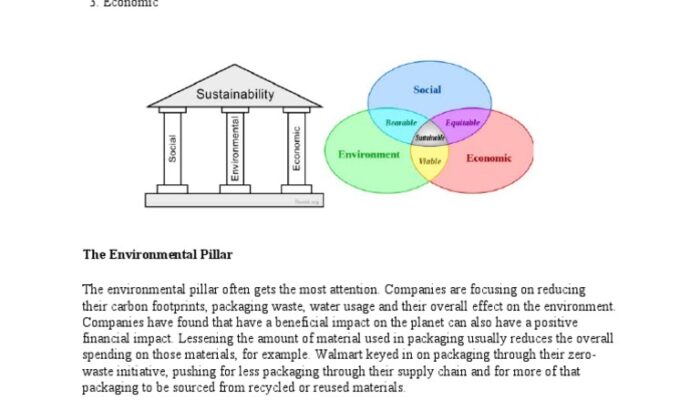
Sustainability represents a comprehensive framework that integrates three fundamental dimensions: environmental protection, social justice, and economic resilience. These dimensions, often termed the three pillars of sustainability, collectively aim to promote development that meets present needs without compromising the ability of future generations to meet theirs. Each pillar plays a distinct role in achieving sustainable development, yet their interactions are complex and sometimes conflicting, posing significant challenges to balanced progress.
- Environmental Sustainability:
Focuses on preserving natural ecosystems, conserving resources, and minimizing pollution to ensure the health of the planet for future generations. - Social Sustainability:
Emphasizes fairness, community involvement, and social equity, ensuring that all individuals have access to resources and opportunities. - Economic Sustainability:
Concerns the long-term viability of economic systems, promoting efficient resource use and stable growth that supports livelihoods without depleting natural capital.
Interplay and Conflicts Among the Sustainability Pillars
The relationship between the environmental, social, and economic pillars is intricate, often marked by tensions where the advancement of one pillar may inadvertently undermine another. For example, economic development initiatives aimed at boosting industrial growth can generate employment and wealth but may simultaneously degrade ecosystems through pollution and habitat loss. This raises critical questions about how to balance economic ambitions with ecological preservation.
Similarly, social sustainability can be compromised when economic activities disproportionately impact marginalized communities. Industrial projects, such as waste incineration plants, are frequently situated in low-income neighborhoods, exposing residents to environmental hazards and social inequities. This scenario highlights the ethical dilemma of pursuing profit at the expense of vulnerable populations.
Environmental Pillar: Goals and Challenges
The environmental dimension of sustainability seeks to safeguard natural resources and maintain biodiversity to support life on Earth indefinitely. However, economic pursuits often come at an environmental cost, including deforestation, pollution, and increased greenhouse gas emissions, which contribute to climate change. The challenge lies in fostering economic growth while preserving the ecological systems essential for human survival.
Social Pillar: Equity and Community Engagement
Social sustainability advocates for equitable distribution of resources, inclusive decision-making, and social justice. Yet, many sustainability efforts falter due to insufficient community participation and governance structures that exclude affected populations. The predominance of top-down policy approaches often marginalizes local voices, undermining the legitimacy and effectiveness of sustainability initiatives.
Economic Pillar: Balancing Profit and Long-Term Viability
Economic sustainability involves managing resources efficiently to ensure enduring economic health. However, short-term profit motives frequently overshadow sustainable practices, leading to overexploitation of shared resources-a phenomenon known as the tragedy of the commons. Businesses face the challenge of adopting long-term strategies that harmonize profitability with responsible resource stewardship.
Globalization and Its Impact on Sustainability
The forces of globalization complicate sustainability by intensifying disparities between wealthy and developing nations. Wealthier countries often benefit from inexpensive labor and raw materials in poorer regions, perpetuating cycles of social inequality and environmental degradation. This dynamic raises concerns about ethical economic models and the need for policies that mitigate adverse effects on vulnerable communities and ecosystems worldwide.
Accountability and Ethical Considerations in Sustainability
Determining responsibility when conflicts arise among the sustainability pillars is a critical ethical issue. Corporate social responsibility (CSR) initiatives have emerged as a response, aiming to align business practices with sustainable values. However, skepticism remains regarding the authenticity and impact of these efforts, prompting ongoing debate about the role of corporations in advancing genuine sustainability.
Measuring Progress: Beyond Traditional Metrics
Conventional indicators like GDP growth inadequately capture the multifaceted nature of sustainability, often neglecting environmental degradation and social disparities. Developing comprehensive, multidimensional metrics is essential to accurately assess progress across all three pillars. Innovative analytical tools and frameworks are needed to deepen understanding and guide effective sustainability strategies.
Why Sustainability Integration Is Crucial
Recognizing the interconnectedness of environmental health, social equity, and economic stability is vital for crafting resilient and inclusive futures. Integrative approaches that foster synergy among the pillars can help overcome conflicts and promote balanced development. By valuing each dimension equally, societies can work toward sustainable solutions that honor present needs while protecting the rights and resources of future generations.
Real-World Illustrations of Sustainability Challenges
Consider a community aiming to develop an industrial center to stimulate economic growth. While this initiative may create jobs and improve living standards, it can also lead to pollution of local waterways and loss of biodiversity, illustrating the tension between economic and environmental goals. Additionally, if industrial facilities are placed in disadvantaged neighborhoods, social inequities may deepen, highlighting the need for inclusive planning and equitable resource distribution.
Common Misconceptions About Sustainability
Economic growth always leads to improved social and environmental outcomes.
Economic expansion can sometimes harm ecosystems and exacerbate social inequalities if not managed sustainably.
Environmental protection hinders economic development.
Sustainable practices can drive innovation and long-term economic benefits by preserving essential natural resources.
Social sustainability is secondary to economic priorities.
Social equity is fundamental to sustainable development, ensuring that benefits and burdens are fairly shared.
FAQ
What are the three pillars of sustainability?
The three pillars are environmental protection, social equity, and economic resilience.
Why is balancing the pillars of sustainability important?
Balancing these pillars is crucial to ensure development meets present needs without compromising future generations.





Leave a Reply