
Short Answer
Definition of Qubits
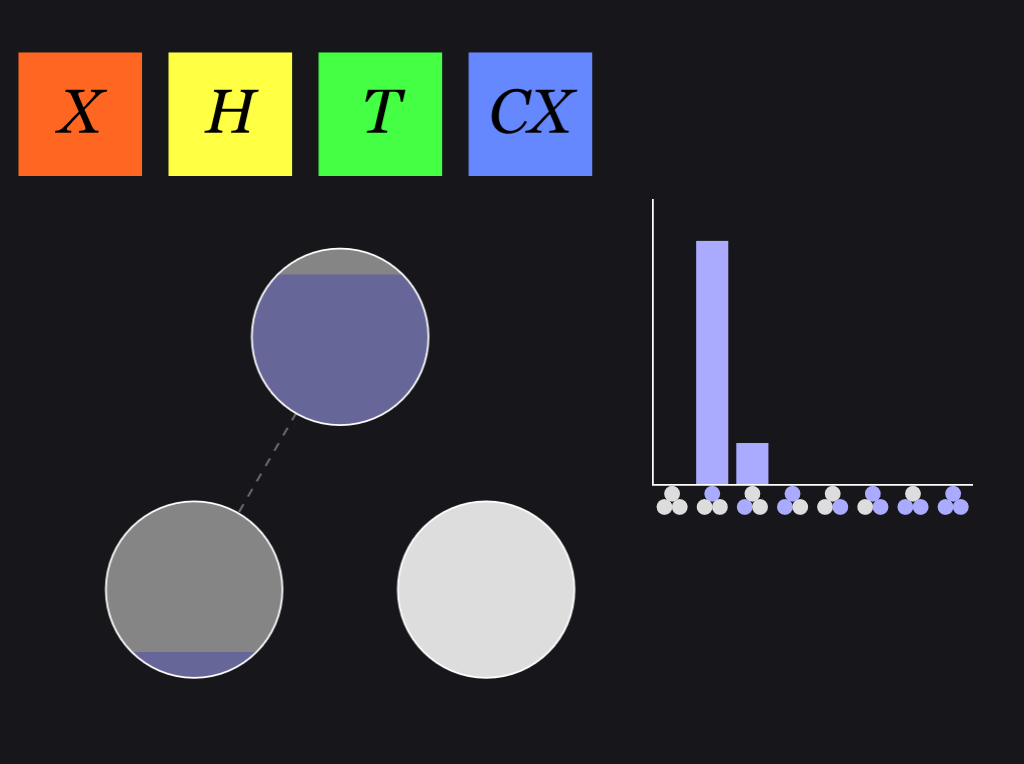
A qubit, or quantum bit, is the fundamental unit of information in quantum computing, representing a significant departure from classical bits. Unlike classical bits that are strictly binary-existing as either 0 or 1-a qubit can simultaneously occupy multiple states due to the quantum phenomenon known as superposition. This unique capability allows qubits to encode and process vastly more information than classical bits, forming the cornerstone of quantum information theory and technology.
- Superposition:
The ability of a qubit to be in a combination of both 0 and 1 states at the same time, enabling parallel computation. - Entanglement:
A quantum correlation between qubits where the state of one instantly influences the state of another, regardless of distance.
Fundamental Principles Behind Qubits
Qubits operate based on the core principles of quantum mechanics, primarily superposition and entanglement. Superposition allows a qubit to exist in multiple states simultaneously, vastly increasing computational possibilities. Entanglement links qubits in such a way that the measurement of one qubit’s state immediately determines the state of its entangled partner, enabling phenomena like quantum teleportation and enhanced data processing speeds.
Historical Context and Evolution
The notion of the qubit emerged from theoretical explorations aimed at transcending the limitations of classical computing. Classical computers, constrained by binary logic and physical hardware limits, face challenges in speed and efficiency. Quantum computing, leveraging qubits, promises to overcome these barriers by exploiting quantum states to perform complex calculations at speeds unattainable by classical machines. Notably, algorithms such as Shor’s algorithm demonstrate the potential to solve problems like integer factorization exponentially faster, threatening current cryptographic standards.
Physical Realizations of Qubits
Implementing qubits in hardware marks a revolutionary shift from traditional silicon-based transistors. Various physical systems serve as qubit platforms, each with unique advantages and challenges:
- Superconducting Circuits:
Utilize superconducting materials cooled to near absolute zero to create qubits with relatively fast operation times. - Trapped Ions:
Employ ions confined by electromagnetic fields, manipulated with lasers to represent qubit states with high coherence. - Topological Qubits:
Leverage exotic quasiparticles to encode information in a way that is inherently protected from certain types of errors.
Applications of Qubits Across Various Fields
Advancements in Medical Research
Quantum computing’s ability to simulate molecular interactions at the quantum level holds transformative potential for drug discovery. By accurately modeling complex chemical reactions and molecular structures, quantum computers can drastically reduce the time and cost associated with experimental drug trials, accelerating the development of new therapies.
Revolutionizing Cryptography
Qubits enable quantum key distribution (QKD), a method of secure communication that exploits quantum mechanics to detect eavesdropping attempts. Unlike classical encryption vulnerable to powerful computational attacks, QKD ensures that any interception disturbs the quantum state, alerting communicators and safeguarding data integrity.
Enhancing Artificial Intelligence
Quantum computing’s capacity to process and analyze large datasets efficiently can significantly impact artificial intelligence. By improving optimization, clustering, and search algorithms, qubits can enable faster and more accurate machine learning models, potentially advancing autonomous systems and decision-making processes.
Challenges in Quantum Computing
Despite the promising capabilities of qubits, several obstacles remain before practical quantum computers become widespread:
- Fragility of Qubit States:
Qubits are highly sensitive to environmental disturbances, leading to decoherence and loss of information. - Quantum Error Correction:
Developing robust methods to detect and correct errors without collapsing quantum states is essential for reliable computation. - Scalability:
Building large-scale quantum systems that maintain coherence and entanglement over many qubits is a significant engineering challenge.
Ethical and Societal Considerations
As quantum technologies advance, it is crucial to address their broader implications. The power of quantum computing raises questions about privacy, security, employment, and equitable access. Proactive discussions and policies are necessary to ensure that the benefits of quantum innovations are distributed fairly and that potential risks are mitigated responsibly.
Why Qubits Are Transformative
Qubits represent a paradigm shift in computing, enabling capabilities far beyond classical systems. Their unique quantum properties open new frontiers in science and technology, from accelerating medical breakthroughs to securing communications and enhancing artificial intelligence. The ongoing research and development in qubit technology signal a future where harnessing quantum phenomena could solve some of humanity’s most complex challenges, marking a revolutionary leap in computational power and application.
FAQ
What is a qubit?
A qubit is the basic unit of information in quantum computing, capable of existing in multiple states simultaneously due to superposition.
How do qubits differ from classical bits?
Unlike classical bits that can only be 0 or 1, qubits can represent 0, 1, or both at the same time, enabling more complex information processing.
What are the applications of qubits?
Qubits have applications in fields like medical research, cryptography, and artificial intelligence, enhancing computational capabilities and security.






Leave a Reply