

Short Answer
Definition
The phrase “gazing beyond the known” in the context of astronomy refers to the human endeavor to explore and understand the universe beyond the limits of current knowledge and observation. It embodies a quest to uncover the mysteries of the cosmos, pushing the boundaries of scientific inquiry and expanding our comprehension of existence itself.
- Cosmic Exploration:
The pursuit of knowledge about celestial bodies and phenomena that lie beyond immediate human perception. - Scientific Curiosity:
An intrinsic drive to question, investigate, and reinterpret the universe through empirical methods and innovative technologies.
Historical Evolution of Astronomical Inquiry
The human fascination with the stars has transformed significantly over millennia. Early civilizations viewed celestial bodies primarily as tools for timekeeping and navigation. Primitive instruments allowed ancient astronomers to differentiate between terrestrial and celestial realms, laying the foundational framework for modern astronomy. Despite technological constraints, their inquisitive spirit sparked critical questions about the universe’s nature and what lies beyond the visible horizon.
The Renaissance era marked a pivotal shift with the introduction of advanced telescopes. Visionaries such as Galileo Galilei and Johannes Kepler challenged prevailing geocentric models, advocating for a heliocentric understanding of the solar system. Their groundbreaking observations redefined humanity’s cosmic perspective, establishing astronomy as a rigorous scientific discipline rather than mere philosophical speculation.
Modern Astrophysics and Contemporary Challenges
Today, astrophysics stands at the forefront of cosmic exploration, delving into phenomena such as dark matter, dark energy, exoplanets, and cosmic microwave background radiation. These discoveries have unveiled the universe’s intricate complexity, yet simultaneously expanded the scope of unanswered questions. For instance, dark energy-a mysterious force accelerating the universe’s expansion-remains one of the most profound enigmas in physics, prompting ongoing research and theoretical exploration.
The Expanding Universe and Its Philosophical Implications
The observation that the universe is continuously expanding challenges traditional anthropocentric views and invites reflection on humanity’s place within the vast cosmic landscape. This expansion raises existential questions about the future of life and connectivity in an ever-widening cosmos. The potential for cosmic isolation confronts optimistic assumptions about universal interconnectedness, urging a reevaluation of our existential and philosophical frameworks.
Search for Extraterrestrial Intelligence (SETI)
The quest to detect signals from intelligent life beyond Earth exemplifies humanity’s enduring curiosity and desire for cosmic companionship. Utilizing radio telescopes and other advanced technologies, SETI initiatives scan the skies for signs of extraterrestrial civilizations. Discovering such life would revolutionize multiple disciplines, including biology, technology, and philosophy, prompting a profound reassessment of concepts like consciousness, cooperation, and the uniqueness of terrestrial life.
This interdisciplinary endeavor integrates astrophysics with ethics, anthropology, and other fields, fostering a holistic approach to understanding life’s potential diversity and the implications of interstellar communication.
Ethical Considerations in Cosmic Exploration
As humanity extends its reach into space, ethical questions arise regarding planetary stewardship and the responsibility to preserve Earth’s environment. The prospect of terraforming other planets introduces debates about the moral implications of altering extraterrestrial ecosystems. Balancing the drive to explore with the duty to protect our home planet highlights the complex duality of our existence as both explorers of the cosmos and caretakers of Earth.
Technological Advances in Space Observation
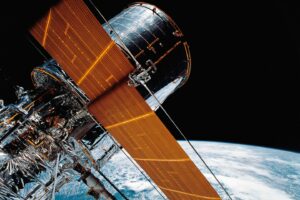
Innovations such as the Hubble Space Telescope and the James Webb Space Telescope have revolutionized our ability to observe and analyze distant celestial phenomena. These instruments provide unprecedented clarity and depth, enabling scientists to uncover details previously hidden in the cosmic expanse. Each new discovery challenges the limits of human perception and expands the horizons of astronomical knowledge.
International Collaboration in Astronomy
The global nature of space exploration underscores the importance of international cooperation. Collaborative projects among space agencies worldwide exemplify a shared commitment to unraveling the universe’s mysteries. These partnerships not only enhance scientific progress but also promote goodwill and unity, demonstrating that the pursuit of cosmic understanding transcends national boundaries.
Why Gazing Beyond the Known Matters
The endeavor to explore beyond familiar cosmic frontiers is more than a scientific pursuit; it is a transformative journey that reshapes our worldview. Astronomy fuels intellectual curiosity, challenges foundational beliefs, and fosters a deeper appreciation of life’s interconnectedness within the universe. As humanity continues its celestial voyage, the vastness of space serves as a catalyst for innovation, reflection, and the enduring quest to embrace the infinite possibilities that lie ahead.
FAQ
What is the significance of the expansion of the universe?
It challenges traditional views and prompts reflections on humanity's place in the cosmos.
How do technological advances impact astronomy?
Innovations like the Hubble and James Webb telescopes enhance our ability to observe distant celestial phenomena.




Leave a Reply