How can quantum computers have units between 1 and 0?

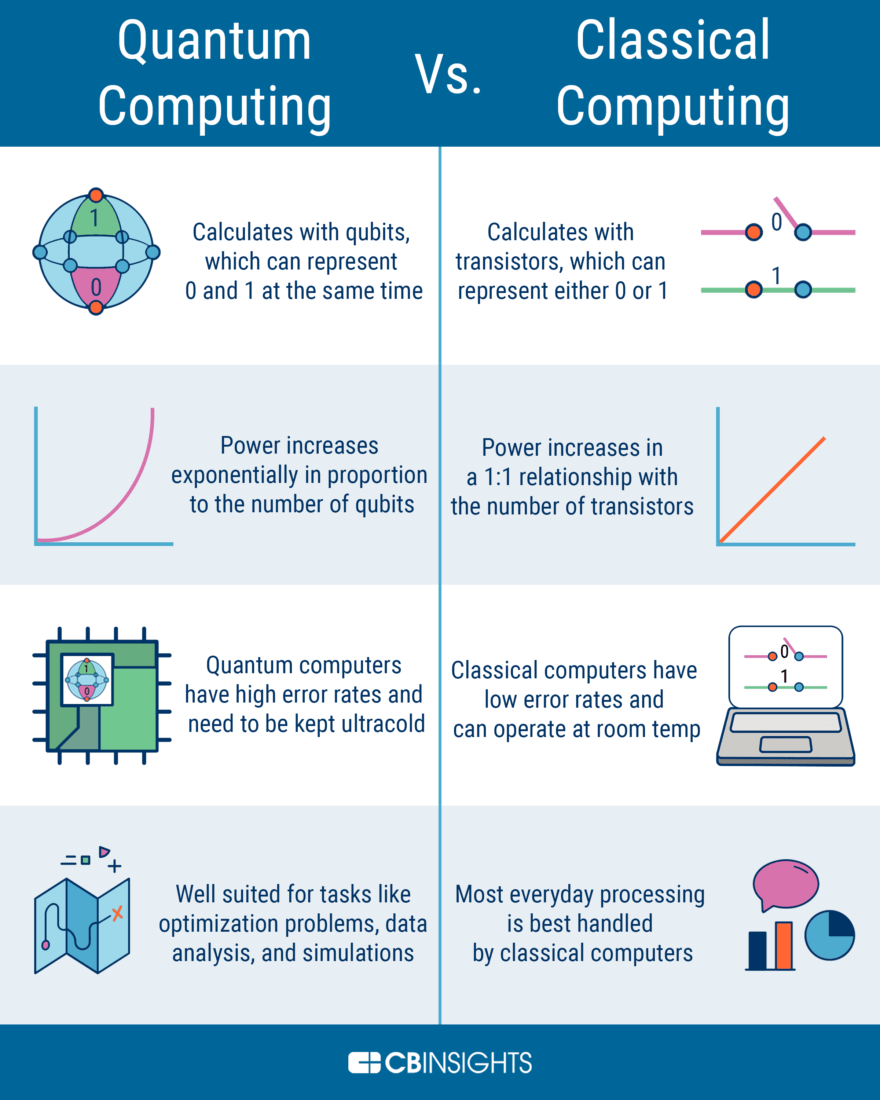
Understanding Quantum Computing Traditional computing systems rely on binary digits, or bits, which exist strictly as either 0 or 1. This binary framework, while effective for classical computers, contrasts sharply with the principles of quantum mechanics. Quantum computing introduces a novel approach by employing quantum bits, known as qubits, which can simultaneously embody multiple states. […]
Read More →

How will quantum computing affect me in the next five years?

Definition of Quantum Computing Quantum computing is an emerging field of technology that utilizes the principles of quantum mechanics to perform computations far beyond the capabilities of classical computers. By exploiting phenomena such as superposition and entanglement, quantum computers can process complex data sets and solve problems that are currently intractable for traditional systems. Quantum […]

Read More →

How to become a quantum computer engineer?

Understanding Quantum Computer Engineering Quantum computer engineering represents a cutting-edge discipline at the intersection of physics, computer science, and electrical engineering. It focuses on designing, building, and optimizing quantum computers-devices that leverage the principles of quantum mechanics to perform computations far beyond the capabilities of classical machines. As traditional computing approaches near their physical and […]

Read More →

Why is error correction so important in quantum computers?

Understanding Quantum Computing Quantum computing represents a cutting-edge field that merges principles from physics and computer science to transform how computations are performed. At its core, this technology leverages the unique properties of quantum mechanics to process information in ways that classical computers cannot. However, despite its revolutionary potential, quantum computing faces significant obstacles, with […]

Read More →

Is quantum computing just analog? – Scientific Stuff?

Definition of Quantum Computing and Analog Computing Quantum computing is an emerging computational framework that leverages the principles of quantum mechanics to process information in fundamentally new ways. It challenges traditional computational models by utilizing quantum phenomena such as superposition and entanglement. Analog computing, on the other hand, is a classical approach where continuous physical […]

Read More →

What’s quantum computing? How can I use it in the future?

Definition of Quantum Computing Quantum computing represents a groundbreaking advancement in computational technology, leveraging the unique principles of quantum mechanics to perform calculations far beyond the capabilities of classical computers. Unlike traditional computing, which relies on binary bits as the smallest unit of data, quantum computing uses quantum bits or qubits. These qubits can exist […]

Read More →

How will quantum computing change cybersecurity forever?

Understanding Quantum Computing Quantum computing signifies a groundbreaking shift in the realm of information technology, introducing capabilities that could dramatically transform cybersecurity practices. Rooted in the principles of quantum mechanics, this emerging technology leverages unique quantum phenomena to perform computations far beyond the reach of classical computers. The profound impact of quantum computing extends to […]

Read More →

Is quantum computing for business reality or hype?

Understanding Quantum Computing Quantum computing represents a revolutionary approach to processing information by leveraging the principles of quantum mechanics. Unlike classical computers that operate using bits-binary units that are either 0 or 1-quantum computers utilize quantum bits, or qubits. These qubits can exist simultaneously in multiple states due to phenomena known as superposition and entanglement, […]

Read More →

Quantum Computers Borrow from Classical Architecture: Old Ideas New Hardware

Definition of Quantum Computing and Its Architectural Roots Quantum computing represents a fusion of revolutionary scientific breakthroughs with foundational architectural principles derived from classical computing. This synergy creates a novel computational paradigm that transcends traditional methods. At its essence, quantum computing builds upon and reinterprets classical architectural concepts, enabling unprecedented processing power and efficiency. Contrasting […]

Read More →

Quantum computing – Technical guruji’s Space?

Definition of Quantum Computing Quantum computing is an advanced computational paradigm that integrates principles from physics, mathematics, and computer science to process information in fundamentally new ways. Unlike classical computing, which relies on binary bits representing either 0 or 1, quantum computing utilizes quantum bits, or qubits, that can exist in multiple states simultaneously. This […]

Read More →