Why Not Call Dark Energy “Repulsive Gravity”?

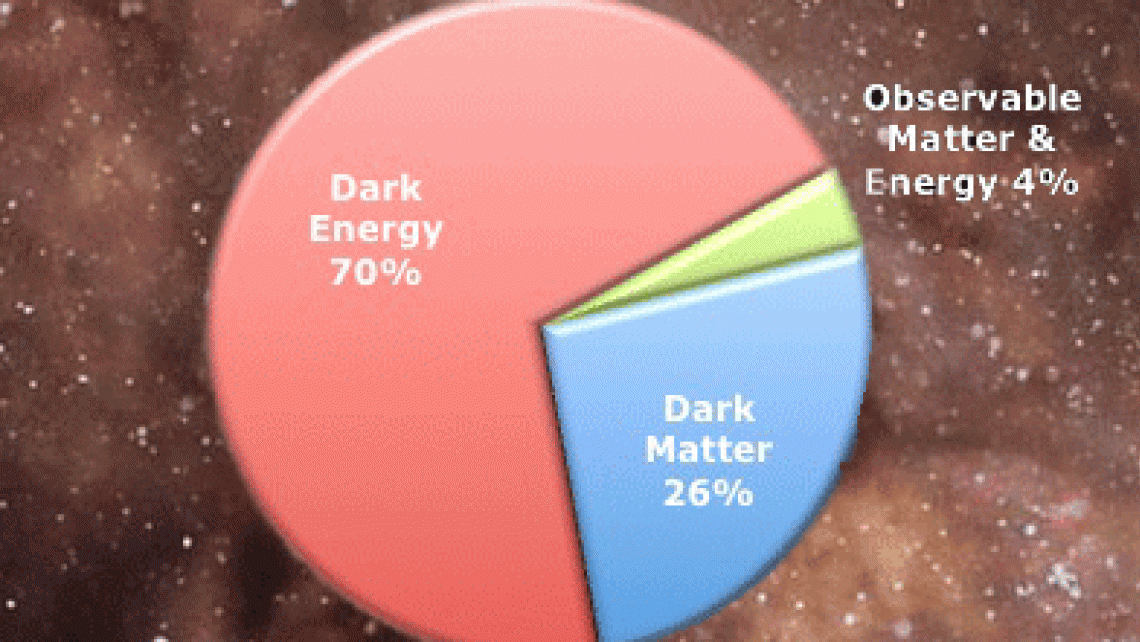
Understanding Dark Energy Dark energy represents a mysterious component of the universe that drives the accelerated expansion of space itself. Unlike familiar forces, it is not a conventional force but an intrinsic property of the vacuum, influencing the cosmos in ways that challenge our traditional understanding of gravity and physics. Gravity: The Traditional Perspective Conventionally, […]

Read More →

Can Galaxies Exist Without Dark Matter?

Understanding Dark Matter and Its Role in the Universe Dark matter is a mysterious and invisible form of matter that neither emits nor absorbs electromagnetic radiation, making it undetectable by conventional telescopes. Its existence is inferred primarily through its gravitational effects on visible matter, radiation, and the large-scale structure of the universe. Introduced in the […]

Read More →

Is Dark Matter Proven—or Still Just a Hypothesis?

Definition of Dark Matter Dark matter refers to a form of matter that does not emit, absorb, or reflect light, making it invisible to current electromagnetic observational methods. Despite its invisibility, it exerts gravitational effects on visible matter, radiation, and the large-scale structure of the universe. It is hypothesized to constitute about 27% of the […]

Read More →

What Happens When Gravity Fights the Expanding Universe?

Definition The interaction between gravity and the expanding universe represents a fundamental cosmic phenomenon where two opposing forces shape the structure and evolution of the cosmos. Gravity, the attractive force pulling matter together, competes with the universe’s expansion, which stretches spacetime and drives galaxies apart. This dynamic interplay governs the formation of celestial bodies and […]

Read More →

Dark Energy Might Be Stranger Than We Thought

Definition of Dark Energy Dark energy is a mysterious and pervasive force believed to be responsible for the accelerated expansion of the universe. Unlike ordinary matter or radiation, it does not emit, absorb, or reflect light, making it invisible and detectable only through its gravitational effects on cosmic structures and the fabric of spacetime. Cosmological […]

Read More →

Why Is Dark Energy So Hard to Understand?

Definition of Dark Energy Dark energy is a mysterious and invisible force believed to be responsible for the accelerated expansion of the universe. Unlike ordinary matter and energy, it cannot be directly observed but is inferred through its gravitational effects on cosmic structures and the large-scale dynamics of spacetime. It constitutes approximately 68% of the […]

Read More →

Will the Universe Tear Itself Apart?

Understanding the Universe’s Ultimate Fate The cosmos, with its vastness and complexity, has long captivated human curiosity and philosophical reflection. Among the many profound questions it raises, one stands out: is the universe destined to eventually tear itself apart? This inquiry delves into the potential cataclysmic end of all matter and energy, challenging our understanding […]

Read More →

Galaxy Surveys Put Cosmology on a Sound Footing

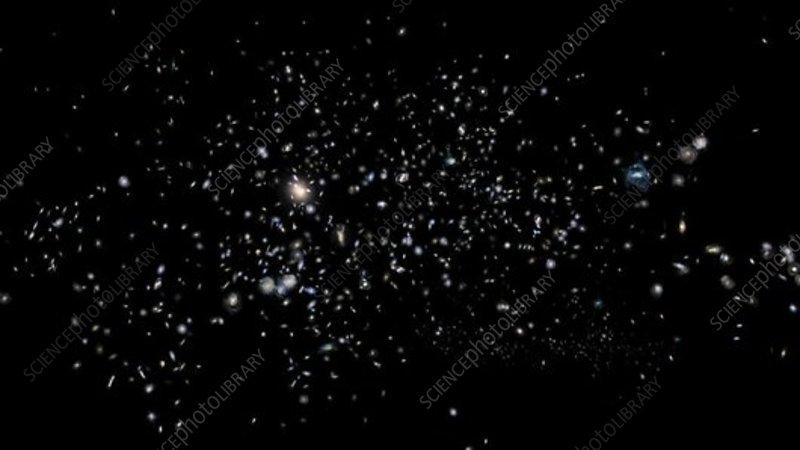
Definition of Galaxy Surveys Galaxy surveys are extensive observational campaigns designed to systematically map and analyze the distribution, properties, and evolution of galaxies across the universe. By collecting detailed data on millions of galaxies, these surveys provide a comprehensive picture of the cosmos, enabling scientists to study its large-scale structure, composition, and dynamic processes. Scope: […]

Read More →