

Short Answer
Definition of the Cosmic Phenomenon
The recently confirmed cosmic phenomenon represents a remarkable and previously undetected feature within the vast expanse of space. Far from being a fleeting anomaly, this phenomenon constitutes a persistent and measurable signature embedded in the fabric of the universe. Its discovery challenges existing paradigms and enriches our understanding of cosmic structures, influencing fields such as astrophysics, cosmology, and exoplanetary science.
- Persistent Cosmic Signature:
Unlike transient events, this phenomenon exhibits consistent characteristics observable across multiple datasets. - Multispectral Detection:
It is identified through a combination of electromagnetic spectrum analysis and gravitational wave measurements.
Scientific Context and Historical Background
The journey toward confirming this phenomenon spans decades of theoretical predictions and intermittent observational clues. Early hypotheses suggested its existence, but only with the advent of advanced observational technologies and collaborative research efforts was empirical validation achieved. This timeline underscores the incremental and cumulative nature of scientific discovery, highlighting the perseverance and international cooperation essential to this breakthrough.
Technological Innovations Enabling Discovery
State-of-the-art telescopes equipped with cutting-edge spectrometry and sophisticated data analytics have been pivotal in detecting subtle deviations in cosmic signals. These instruments can isolate faint fingerprints of the phenomenon from overwhelming cosmic noise, revealing intricate patterns that were previously invisible. The integration of high-resolution imaging and precise measurement tools has transformed our ability to observe and analyze the universe’s hidden complexities.
Role of Computational Simulations
Advanced computational models play a crucial role in corroborating observational data. By simulating cosmic environments under various conditions, scientists can replicate the newly observed phenomenon and test theoretical frameworks. These simulations provide predictive insights and validate interpretations, demonstrating the dynamic interplay between empirical evidence and theoretical modeling in contemporary astrophysics.
Implications for Exoplanetary Science
This discovery significantly impacts our understanding of planetary systems beyond our own. It offers new perspectives on the formation, evolution, and behavior of exoplanets, particularly those previously deemed anomalous. By situating these distant worlds within the context of the confirmed cosmic phenomenon, researchers can better interpret their characteristics and potential habitability, enriching the broader narrative of planetary science.
Philosophical and Existential Reflections
Beyond its scientific significance, the phenomenon invites profound contemplation about humanity’s place in the cosmos. It suggests a more interconnected universe, where celestial bodies and cosmic structures are woven into a complex, dynamic web. This interconnectedness challenges traditional views of isolated cosmic entities and encourages reflection on the relationships between matter, energy, and time.
Visual and Educational Enhancements
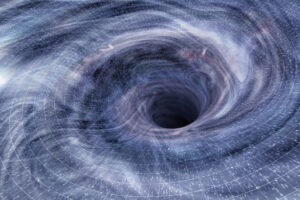
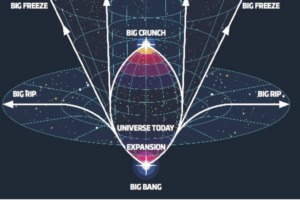
The dissemination of this discovery is complemented by vivid, high-definition imagery and detailed infographics. These visual aids provide accessible yet scientifically rigorous representations of the phenomenon, enabling a deeper understanding for both experts and enthusiasts. Annotated diagrams break down complex data, fostering an engaging and comprehensive learning experience.
Collaborative Efforts in Modern Space Science
The confirmation of this cosmic phenomenon exemplifies the power of global scientific collaboration. It resulted from the combined efforts of astrophysicists, engineers, data scientists, and theoreticians across multiple institutions and countries. Open data sharing and interdisciplinary cooperation accelerated the research process, illustrating how contemporary science transcends geographical and institutional boundaries to achieve groundbreaking results.
Future Directions and Scientific Prospects
Looking forward, this discovery sets the stage for new research initiatives and technological advancements. Upcoming space missions and enhanced ground-based observatories will leverage this knowledge to explore the phenomenon in greater detail. Future instruments will be designed with increased sensitivity to uncover further properties and implications, driving the evolution of astrophysical research agendas.
Why This Discovery Matters
The confirmation of this extraordinary cosmic phenomenon represents a significant leap in our cosmic understanding. It enriches scientific knowledge, inspires technological innovation, and stimulates philosophical inquiry. By expanding the frontiers of space exploration and deepening our grasp of the universe’s intricate architecture, this breakthrough fosters a renewed sense of wonder and humility about our place in the cosmos.
FAQ
What is the recently confirmed cosmic phenomenon?
It is a persistent and measurable feature within the universe that challenges existing paradigms and enriches our understanding of cosmic structures.
How was this phenomenon detected?
Through multispectral detection using advanced telescopes and gravitational wave measurements.
What are the implications for exoplanetary science?
It provides new perspectives on the formation and behavior of exoplanets, enhancing our understanding of their potential habitability.


Leave a Reply