
Short Answer
Definition of Quantum Computing as a Service (QCaaS)
Quantum Computing as a Service (QCaaS) represents a significant advancement in how computational power is accessed and utilized. It merges the complex principles of quantum mechanics with the widespread availability of cloud computing, allowing users-from researchers to businesses and hobbyists-to harness quantum algorithms remotely. This service model eliminates the need for deep expertise in quantum physics or substantial investment in specialized hardware, making quantum computing more accessible and practical.
Core Concept and Accessibility
At its foundation, QCaaS delivers quantum computational capabilities through cloud-based platforms. Much like traditional cloud services that provide virtual machines or software applications, QCaaS enables users to run quantum computations on remote quantum processors. This democratization of quantum resources breaks down previous barriers, opening up opportunities for a wide range of users to perform complex quantum calculations that were once limited to specialized research facilities.
Quantum Computing Models Utilized in QCaaS
Understanding the types of quantum computing models integrated into QCaaS is essential for grasping its full potential. The primary models include:
- Gate-Based Quantum Computing:
This model operates similarly to classical logic gates but manipulates quantum bits (qubits) through unitary transformations. It is versatile and applicable to various domains such as cryptography and solving complex computational problems. - Quantum Annealing:
Specialized in optimization tasks, quantum annealing uses quantum tunneling to identify global minima in functions. This approach is particularly valuable in sectors like logistics and financial modeling where optimization is critical. - Topological Quantum Computing:
This emerging model focuses on enhancing stability and reducing errors by manipulating non-abelian anyons through braiding. It offers theoretical robustness against decoherence, a major challenge in quantum computing.
Applications Across Industries
QCaaS has transformative implications across multiple fields by providing scalable quantum computational power:
- Pharmaceuticals:
QCaaS enables detailed molecular simulations that accelerate drug discovery by revealing atomic-level interactions, facilitating the design of new, effective compounds. - Finance:
Financial institutions utilize QCaaS to implement sophisticated algorithms for portfolio optimization and risk assessment, gaining insights into complex market dynamics beyond classical capabilities. - Logistics:
Enhanced route optimization models powered by QCaaS can process numerous variables simultaneously, improving efficiency in supply chain management and real-time decision-making.
Technical Infrastructure and Operational Mechanisms
The architecture supporting QCaaS is a complex integration of quantum and classical computing elements:
- Quantum Hardware:
Quantum processors, such as those based on superconducting qubits or trapped ions, form the computational core. These processors exploit quantum phenomena like superposition and entanglement to handle vast information simultaneously. - Classical Computing Resources:
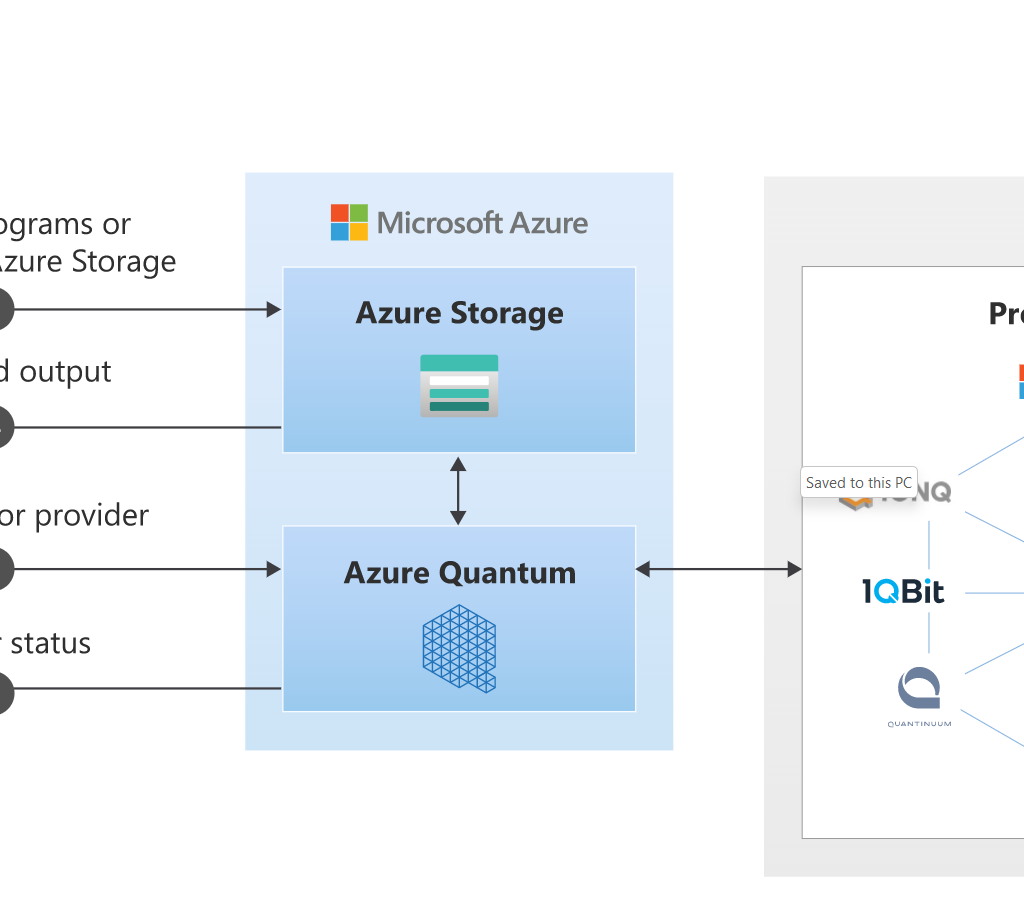
Robust cloud infrastructure manages user interactions, schedules quantum tasks, and stores data. Classical algorithms often complement quantum processes by preparing inputs, processing outputs, and managing workflows, creating a hybrid computational environment.
Security and Ethical Dimensions
QCaaS introduces critical considerations in both security and ethics:
- Security Challenges:
Quantum algorithms threaten traditional cryptographic methods, necessitating the development of quantum-resistant encryption. Quantum key distribution (QKD) offers a promising solution by enabling theoretically unbreakable secure communication. - Ethical Concerns:
The distribution and use of quantum technologies raise issues such as potential monopolization, misuse of powerful computational tools, and environmental impacts from large-scale data centers. These factors require ongoing ethical scrutiny and responsible governance.
Future Outlook and Development Trends
The evolution of QCaaS is poised for rapid progress driven by ongoing research and innovation:
- Advancements in Error Correction:
Improving quantum error correction methods will enhance the reliability and scalability of quantum computations. - Enhanced Qubit Connectivity:
Expanding the interconnections between qubits will increase computational power and efficiency. - User-Friendly Programming:
Development of intuitive quantum programming languages will lower the learning curve, broadening user engagement. - Collaborative Ecosystems:
Partnerships between academia, industry, and government are expected to foster shared knowledge and resource pooling, accelerating QCaaS adoption.
Significance of QCaaS in Modern Technology
QCaaS is set to revolutionize computational capabilities by integrating quantum power into everyday applications. Its ability to solve problems beyond classical limits has profound implications for science, technology, and industry. By making quantum computing accessible, QCaaS paves the way for breakthroughs in drug development, financial modeling, logistics, and beyond, marking a pivotal shift from traditional computing constraints to quantum-enabled innovation.
Summary
In essence, Quantum Computing as a Service transforms the accessibility and application of quantum computational power through cloud platforms. By understanding the diverse quantum models, technical frameworks, and ethical considerations, users can effectively leverage QCaaS to drive innovation across various sectors. As this technology matures, it promises to redefine problem-solving paradigms, ushering in a new era where quantum computing becomes an integral part of the technological landscape.
FAQ
What is QCaaS?
QCaaS, or Quantum Computing as a Service, is a model that allows users to access quantum computational capabilities via cloud platforms without needing deep expertise in quantum mechanics.
What industries can benefit from QCaaS?
Industries such as pharmaceuticals, finance, and logistics can benefit significantly from QCaaS by leveraging its capabilities for drug discovery, risk assessment, and route optimization.
What are the main models of quantum computing utilized in QCaaS?
The main models include Gate-Based Quantum Computing, Quantum Annealing, and Topological Quantum Computing, each serving different computational needs.






Leave a Reply