

Short Answer
Definition of the Pioneer Anomaly
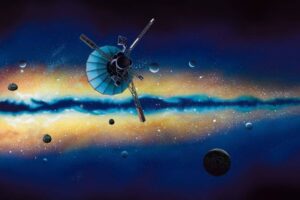
The Pioneer Anomaly refers to the unexpected deviations in the trajectories of the Pioneer 10 and Pioneer 11 spacecraft as they journeyed through the outer regions of our solar system. First noticed in the late 1970s, this phenomenon puzzled astrophysicists due to the spacecraft exhibiting a small but consistent acceleration toward the Sun that was not predicted by existing models of physics. The anomaly sparked widespread scientific interest, prompting numerous theories to explain the unusual behavior of these distant probes.
Initial Observations and Significance
Scientists initially detected the anomaly when tracking data revealed that both Pioneer spacecraft were not following their anticipated paths precisely. The deviation corresponded to an acceleration of approximately 8.74 × 10⁻¹⁰ m/s² directed sunward. This finding was significant because it suggested potential gaps in our understanding of gravitational forces or spacecraft dynamics, raising questions about the completeness of Newtonian gravity and Einstein’s general relativity in describing motion at large distances.
Hypotheses Explored to Explain the Anomaly
- Gravitational Modifications:
Some researchers proposed that unknown gravitational effects or forces beyond the solar system might be influencing the spacecraft, including possible alterations to the inverse-square law of gravity. - Cosmological Factors:
Speculations included the influence of dark energy or other cosmological phenomena that could subtly affect spacecraft trajectories over vast distances. - Thermal Radiation Effects:
Attention turned to the spacecraft’s own heat emissions, particularly from their radioisotope thermoelectric generators (RTGs), as a source of small but continuous thrust. - Environmental Influences:
External factors such as solar radiation pressure and interactions with solar wind particles were also considered as contributors to the observed acceleration. - Navigation and Tracking Errors:
The precision of navigational models and tracking systems was scrutinized to determine if measurement inaccuracies could explain the anomaly.
Thermal Emission as a Primary Cause
The most compelling explanation emerged from detailed studies of the spacecraft’s thermal behavior. The RTGs onboard the Pioneer probes generated heat through radioactive decay, which was emitted unevenly in different directions-a phenomenon known as anisotropic thermal radiation. This uneven heat emission produces a recoil force, effectively pushing the spacecraft slightly off course.
Advanced thermal modeling and simulations demonstrated that the distribution of heat across the spacecraft’s surfaces could generate a thrust sufficient to account for the anomalous acceleration. This explanation aligns with fundamental physics principles, particularly the conservation of momentum, and does not require new or exotic physics.
Role of Environmental and Operational Factors
In addition to thermal effects, the spacecraft’s interaction with the space environment was analyzed. Solar radiation pressure, though weak, exerts a continuous force on spacecraft surfaces. Similarly, collisions with microscopic particles from the solar wind can impart small momentum changes. While these forces are minor individually, their cumulative impact over long durations can influence trajectory measurements.
Furthermore, the spacecraft’s operational parameters, including instrument calibration and onboard system behavior, were reassessed. Variations in these factors, combined with the challenges of tracking spacecraft at extreme distances, contributed to the initial perception of an unexplained anomaly.
Reevaluation of Navigational Models and Tracking Accuracy
As the Pioneer missions progressed, the accuracy of trajectory predictions depended heavily on the quality of navigational models and tracking technologies. Early models did not fully account for all subtle forces acting on the spacecraft, and tracking data had inherent limitations. Subsequent refinements in these models and improved calibration of tracking instruments reduced the magnitude of the observed anomaly, indicating that some of the deviation was due to measurement and modeling imperfections.
Testing Alternative Theories and the Robustness of General Relativity
Some scientific groups proposed that the Pioneer Anomaly might signal new physics, such as modifications to gravitational theory or the existence of unknown forces. However, these hypotheses lacked empirical support after rigorous testing. General relativity, formulated by Albert Einstein, has consistently passed extensive experimental validation, accurately describing gravitational phenomena across a wide range of scales. The reanalysis of Pioneer data reaffirmed the theory’s reliability, showing that the anomaly could be explained without revising fundamental physics.
Summary and Scientific Implications
In conclusion, the Pioneer Anomaly, once a source of considerable speculation, is now understood primarily as a consequence of conventional physics. The interplay of anisotropic thermal radiation, environmental forces, and improved navigational modeling accounts for the observed deviations in spacecraft trajectories. This resolution highlights the importance of meticulous empirical analysis and the refinement of existing models in advancing scientific knowledge.
Lessons for Future Space Missions
The insights gained from investigating the Pioneer Anomaly have practical implications for future deep-space exploration. Enhanced thermal modeling, more precise tracking algorithms, and better understanding of environmental interactions will improve spacecraft navigation and mission planning. These advancements will help avoid similar ambiguities and enable more accurate interpretation of spacecraft data, ultimately deepening our comprehension of the cosmos.
Why Understanding the Pioneer Anomaly Matters
The study of the Pioneer Anomaly exemplifies the scientific method’s strength-balancing curiosity about unexplained phenomena with rigorous testing and validation. Resolving this anomaly reinforces confidence in established physical laws and demonstrates the necessity of accounting for all subtle forces in spacecraft dynamics. This case also underscores the continuous evolution of scientific inquiry, where even minor discrepancies can lead to significant improvements in technology and theory.
FAQ
What is the Pioneer Anomaly?
The Pioneer Anomaly refers to the unexpected deviations in the trajectories of the Pioneer 10 and 11 spacecraft, which were not predicted by existing models of physics.
What caused the Pioneer Anomaly?
The anomaly was primarily explained by thermal radiation effects from the spacecraft's radioisotope thermoelectric generators (RTGs), which emitted heat unevenly, producing a small thrust.
Why is the Pioneer Anomaly significant?
It raised questions about our understanding of gravitational forces and the applicability of Newtonian gravity and Einstein's general relativity at large distances.


Leave a Reply