

Short Answer
Overview of the Vera C. Rubin Observatory
Imagine the night sky not as a quiet backdrop but as an active narrator, revealing cosmic mysteries once hidden in darkness. The Vera C. Rubin Observatory, situated atop Cerro Pachón in Chile, is set to transform this vision into reality. By capturing an unprecedented volume of astronomical data, this cutting-edge facility aims to revolutionize our comprehension of the universe. However, the influx of information also introduces significant technological and conceptual challenges that both scientists and society must address. Will this flood of data fundamentally alter our cosmic understanding, or will it simply add complexity to the existing astronomical puzzle?
Purpose and Mission: The Legacy Survey of Space and Time (LSST)
The Rubin Observatory was conceived with a clear objective: to execute the Legacy Survey of Space and Time (LSST), a ten-year initiative designed to observe the entire visible sky every few nights. Unlike traditional telescopes that capture static snapshots of distant celestial objects, this observatory focuses on unveiling a dynamic universe by monitoring cosmic events as they happen. Central to this mission is the 8.4-meter Simonyi Survey Telescope, equipped with a colossal 3.2-gigapixel camera-the largest ever built for astronomical purposes-enabling rapid, high-resolution sky surveys.
Data Generation and Technological Infrastructure
The observatory’s advanced instrumentation results in an extraordinary data output. It is expected to produce roughly 20 terabytes of raw data nightly, accumulating to about 60 petabytes over its operational lifespan. Managing such vast data streams demands cutting-edge computational infrastructure, sophisticated machine learning techniques, and extensive international cooperation. The complexity involved in processing, storing, and analyzing this data pushes the boundaries of both computational science and astronomy.
Dynamic Cosmic Phenomena Captured
Beyond sheer data volume, the Rubin Observatory’s true value lies in its ability to detect transient and evolving celestial phenomena. For instance, it can observe supernovae-stellar explosions that briefly shine with immense brightness before fading-providing critical insights into stellar evolution and cosmic expansion. Additionally, the observatory tracks the subtle movements of asteroids and comets, enhancing planetary defense by identifying potentially hazardous objects well in advance.
Exploring Dark Matter and Dark Energy
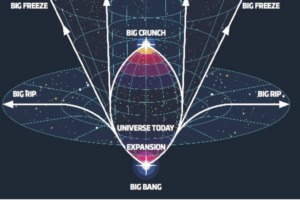
One of the most profound scientific goals of the Rubin Observatory is to deepen our understanding of dark matter and dark energy, which together constitute about 95% of the universe’s total mass-energy content. Through detailed mapping of billions of galaxies and their spatial distribution over time, the observatory aims to refine measurements of the universe’s accelerating expansion. This research could illuminate the fundamental nature of gravity, spacetime, and the mysterious forces shaping cosmic evolution.
Challenges in Data Interpretation and Verification
Interpreting the vast data collected presents significant hurdles. Distinguishing authentic astrophysical signals from noise, instrumental errors, or terrestrial interference requires not only expert scientific judgment but also advanced, adaptive algorithms. The risk of misclassification or misinformation is considerable, necessitating robust verification protocols to uphold scientific accuracy and integrity.
Global Accessibility and Equity in Astronomical Research
The enormous scale of data generated by the Rubin Observatory challenges existing models of data access and inclusivity. Ensuring that researchers worldwide, especially those in regions with limited computational resources, can access and analyze this information equitably is a critical concern. Addressing this requires not only technological innovations but also policy development and educational programs to build global capacity, ensuring that the benefits of this astronomical endeavor are shared universally.
Public Engagement and Science Communication
The observatory’s discoveries have the potential to transform public interaction with astronomy. By enabling near real-time observation of the dynamic universe, it invites a new way for citizens to engage with cosmic phenomena. Interactive digital platforms can disseminate these findings broadly, fostering scientific literacy and inspiring future generations. However, effectively communicating complex and uncertain frontier research demands careful, thoughtful strategies to balance accuracy with accessibility.
Philosophical and Existential Reflections
The insights gained from the Rubin Observatory also intersect with deeper philosophical questions. As humanity uncovers the roles of dark energy in cosmic destiny and witnesses countless transient events marking cosmic births and deaths, it challenges us to reconsider our place within an immense, ever-evolving universe. These revelations may provoke profound contemplation about existence, the flow of time, and the limits of human perception.
Conclusion: A New Era in Cosmic Exploration
The Vera C. Rubin Observatory represents a convergence of ambition, technology, and scientific inquiry. It promises to create a continuously updated, living map of the cosmos, offering unprecedented opportunities for discovery. Yet, this promise comes with the need to manage immense data volumes, verify countless findings, and ensure that the benefits extend beyond academia to society at large. As this new chapter in cosmic exploration unfolds, the universe’s silent stories are poised to become vibrant, intelligible, and transformative. The question remains: is the global community prepared to embrace the revelations that lie ahead?
FAQ
What is the purpose of the Rubin Observatory?
The purpose is to execute the LSST, capturing dynamic events in the universe for comprehensive analysis.
What challenges does the observatory face?
Challenges include processing vast data streams and ensuring accurate interpretation of astrophysical signals.


Leave a Reply