
Short Answer
Definition of Martian Meteorites
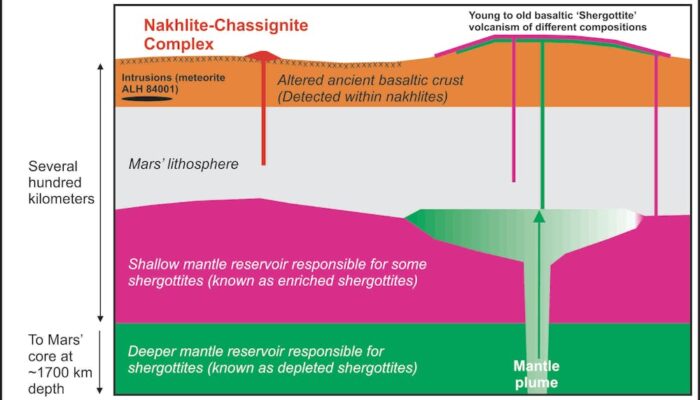
Martian meteorites are fragments of rock that originated from the surface of Mars and have traveled through space to land on Earth. These extraterrestrial rocks offer invaluable insights into the geological history and potential biological past of the Red Planet. By studying these meteorites, scientists gain a unique window into Mars’ ancient environment and the processes that have shaped it over billions of years.
Mechanisms Behind the Ejection of Martian Meteorites
The process by which Martian rocks are expelled from the planet and sent into space involves several natural phenomena. Mars’ atmosphere, primarily composed of carbon dioxide, exerts a gravitational pull approximately 38% that of Earth’s gravity. This relatively low gravity, combined with specific geological and environmental factors, enables rocks to escape Mars under certain conditions.
Impact Cratering
The dominant mechanism responsible for launching Martian meteorites into space is impact cratering. Mars’ surface is heavily scarred by craters formed from collisions with asteroids and comets. When a large impact occurs, the tremendous energy released can eject surface and subsurface materials at velocities exceeding Mars’ escape velocity. These impacts can excavate rocks from deep beneath the surface, revealing ancient minerals and ices that hold clues to Mars’ geological and climatic history.
Thermal Stress and Temperature Fluctuations
Mars experiences extreme temperature variations between day and night, as well as across seasons. These fluctuations induce thermal stresses that cause rocks to crack and fracture. The low atmospheric pressure and reduced gravity on Mars facilitate the dislodging and upward movement of these fractured rock fragments, increasing the likelihood that some debris may eventually enter orbit or escape into space.
Volcanic Activity
Volcanism has played a significant role in shaping Mars’ surface. The presence of massive shield volcanoes, such as Olympus Mons, indicates that volcanic eruptions have historically been powerful enough to propel pyroclastic material high into the atmosphere. Although current volcanic activity is minimal, ancient explosive eruptions could have contributed to the ejection of Martian rocks into space.
Scientific Importance of Martian Meteorites
Martian meteorites are more than geological curiosities; they are critical to understanding Mars’ environment and its capacity to support life. Each meteorite acts as a natural time capsule, preserving information about the planet’s past conditions.
Clues to Water and Habitability
Many Martian meteorites contain minerals such as olivine and phyllosilicates, which form in the presence of liquid water. This suggests that Mars once had more temperate and potentially habitable conditions. The presence of water-related minerals supports theories that the planet’s surface environment may have been conducive to life during certain periods.
Atmospheric and Isotopic Insights
Isotopic studies of Martian meteorites reveal details about the composition and evolution of Mars’ atmosphere. Variations in elemental and molecular isotopes provide evidence of atmospheric loss and chemical processes that have shaped the planet’s climate over time.
Astrobiological Implications
The study of Martian meteorites fuels ongoing debates about the existence of life beyond Earth. Researchers investigate whether these rocks contain biosignatures-chemical or structural indicators of past or present life. The possibility that life once thrived on Mars, or may still exist beneath its surface, drives missions aimed at collecting and analyzing samples directly from the Martian terrain.
Cultural and Philosophical Significance
Beyond their scientific value, Martian meteorites inspire humanity’s curiosity about the cosmos. They represent tangible connections to another world, fueling dreams of space exploration and the search for extraterrestrial life. These meteorites provoke reflection on our place in the universe and the broader quest to understand life’s diversity across planetary systems.
Summary and Future Perspectives
The relatively easy escape of Martian meteorites into space offers profound insights into Mars’ geology, climate history, and potential for life. Each fragment carries a unique story that enriches our understanding of a distant planet that continues to captivate scientists and the public alike. As research and exploration technologies advance, the secrets held within these meteorites may not only illuminate Mars’ past but also reshape our understanding of life’s possibilities throughout the universe.
FAQ
What are Martian meteorites?
Martian meteorites are rocks that originated from Mars and have landed on Earth, providing insights into Mars’ geology and potential for life.
How do Martian meteorites escape from Mars?
They escape through mechanisms such as impact cratering, thermal stress, and volcanic activity.
What is the significance of studying Martian meteorites?
They help scientists understand Mars’ past environment, climate, and the possibility of life.




Leave a Reply