
Short Answer
Definition of Materials Science
Materials science is an interdisciplinary field that merges principles from physics, chemistry, and engineering to study the properties, structures, and behaviors of various materials. Its primary goal is to understand how materials perform and to innovate new materials with enhanced functionalities for diverse industrial applications.
The Integral Role of Mathematics in Materials Science
Mathematics is deeply embedded in materials science, serving as the essential language and toolset for describing and predicting material behavior. Beyond empirical observations, the discipline relies heavily on mathematical frameworks to connect atomic-scale phenomena with macroscopic properties, enabling scientists to model and analyze complex material systems.
Mathematical Foundations in Materials Science
- Atomic and Microstructural Modeling:
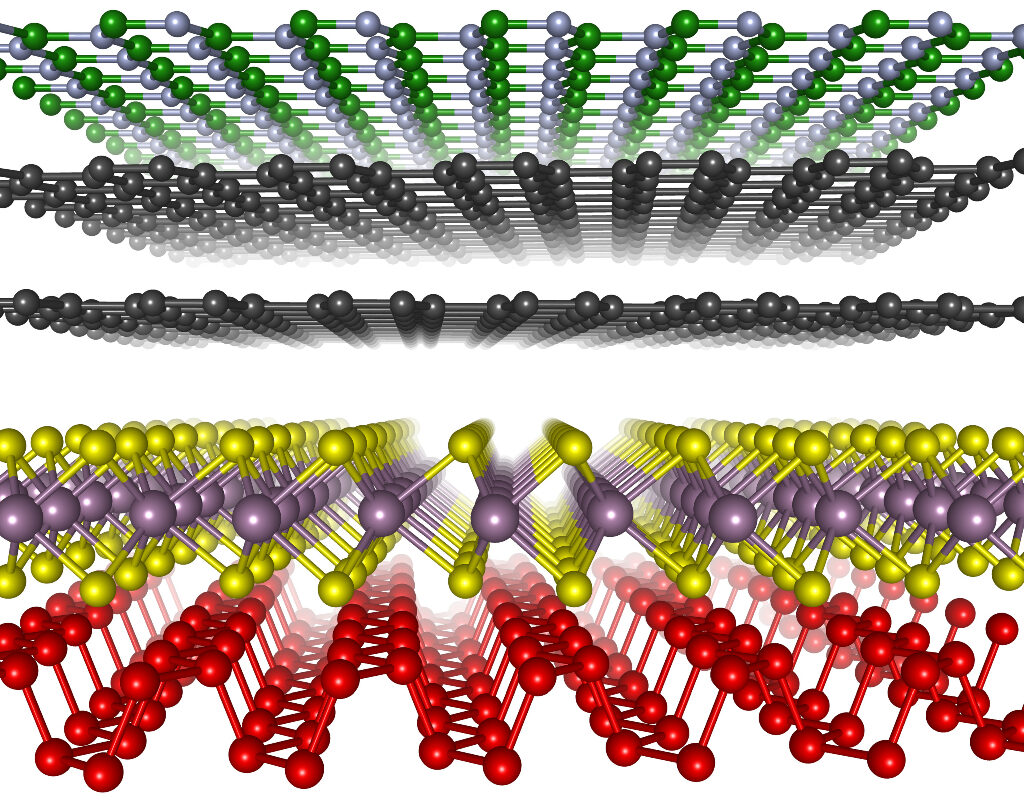
Mathematical models articulate the relationships between atomic arrangements, microstructures, and bulk material properties, facilitating predictions about material performance. - Solid-State Physics Applications:
Advanced mathematical techniques such as Fourier transforms, differential equations, and linear algebra are employed to understand crystalline structures, electronic band theory, and phonon dynamics. - Group Theory:
This branch of mathematics is crucial for analyzing symmetry operations in crystal lattices, which directly influence material characteristics.
Statistical Mechanics and Probabilistic Approaches
Statistical mechanics bridges the microscopic atomic behavior with observable macroscopic phenomena in materials. Utilizing calculus and statistical methods, it enables the prediction of phase transitions, thermal responses, and electrical conductivity by interpreting probabilistic models grounded in physical laws.
Mathematical Modeling of Mechanical Properties
Understanding how materials respond to forces involves mathematical descriptions of stress-strain relationships. Foundational equations like Hooke’s Law and more sophisticated constitutive models quantify material deformation and strength, guiding engineers in designing components that meet specific performance criteria.
Computational Materials Science and Numerical Methods
Computational approaches in materials science rely extensively on mathematics to simulate material behavior at atomic and molecular scales. Techniques such as molecular dynamics and finite element analysis use numerical algorithms to predict properties and responses, reducing the need for exhaustive experimental testing and accelerating material innovation.
Mathematics in Nanotechnology and Advanced Materials
At the nanoscale, materials exhibit unique properties that require precise mathematical calculations related to surface phenomena, mechanical behavior, and atomic interactions. This mathematical insight is vital for developing cutting-edge applications in electronics, medicine, and sustainable energy technologies.
Interdisciplinary Synergies: Data Science and Machine Learning
The evolution of materials science increasingly incorporates data-driven methods, including artificial intelligence and machine learning. These fields apply mathematical tools such as regression analysis, clustering, and optimization algorithms to streamline materials discovery and enhance predictive modeling capabilities.
Common Misconceptions About Mathematics in Materials Science
Materials science is purely experimental.
While experimentation is crucial, mathematical modeling and theoretical analysis form the backbone of understanding and innovation in the field.
Mathematics in materials science is limited to basic calculations.
The discipline employs advanced mathematical concepts from linear algebra to statistical mechanics and computational algorithms.
Why Mathematics is Essential in Materials Science
Mathematics provides the structural framework that supports the interpretation of experimental data and the prediction of material behavior. It enables the design of materials with tailored properties, fosters innovation in emerging technologies, and bridges the gap between theoretical understanding and practical application, making it indispensable to the advancement of materials science.
Summary
In summary, mathematics is not just a supplementary tool but a fundamental component of materials science. From theoretical models describing atomic interactions to computational simulations guiding engineering solutions, mathematical principles are integral to the discipline’s progress. This synergy between empirical research and mathematical rigor drives the continuous evolution and impact of materials science in technology and society.
FAQ
Is mathematics important in materials science?
Yes, mathematics is vital as it provides the framework for understanding and predicting material behavior.
What are common misconceptions regarding math in materials science?
A common misconception is that materials science is purely experimental, while in reality, it relies heavily on mathematical modeling.






Leave a Reply