
Short Answer
Definition of Gravity
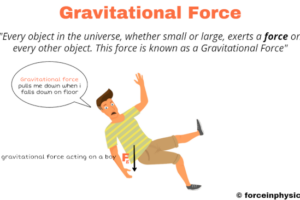
Gravity is a fundamental force of nature that governs the attraction between objects with mass. It acts as an invisible thread weaving through the fabric of space and time, shaping the structure and behavior of the universe on every scale. From the smallest particles to the largest galactic clusters, gravity is the force that binds matter together and orchestrates the cosmic order.
- Universal Attraction:
Gravity causes all objects with mass to pull toward each other, creating the foundation for the formation and stability of celestial bodies. - Cosmic Architect:
It shapes the universe by influencing the motion of stars, planets, galaxies, and even the large-scale structure of the cosmos.
Gravity’s Role in Star Formation and Evolution
Gravity is the driving force behind the birth and life cycle of stars. It initiates the collapse of vast clouds of gas and dust in space, leading to the formation of new stars. This process begins when gravity overcomes the internal pressure of these molecular clouds, causing them to contract and increase in density.
- Star Birth:
As gravity compresses the cloud, the core temperature rises until nuclear fusion ignites, transforming the cloud into a luminous star. - Stellar Lifecycle:
Gravity continues to influence stars throughout their existence, determining their lifespan and eventual fate-whether they end as white dwarfs, neutron stars, or black holes. - Supernovae and Element Formation:
Massive stars, under intense gravitational pressure, explode as supernovae, dispersing heavy elements essential for the creation of planets and life.
Gravity as the Architect of Galaxies
On a grand scale, gravity is responsible for assembling galaxies-vast collections of stars bound together in complex structures. It holds billions of stars in orbit around a common center, often dominated by a supermassive black hole whose immense gravitational pull influences the entire galaxy.
- Galactic Structure:
Gravity shapes galaxies into spirals, ellipticals, or irregular forms, guiding their rotation and internal dynamics. - Galactic Collisions:
When galaxies collide, gravity orchestrates the interaction, merging stars and dark matter, and triggering new waves of star formation.
The Cosmic Web and Large-Scale Structure
Beyond individual galaxies, gravity sculpts the universe’s large-scale architecture known as the cosmic web. This vast network consists of filaments of dark matter and galaxies interconnected across immense distances, forming a grand lattice that defines the universe’s structure.
- Dark Matter’s Role:
Gravity pulls dark matter into filamentous strands, which act as scaffolding for galaxy formation and clustering. - Universe’s Expansion:
The interplay between gravity and dark energy influences the rate of cosmic expansion and the evolution of the universe’s structure.
Fundamental Characteristics of Gravity
Despite being the weakest of the four fundamental forces at human scales, gravity’s infinite range and cumulative effect make it the dominant force on astronomical scales. It governs the motion of planets, stars, and galaxies, and shapes the very fabric of spacetime.
- Weakest Force at Small Scales:
Compared to electromagnetic and nuclear forces, gravity is feeble in everyday interactions. - Infinite Reach:
Gravity’s influence extends across the universe, never diminishing completely. - Spacetime Curvature:
According to general relativity, gravity is the warping of spacetime caused by mass and energy.
Gravity’s Influence on Earth and Life
Gravity is not only a cosmic force but also a fundamental influence on our daily lives. It governs the motion of the Earth, the tides of the oceans, and the stability of ecosystems. Every atom in our bodies is held together under gravity’s subtle pull, linking us intimately to the universe.
- Planetary Orbits:
Gravity keeps planets in stable orbits around the sun, enabling conditions suitable for life. - Tidal Forces:
The gravitational interaction between the Earth and the moon causes ocean tides, affecting marine and coastal ecosystems. - Biological Impact:
Gravity influences physiological processes and the structural integrity of living organisms.
Paradoxical Nature of Gravity
Gravity embodies a dual character, acting as both a creative and destructive force. It fosters the formation of stars and galaxies while also driving the collapse of massive stars into black holes, where conventional physics breaks down.
- Creative Force:
Gravity unites matter, ignites stars, and builds complex cosmic structures. - Destructive Force:
It can cause catastrophic collapse, leading to black holes and singularities that challenge our understanding of physics.
Why Gravity Is Essential
Gravity is the cornerstone of cosmic order and evolution. It transforms chaos into structured systems, enabling the formation of stars, planets, and ultimately life. Without gravity, the universe would be a disordered expanse of scattered particles rather than a dynamic, interconnected entity.
- Cosmic Evolution:
Gravity drives the continuous cycle of birth, death, and rebirth of celestial bodies. - Scientific Significance:
Understanding gravity is crucial for fields such as astrophysics, cosmology, and space exploration. - Everyday Relevance:
Gravity affects everything from the stability of our planet to the biological processes that sustain life.

Leave a Reply