
Short Answer
Definition of Galactic Nuclei and Quasars
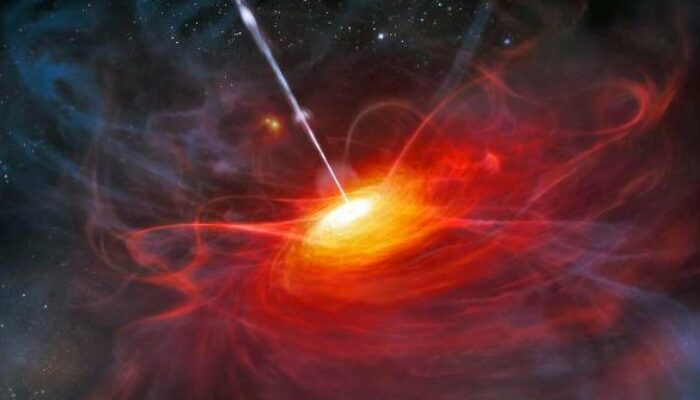
Galactic nuclei are the central regions of galaxies, often hosting some of the universe’s most intriguing and energetic phenomena. These cores can contain supermassive black holes and densely packed stars, making them focal points for astrophysical research. Quasars, short for “quasi-stellar objects,” are a specific type of active galactic nucleus (AGN) known for their extraordinary brightness, frequently outshining entire galaxies. Their intense luminosity is primarily powered by supermassive black holes accreting matter at high rates, producing energy across the electromagnetic spectrum.
- Galactic Nuclei:
Central zones of galaxies that may be active or inactive, containing black holes, stars, gas, and dust. - Quasars:
Exceptionally luminous AGNs, often billions of light-years away, powered by accretion onto supermassive black holes.
Characteristics and Mechanisms of Quasars
Quasars derive their remarkable brightness from the gravitational energy released as matter spirals into supermassive black holes. This accretion process generates friction and heat, emitting radiation across multiple wavelengths including visible light, radio waves, and X-rays. Typically observed at vast cosmological distances, quasars serve as beacons illuminating the early universe. Their luminosity can exceed that of entire galaxies by factors of thousands, making them some of the most radiant objects known.
Active vs. Inactive Galactic Nuclei
Galactic nuclei can be broadly categorized into active and inactive types based on their energy output and observable phenomena. Active nuclei are often enveloped by complex structures of gas, dust, and regions of star formation, exhibiting diverse shapes and brightness levels. In contrast, inactive nuclei may harbor dormant supermassive black holes with minimal accretion activity. Notably, some nearby galaxies possess nuclei that shine intensely due to starburst activity or intermittent black hole feeding, challenging the notion that only distant quasars dominate cosmic luminosity.
Expanding the Concept of Cosmic Brightness
Traditional assessments of cosmic brightness have largely focused on black hole accretion as the primary source of luminosity. However, recent studies suggest that other processes, such as vigorous star formation in galactic centers, contribute significantly to the overall energy output. By integrating data from radio, infrared, and optical observations, astronomers have uncovered complex emission patterns that extend beyond classical quasar models. This broader perspective invites a reevaluation of what defines peak brightness in galactic nuclei.
Starburst Activity and Its Impact on Luminosity
Starburst galaxies, characterized by exceptionally high rates of star formation-sometimes exceeding 100 solar masses per year-exhibit central regions that can rival or even surpass the brightness of quasars. The intense stellar nucleosynthesis, combined with frequent supernova explosions, generates substantial energy emissions across various wavelengths. This phenomenon adds a layer of complexity to understanding galactic core luminosity and suggests that starburst-driven processes may be as influential as black hole accretion in shaping observed brightness.
Case Study: M87 and Nearby Luminous Galactic Nuclei
The galaxy M87, notable for its supermassive black hole, provides a compelling example of a nearby galactic nucleus exhibiting luminosity that can exceed that of some quasars. Observations across multiple wavelengths have revealed episodes of extreme brightness, challenging the assumption that quasars are always the most luminous galactic centers. These findings highlight how cosmic distance and evolutionary factors can influence perceived brightness, underscoring the importance of local galactic nuclei in the broader context of cosmic energetics.
Relativistic Jets and Their Role in Galactic Luminosity
Supermassive black holes often produce relativistic jets-streams of charged particles traveling near the speed of light-that extend far beyond the galactic core. These jets can illuminate vast regions of space, sometimes outshining the host galaxy itself. The presence and orientation of such jets add complexity to the measurement and interpretation of galactic brightness, suggesting that the most intense luminosity may not always be confined to the immediate vicinity of the black hole but distributed across extended structures.
Reevaluating Cosmic Brightness Paradigms
Current models that place quasars at the apex of cosmic luminosity may benefit from a more inclusive approach that considers the diverse mechanisms contributing to galactic nucleus brightness. By acknowledging the significant roles of starburst activity, dormant black holes, and relativistic jets, astronomers can develop a more nuanced understanding of energy generation in galaxies. This shift encourages the exploration of luminous galactic nuclei within our local universe, potentially uncovering phenomena that rival or exceed the brightness of distant quasars.
Significance in Astrophysics and Cosmology
Understanding the true sources and scales of cosmic luminosity is vital for unraveling the evolutionary history of galaxies and the universe at large. Galactic nuclei serve as laboratories for studying extreme physics, including black hole growth, star formation, and high-energy particle acceleration. Recognizing that some local galactic centers may outshine quasars reshapes our comprehension of cosmic energy distribution and challenges long-held assumptions about the universe’s most luminous objects.
Conclusion: A New Perspective on Galactic Luminosity
The evolving landscape of astrophysical research invites a reconsideration of the dominance of quasars in cosmic brightness hierarchies. Advances in observational technology and theoretical modeling reveal that galactic nuclei, especially those in our cosmic neighborhood, can exhibit luminosities comparable to or exceeding those of quasars. Embracing this broader viewpoint opens pathways to deeper insights into the energetic processes shaping galaxies and the universe, emphasizing that some of the most spectacular cosmic phenomena may be closer to home than previously thought.
FAQ
What are galactic nuclei?
Galactic nuclei are the central regions of galaxies, often containing supermassive black holes and dense star populations.
How do quasars differ from galactic nuclei?
Quasars are a specific type of active galactic nucleus known for their extreme luminosity due to high rates of matter accretion.
Can local galaxies be as bright as quasars?
Yes, some local galactic nuclei can exhibit luminosities comparable to or exceeding those of quasars.



Leave a Reply