
Short Answer
Definition of Gravity in a Cosmological Context
Gravity is commonly recognized as a fundamental interaction that governs the attraction between masses. On a cosmic scale, it is the force responsible for the motion and structure of celestial bodies, from falling objects on Earth to the orbits of planets and the clustering of galaxies. The question arises: does the universe itself possess gravity as an inherent property, beyond the gravitational effects of individual masses? This inquiry explores whether gravity is a characteristic of the universe as a whole or simply a consequence of its contents.
Historical Perspectives on Gravity
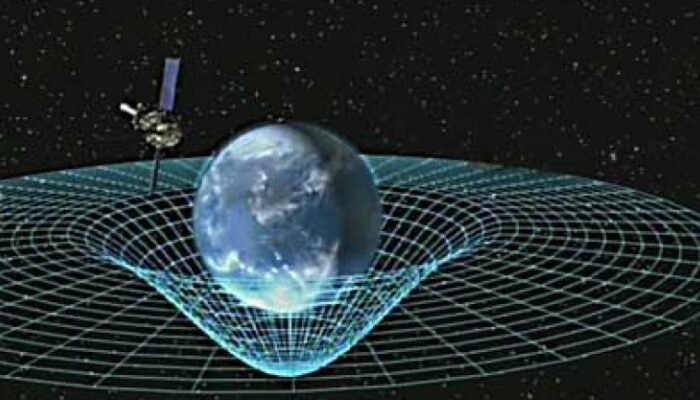
Initially, gravity was described by Sir Isaac Newton as a universal force acting instantaneously between any two masses, binding objects across the cosmos. This classical view was transformed by Albert Einstein’s general theory of relativity, which redefined gravity not as a force but as the curvature of spacetime caused by mass and energy. According to Einstein, gravity emerges from the geometric deformation of the universe’s fabric, fundamentally linking gravity to the structure of spacetime itself.
Gravity and the Structure of the Universe
On large scales, gravity is the architect of cosmic structures. Galaxies cluster together under mutual gravitational attraction, forming vast networks known as cosmic webs. However, if gravity were the only influence, the universe would eventually collapse under its own weight. Instead, observations reveal that the universe is expanding, with this expansion accelerating due to a mysterious component called dark energy. This dynamic interplay highlights gravity’s role not just as a local force but as a key factor in the universe’s evolution.
Gravitational Influence on Cosmic Expansion
Einstein’s field equations describe how the distribution of mass and energy shapes spacetime curvature on the grandest scales. Gravity, therefore, is not confined to isolated objects but is woven into the universe’s expansion and fate. The gravitational field is a manifestation of the universe’s matter-energy content rather than a property generated by the universe itself as an independent entity.
Mass-Energy and the Origin of Gravity
Gravity arises from the presence of mass and energy, which together form the stress-energy tensor in general relativity. This tensor dictates how spacetime bends, producing the gravitational effects we observe. In a hypothetical universe devoid of matter and energy, gravity would be absent. Since our universe is filled with galaxies, dark matter, radiation, and dark energy, gravity is an intrinsic feature of this cosmic composition.
Observable Universe and Gravitational Reach
Due to the finite speed of light, humans can only observe a limited portion of the universe, known as the observable universe. Nevertheless, gravity extends beyond this horizon, influencing regions beyond our observational limits. This raises complex questions about whether the universe’s gravitational field can be considered a single unified entity or a vast collection of localized gravitational fields distributed throughout spacetime.
Gravitational Waves: Dynamic Ripples in Spacetime
Gravitational waves, first directly detected in 2015, are disturbances in spacetime generated by massive accelerating bodies such as merging black holes. These waves travel across the universe, carrying energy and information about gravitational events over immense distances. Their discovery underscores gravity’s dynamic and pervasive nature, demonstrating that gravity is an active participant in cosmic phenomena rather than a static force.
Philosophical and Theoretical Considerations
The evolving mass-energy content of the universe prompts questions about whether gravity itself might change over time. While current physical models treat gravitational interaction as constant, governed by fundamental constants, some theoretical frameworks propose that gravity could be emergent or linked to deeper pre-spacetime realities. These ideas remain speculative but highlight the profound philosophical implications of gravity in cosmology.
Why Understanding Gravity in the Universe Matters
Gravity’s omnipresence and its ability to shape the cosmos from the smallest particles to the largest structures make it a cornerstone of both physics and cosmology. Understanding gravity on a universal scale informs our knowledge of cosmic origins, the lifecycle of stars and galaxies, and the ultimate fate of the universe. It bridges the gap between observable phenomena and the fundamental architecture of reality, enriching our comprehension of existence itself.
Summary: Gravity as a Manifestation of the Universe’s Contents
The universe does not possess gravity as an independent attribute; rather, gravity emerges from the distribution and interaction of matter and energy within spacetime. This gravitational influence governs the motion of celestial bodies, the formation of cosmic structures, and the expansion of space. The gravitational field is a complex, evolving phenomenon shaped by the universe’s material content, reflecting the intricate interplay between matter, energy, and the geometry of spacetime.
Common Misconceptions About Gravity and the Universe
Gravity is a force exerted by the universe as a whole.
Gravity arises from the presence and distribution of mass and energy within the universe, not from the universe itself as an independent entity.
The universe’s gravitational field is a single, uniform force.
Gravity is a complex amalgamation of localized fields generated by matter and energy spread throughout spacetime.
Gravity is static and unchanging.
Gravity is dynamic, as evidenced by phenomena like gravitational waves and the evolving structure of the cosmos.

Leave a Reply