
Short Answer
Understanding Dark Energy
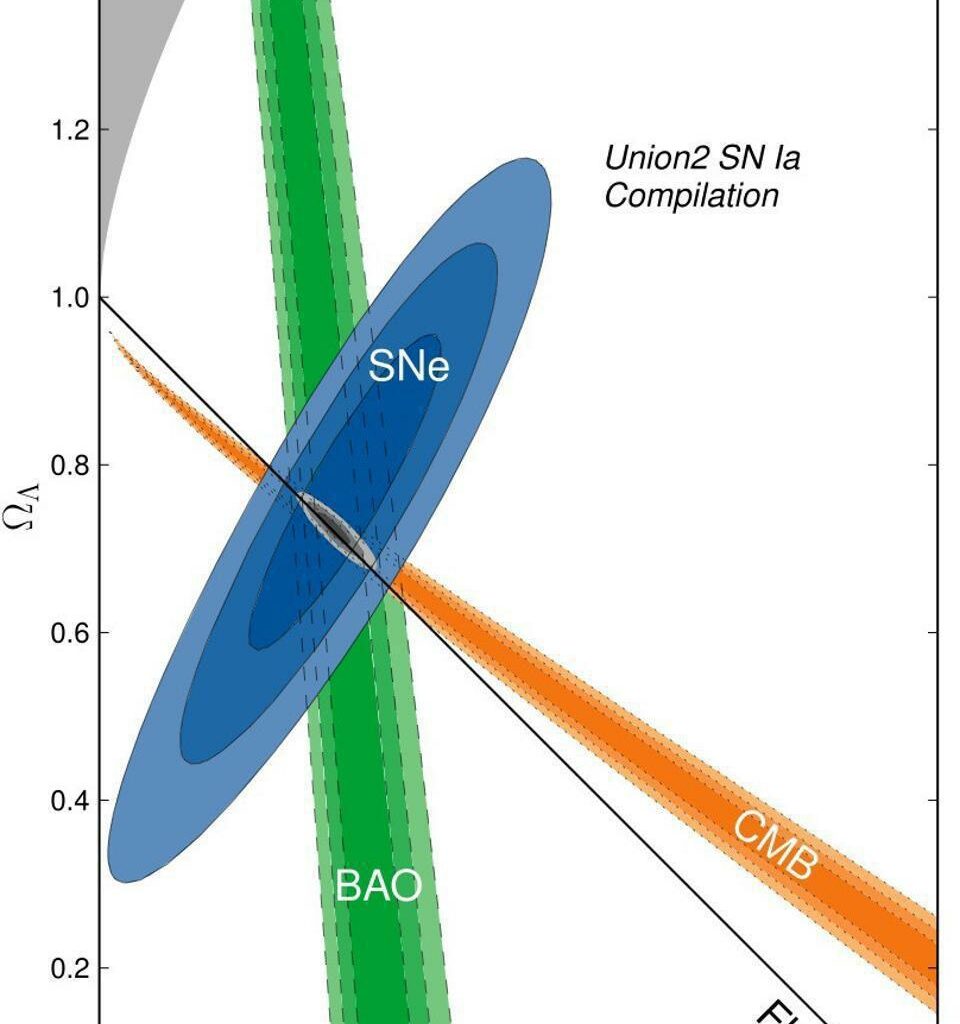
Dark energy is a mysterious and pervasive force that currently dominates the energy composition of the universe, accounting for roughly 68% of its total energy. It acts as a repulsive influence, driving the accelerated expansion of the cosmos and counterbalancing the attractive force of gravity. Despite its significant role in cosmic evolution, the true nature and origin of dark energy remain elusive, sparking profound questions about its existence and genesis.
Exploring the Concept of Pre-Big Bang Dark Energy
The question of whether dark energy existed prior to the Big Bang challenges conventional cosmological paradigms. Since the Big Bang marks the inception of time and space as we understand them, contemplating a “before” is inherently paradoxical. However, some theoretical models propose that conditions or entities predating the Big Bang could have given rise to dark energy, suggesting it might be a fundamental aspect of a broader cosmic framework rather than a phenomenon emerging solely after the universe’s birth.
Quantum Vacuum and Dark Energy
One prominent hypothesis links dark energy to the quantum vacuum-a dynamic state filled with fluctuating energy and transient virtual particles. This zero-point energy is thought to permeate all of space, potentially existing even before the Big Bang. If the quantum vacuum is indeed eternal or predates our universe, then dark energy, as a manifestation of this vacuum energy, could also have a pre-Big Bang origin. This perspective invites consideration of a multiverse scenario, where multiple Big Bang events occur within an infinite and timeless backdrop.
Cyclic and Bouncing Universe Models
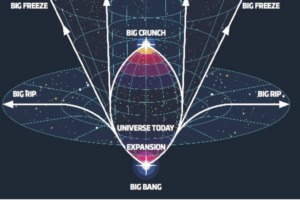
Alternative cosmological theories, such as cyclic or bouncing universe models, propose that the cosmos undergoes endless sequences of contraction and expansion phases. In these frameworks, the Big Bang is not the absolute beginning but a transitional “bounce” between cycles. Dark energy, in this context, might be a persistent force influencing multiple cosmic epochs, existing before and after each bounce. This cyclical view integrates dark energy as an intrinsic component of the universe’s ongoing evolution rather than a transient post-Big Bang phenomenon.
Higher-Dimensional Theories and Dark Energy
String theory and related higher-dimensional models offer another avenue for understanding dark energy’s origins. According to these ideas, our familiar four-dimensional universe could be a “brane” embedded within a higher-dimensional “bulk.” Interactions between these dimensions might generate effects perceived as dark energy within our universe. If such higher-dimensional processes are eternal or predate the Big Bang, dark energy or its equivalent could have existed in realms beyond our direct observation, playing a crucial role in cosmic genesis and destiny.
Dark Energy as a Post-Big Bang Phenomenon
Contrasting with pre-Big Bang hypotheses, many cosmologists argue that dark energy is an emergent property tied to the universe’s expansion and spacetime structure. From this standpoint, dark energy arises after the Big Bang, manifesting as vacuum energy, a cosmological constant, or dynamic fields like quintessence. This view suggests that discussing dark energy before the Big Bang is conceptually problematic, akin to questioning the characteristics of a stage before a play begins.
Philosophical and Scientific Implications
The inquiry into dark energy’s existence before the Big Bang transcends empirical science, touching on metaphysical questions about causality, time, and the nature of reality. If time itself began with the Big Bang, traditional cause-and-effect relationships may not apply to any “before.” This challenges our understanding of cosmogenesis and compels a reevaluation of foundational assumptions in physics and philosophy.
Bridging Quantum Mechanics and Cosmology
Investigating dark energy’s origins necessitates reconciling quantum mechanics with general relativity-two pillars of modern physics that remain difficult to unify. Theoretical explorations into pre-Big Bang dark energy push the boundaries of current models, potentially offering insights that could resolve longstanding conflicts between these frameworks and illuminate the true nature of cosmic beginnings.
Observational Prospects and Future Research
Empirical investigation into dark energy’s history relies on subtle clues embedded in the cosmic microwave background radiation, the large-scale structure of the universe, and the evolution of dark energy’s influence over time. Advances in observational technology and theoretical physics may eventually distinguish between pre- and post-Big Bang origins or reveal entirely new physics. Until such breakthroughs occur, the question remains a stimulating intellectual challenge that drives cosmological research forward.
Significance of Understanding Dark Energy’s Origins
Determining whether dark energy existed before the Big Bang has profound implications for our comprehension of the universe’s origin, structure, and ultimate fate. It invites us to reconsider the finality of the Big Bang event and explore the possibility of a multiverse or higher-dimensional realities. Each hypothesis enriches our cosmological narrative, deepening our grasp of how the universe expands and possibly how it first emerged from the unknown.
FAQ
What is dark energy?
Dark energy is a mysterious force that accounts for approximately 68% of the universe’s energy, driving its accelerated expansion.
Did dark energy exist before the Big Bang?
The existence of dark energy before the Big Bang is a matter of debate, with various theories suggesting it could have originated from quantum vacuum fluctuations or higher-dimensional interactions.

Leave a Reply